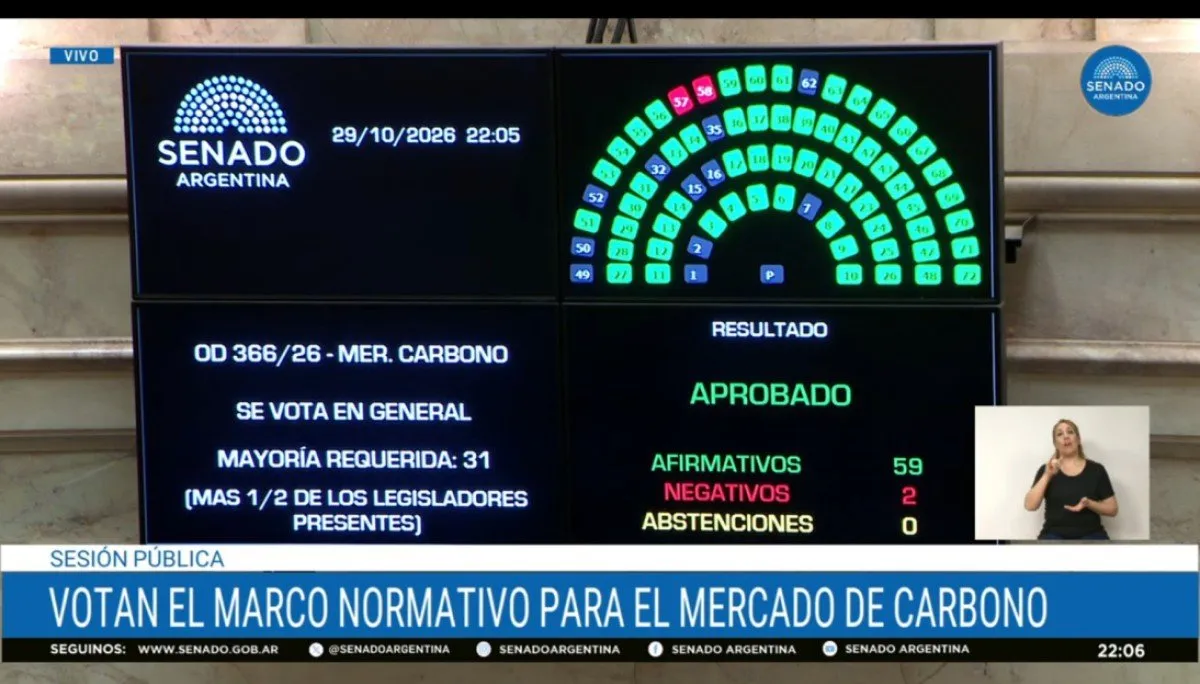
Argentina’s carbon markets are moving closer to a national regulatory framework after the country’s Senate overwhelmingly approved legislation designed to expand carbon credit trading, attract investment and create new export opportunities.
The carbon market, carbon credits and Article 6 of the Paris Agreement are central to the initiative, which could position the South American country as a larger participant in international environmental markets.
The vote took place late Thursday, October 29, with 60 senators supporting the proposal and two opposing it. The legislation will now move to the Chamber of Deputies, where lawmakers must approve it before it can become law.
The bill establishes rules for generating, registering and commercialising credits from projects that reduce or remove greenhouse gas emissions, including forest conservation, reforestation and renewable energy initiatives.
A central element is the creation of the National Emissions Reduction Registry, known as ReNaRe, intended to provide public oversight and improve the traceability of carbon credits. The proposal also recognises credits as independent financial assets and allows their use in financial instruments.
The legislation includes up to 30 years of fiscal stability for registered projects, alongside provisions facilitating international transactions. Transfers used towards another country’s climate commitments would require government authorisation and accounting adjustments to prevent double counting.
Industry projections cited by Argentine media suggest carbon credit exports could generate between $1.4 billion and $3.9 billion annually under different market scenarios.
However, the proposal faces questions over land rights, provincial authority and environmental safeguards. Environmental organisations have warned that weak oversight could encourage greenwashing, deforestation and conflicts involving local and Indigenous communities.
Source link