This month, the Coordinated Research Network (CRN) on enhanced rock weathering (ERW) launched its first project at the Mato Grosso Cotton Institute (IMA) in Brazil.
The purpose of the pilot is to gather structured, independent, and scientifically rigorous evidence on ERW CO2 removal performance and soil impact under different conditions.
Introduced as one of many such projects planned for other locations, this pilot will contribute data in a structure that will enable comparison between the ERW information gathered across different global regions in the future.
Created to run as a network of intensively monitored field experiments capable of generating comparable ERW data, the CRN is one of three components in Cascade Climate’s Bedrock Initiative, which aims to strengthen the evidence base for this carbon removal pathway.
The two other components include the Model Acceleration front, which unites field scientists and modelers on improving predictions for ERW performance under different conditions, and the Large-Scale Studies initiative, which will serve to investigate issues in larger spatial scale projects.
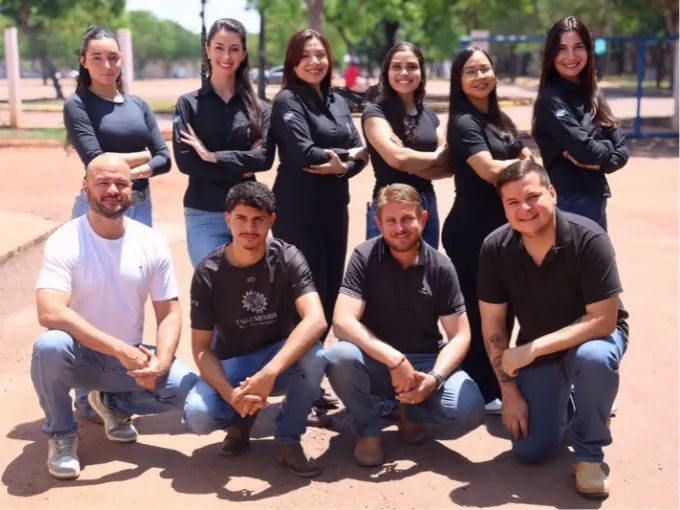
CRN’s first pilot is being launched in Mato Grosso under the leadership of researchers from the Federal University of Rondonópolis (UFR), in partnership with the SIPA Alliance.
The team’s main goal is to produce data that will help researchers understand ERW carbon dioxide removal (CDR) performance and its potential for delivering agricultural benefits, such as influencing soil pH, impacting nutrient availability, and crop productivity.
This pilot will be the first one to use the standardized experimental protocol for generating detailed and consistent ERW performance data, developed by researchers, modelers, the Cascade Scientific Advisory Board, private sector ERW scientists, and ongoing contributions from interested stakeholders.
Source link