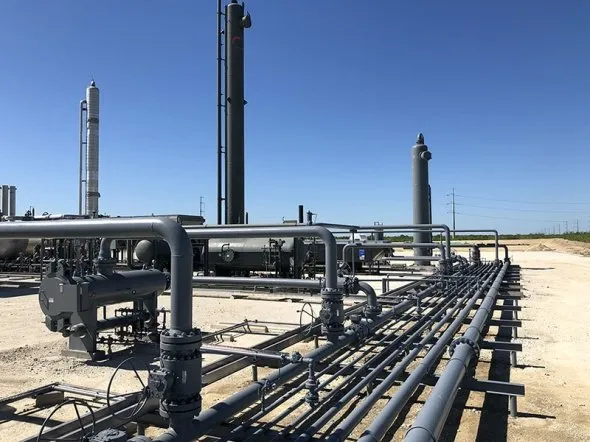
Texas carbon storage is moving closer to a new development milestone after Ozona CCS and Japanese trading group Marubeni reached a final investment decision on a project designed to permanently store carbon dioxide from natural gas processing. The Pawnee Carbon Sequestration Project in Bee County, Texas, is expected to begin injecting carbon dioxide underground in the first quarter of 2027.
The project is designed to handle approximately 400,000 metric tons of carbon dioxide annually, using an existing well adapted for underground injection. The partners reported a successful injection test at the Sligo Formation, a geological formation selected for the storage operation.
The decision moves the venture beyond development planning and toward construction and eventual operations. Ozona will develop and operate the facilities, while Marubeni will manage the marketing and commercialization of carbon credits generated by the project. The companies are also considering further carbon storage investments in Texas.
The announcement reflects a wider push to establish carbon capture and storage infrastructure across the U.S. Gulf Coast. The technology involves separating carbon dioxide from industrial processes, transporting it to designated sites and injecting it into underground geological formations for long-term storage.
Marubeni announced its partnership with Ozona in September 2024, outlining plans to capture emissions from multiple natural gas production and processing facilities in South Texas. The broader concept involves transporting the gas through dedicated pipelines and storing it in underground saline formations.
Other energy companies are developing similar projects in the region. BKV Corporation, for example, announced a separate South Texas carbon storage investment decision in 2024, targeting an annual sequestration rate of about 90,000 metric tons.
Source link