The collaboration agreement was signed on the sidelines of the India-European Free Trade Association (EFTA) Prosperity Summit, as India and Norway seek to expand cooperation in clean energy technology and investment.
To assess whether the EU could emerge as a major alternative export market for Indian solar manufacturers [subscription required], PV Tech Premium spoke to Yana Hryshko, managing consultant and head of solar supply chain research at Wood Mackenzie, and Charith Konda, energy specialist for India Mobility and New Energy at the Institute for Energy Economics and Financial Analysis (IEEFA).
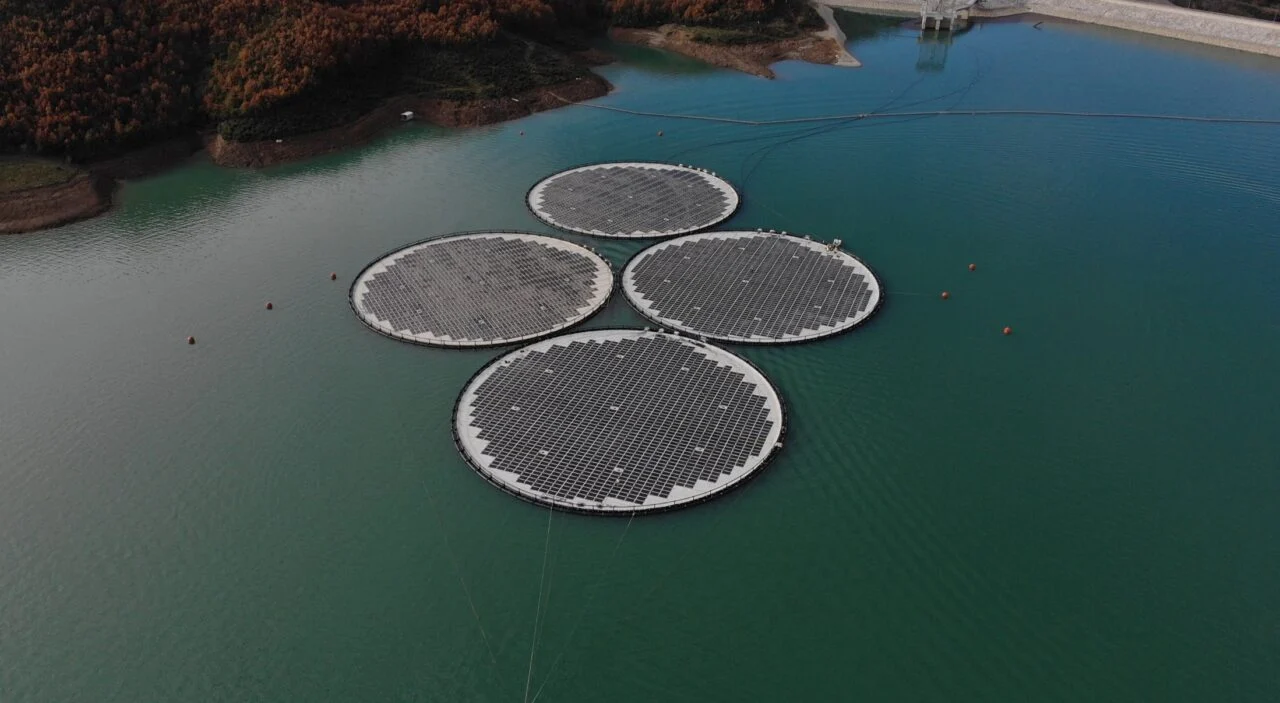
Ocean Sun’s floating PV system differs from conventional floating solar projects, which typically use interconnected pontoon structures to support PV modules. Its technology mounts the modules on a thin hydro-elastic membrane that floats directly on the water surface.
Tata Power will evaluate the system against conventional floating PV solutions across energy yield, capacity utilisation factor (CUF), installation methodology and duration, reliability, operations and maintenance requirements, capital expenditure and overall commercial viability.
The companies said the membrane-based design could reduce structural requirements and simplify transportation and installation. Positioning the PV modules close to the water surface could also provide a cooling effect that may improve generation performance.
The pilot will provide operating data that Tata Power and Ocean Sun can use to assess the potential for larger-scale deployment in India.
“India is one of the world’s most attractive floating solar markets, but it is also a large and complex market where local execution capabilities are essential. Tata Power brings the experience, capabilities and market understanding required to navigate that complexity.
Source link