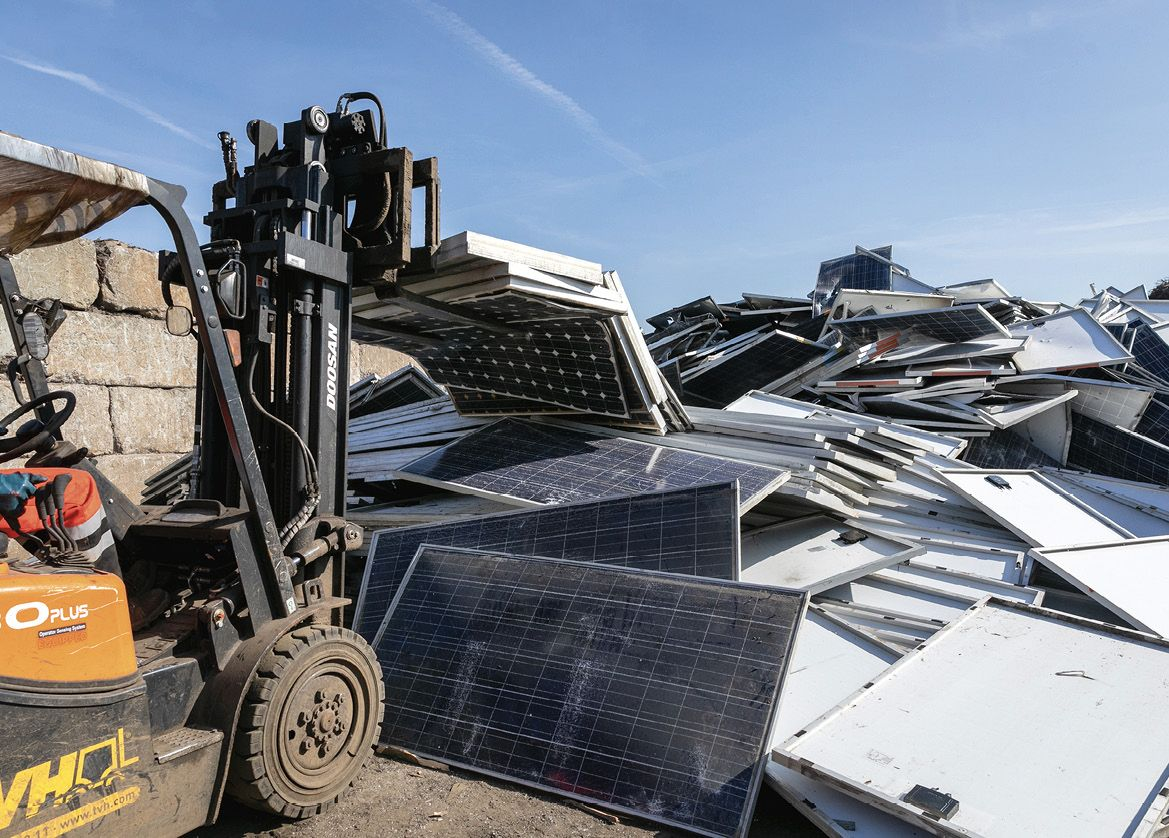
Researchers have assessed the environmental and economic performance of recycling strategies for frameless glass-glass PV modules encapsulated with polyolefin elastomer (POE), a design increasingly used in bifacial modules.
Most PV recycling studies have focused on conventional modules with ethylene-vinyl acetate (EVA) encapsulant, a plastic backsheet and an aluminum frame, the researchers said.
The international research team compared three scenarios for recycling one complete module weighing about 27 kg. The first applied thermal and chemical treatment to the whole module. The second used mechanical treatment and selective processing, limiting thermal treatment to selected fractions. The third added further fractionation after thermal treatment, using electrostatic corona separation.
Each scenario was assessed with two chemical routes for metal recovery: sodium hydroxide (NaOH) followed by ammonia and hydrogen peroxide (NH3 + H2O2), and nitric acid with hydrogen peroxide (HNO3 + H2O2).
The researchers described the work as an early-stage comparative study based on their earlier laboratory-scale recycling results. They carried out a “gate-to-gate” life cycle assessment with credits for avoided primary materials, using ReCiPe 2016 midpoint indicators. The economic assessment used a process-level operational margin based on revenue from recovered materials and selected operating costs, excluding capital costs and equipment maintenance.
Under baseline assumptions, the two targeted scenarios reduced energy demand and improved impacts such as global warming, with the third scenario generally achieving the lowest processing burden. Whole-module treatment retained stronger benefits in several material-driven impact categories because it recovered more material for credit. The preferred chemical route depended on the impact category.
Source link