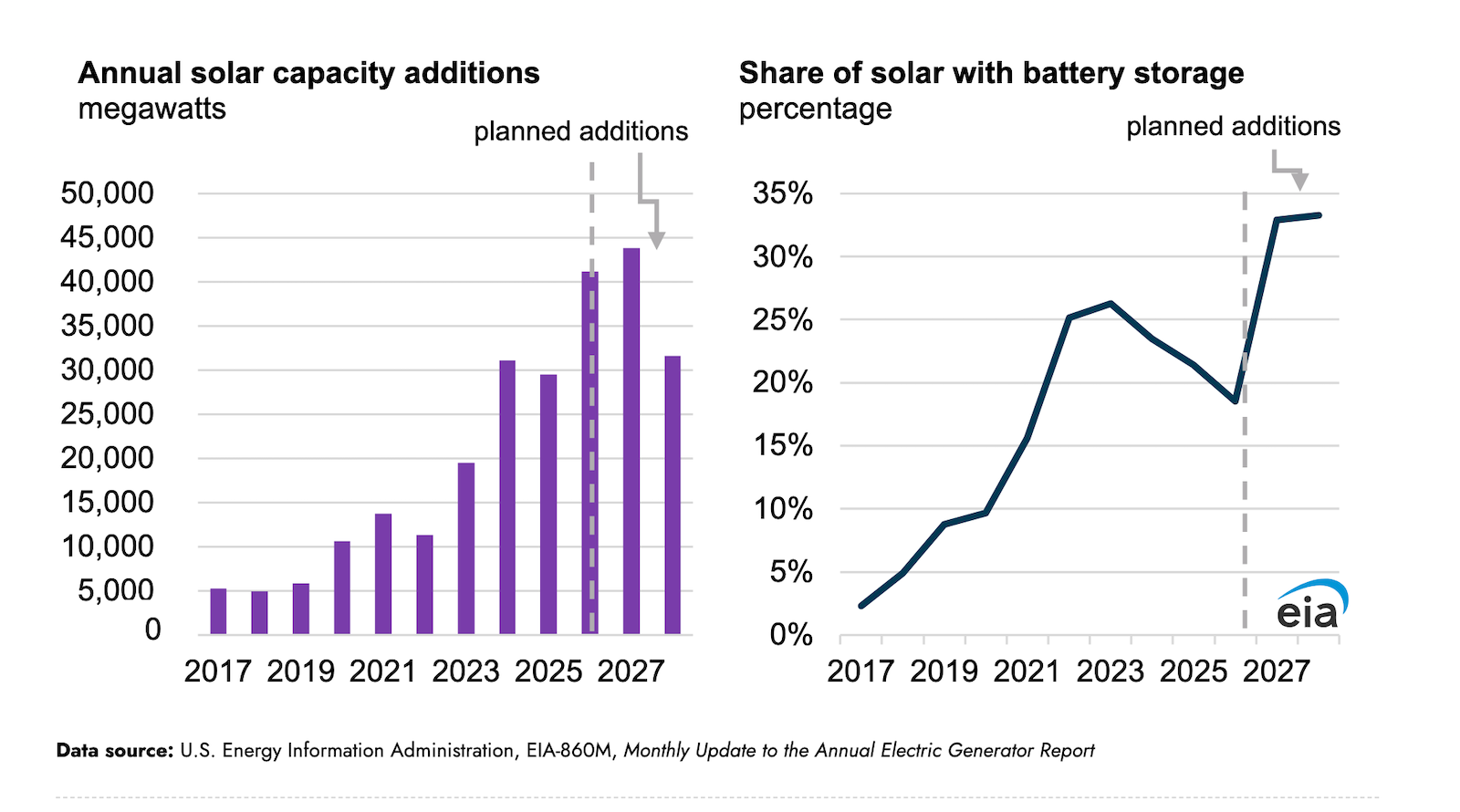
US President Donald Trump signed the OBBBA into law in 2025, shortening the time frame during which solar developers could access the Section 48E investment tax credit (ITC) and restricting access to those credits by foreign entities of concern (FEOC). Developers responded with a six-month, 200 GW safe-harbor blitz through 2025, avoiding FEOC regulations and laying the foundation for ITC-enabled installations through the end of the decade.
Post-IRA, suppliers eschewed investment in long-lead, capital-intensive upstream component supply and instead focused on expanding domestic module production to maximize the impact of the $0.07/W Section 45X tax credit. Developers needed domestic modules to satisfy the Section 48/48E ITC domestic content bonus (DCB), but premium pricing drove a blending strategy instead, procuring domestic modules alongside low-cost imported PV modules to meet DCB thresholds and maintain project return on investment (ROI).
Auxin Solar filed a request in 2022 for an anti-circumvention ruling against four Southeast Asian (SEA) nations. Developers saw a potential supply disruption, but successfully lobbied for a two-year moratorium on the duties. As a result, SEA module imports grew to more than 3 GW per month in 2023, rising above 5 GW per month by the end of the first half of 2024. The Auxin case laid the groundwork for what is now a routine process of initiating new AD/CVD and anti-circumvention investigations.
The Solar 3 AD/CVD investigation, initiated in May 2024, resulted in duties ranging from 34% to 652% on imported cells and modules from Cambodia, Malaysia, Thailand, and Vietnam. Foreign producers pressed on, dismantling affected facilities and relocating to non-AD/CVD countries, embarking on a nomadic journey that has since prompted Solar 4 (India, Laos, and Indonesia) and a second investigation against Ethiopia.
Source link