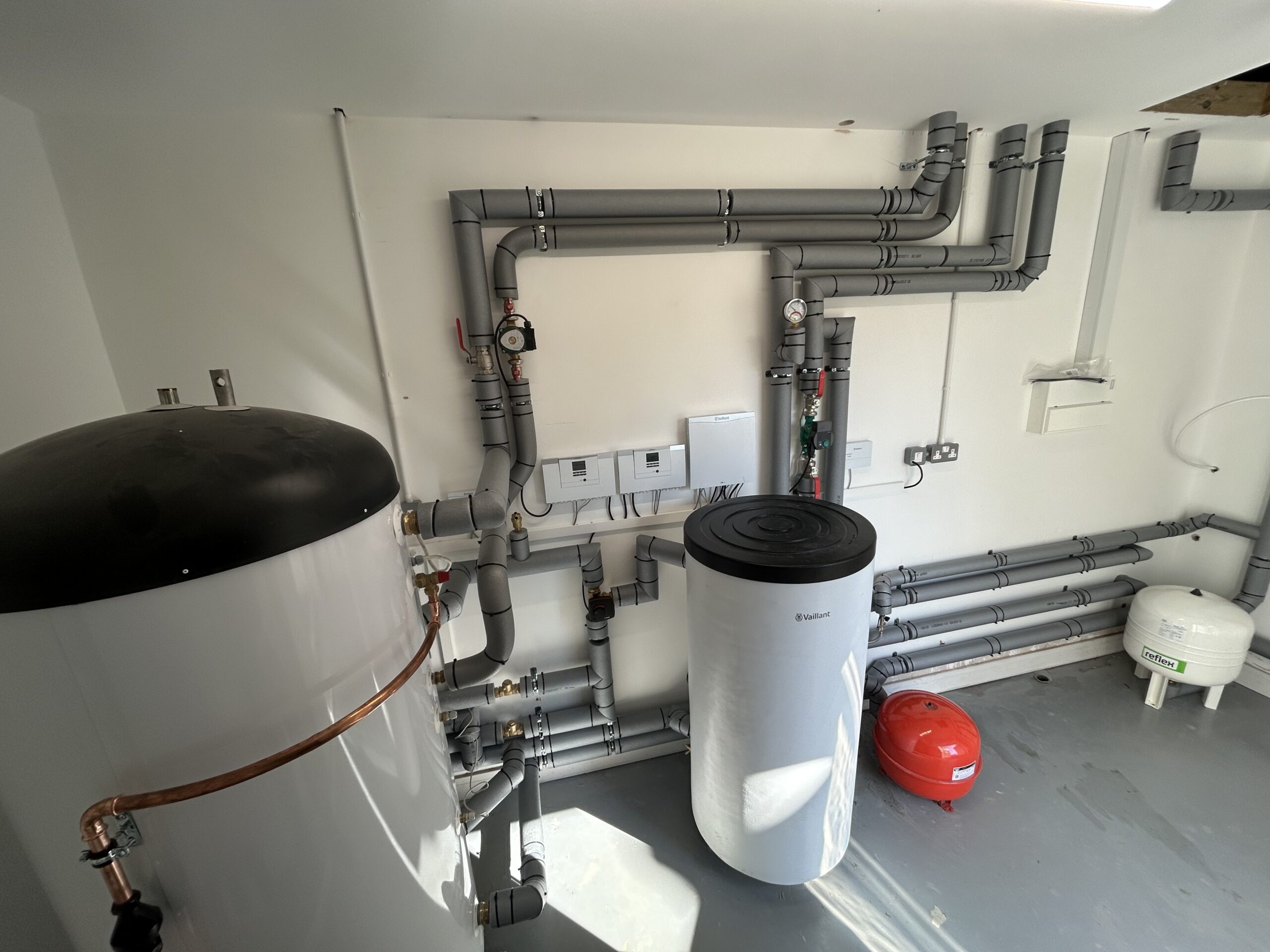
The usual answer to surplus rooftop PV in a British home has been an immersion diverter. A current clamp on the meter tails detects export, and the diverter feeds that spare power into the immersion element in the hot water cylinder, varying the power to match whatever is spare. The kit is cheap, it works with almost any cylinder, and it suited homes heated by gas, where the cylinder’s hot water would otherwise have come from the boiler.
Homes in England and Wales are replacing gas boilers with air-to-water heat pumps under the Boiler Upgrade Scheme, and some of them already have panels on the roof or add them at the same time. In those homes the diverter’s arithmetic stops working the way it used to.
An immersion element is a resistance heater. One kWh of electricity in gives one kWh of heat in the water. A heat pump moves heat from outside air into the water, so the same kWh of electricity delivers several kWh of heat.
The government’s Electrification of Heat demonstration project ran one of the largest UK field trials of heat pump performance. 80 across 291 air source heat pumps, using a boundary that counts space heating, hot water, back-up heaters and immersion use together. The report notes that summer hot water runs are less efficient than the annual picture, because the heat pump runs less often and works against a higher target temperature.
Source link