

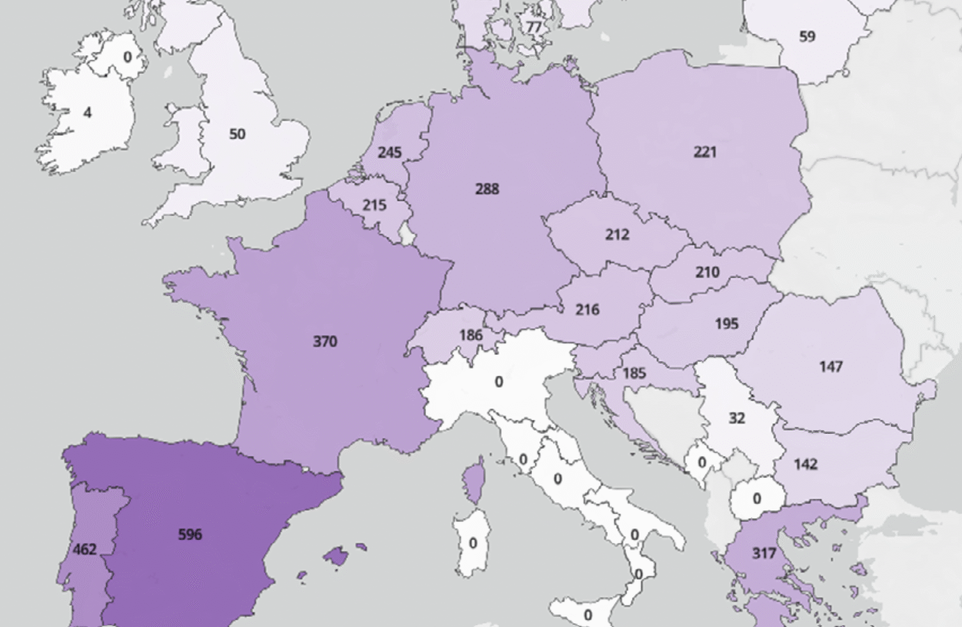
European solar power generation exceeded the previous record by nearly 20%, supported by prolonged periods of high pressure and abundant sunshine. The increase in output led to recurring electricity surpluses around midday, pushing intraday prices to record negative levels in several markets.
The distribution of negative-price periods also shifted compared with the previous year. Spain recorded the highest number of hours with negative electricity prices, at 596, followed by Portugal with 462, France with 370 and Greece with 317. By contrast, Nordic markets experienced fewer such periods. The report attributes these differences to variations in solar capacity growth and electricity demand patterns across Europe.
In Spain, daily and weekly electricity prices repeatedly exceeded €100 ($112.3)/MWh during the late-June heatwave, following a period of high renewable power generation and negative midday prices. In Germany, electricity prices surged above €600/MWh during evening peak hours.
These developments highlighted contrasting market conditions. While high solar output created electricity surpluses during certain hours, rising demand during periods of extreme heat pushed prices higher during peak consumption periods. According to Montel, these fluctuations exposed the limitations of flexibility resources available to European electricity markets.
In late April, prices in some European markets approached the technical floor of €-500/MWh, which was subsequently lowered to €-600/MWh.
The report also identifies a gradual withdrawal of certain flexible resources from day-ahead electricity markets. In response to recurring negative prices, some flexible thermal power plants, storage operators and industrial consumers opted against submitting bids at negative price levels in day-ahead auctions, instead reserving their capacity for intraday or balancing markets.
Source link





