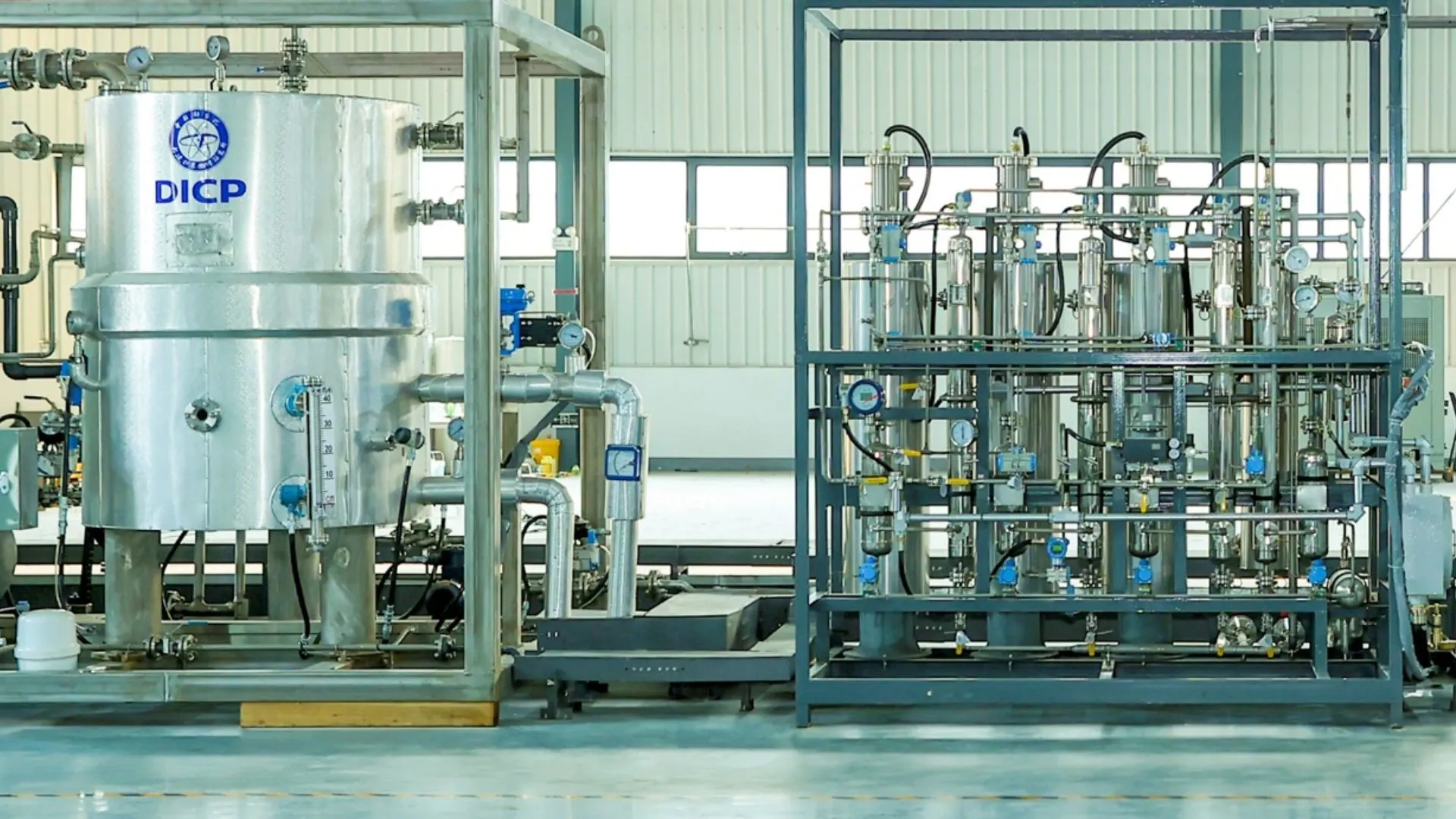
Chinese scientists have developed a 250-kilowatt system that can produce hydrogen and fresh water from seawater while recovering valuable marine resources. The plant also improves electricity use by 14.4 percent compared with conventional alkaline water electrolysis, according to a new study.
The team, led by Deng Dehui and Liu Yanting of the Chinese Academy of Sciences’ Dalian Institute of Chemical Physics, designed the system to address a major problem in seawater-based hydrogen production. The researchers combined electrolysis with a desalination process so that heat normally lost during hydrogen production can be reused.
Hydrogen made with renewable electricity is being explored as a cleaner energy source. Using seawater could provide an abundant source of water, but direct seawater electrolysis creates several technical problems.
Chloride ions in seawater can react at the anode and corrode the electrode. Calcium and magnesium ions can also form mineral deposits on the cathode, reducing its performance over time.
A second method first removes salt from seawater before using the resulting fresh water for electrolysis. Reverse osmosis and distillation can produce suitable water, but desalination adds equipment and increases electricity demand.
The researchers built on this approach and looked for a way to recover energy that is normally lost during the process.
Commercial electrolysis systems can operate at around 176 to 194 degrees Fahrenheit (80 to 90 degrees Celsius). At these temperatures, about 30 percent of the electricity can become low-quality waste heat, according to the study.
The researchers connected the electrolyzer to a desalination unit to capture this heat.
Source link