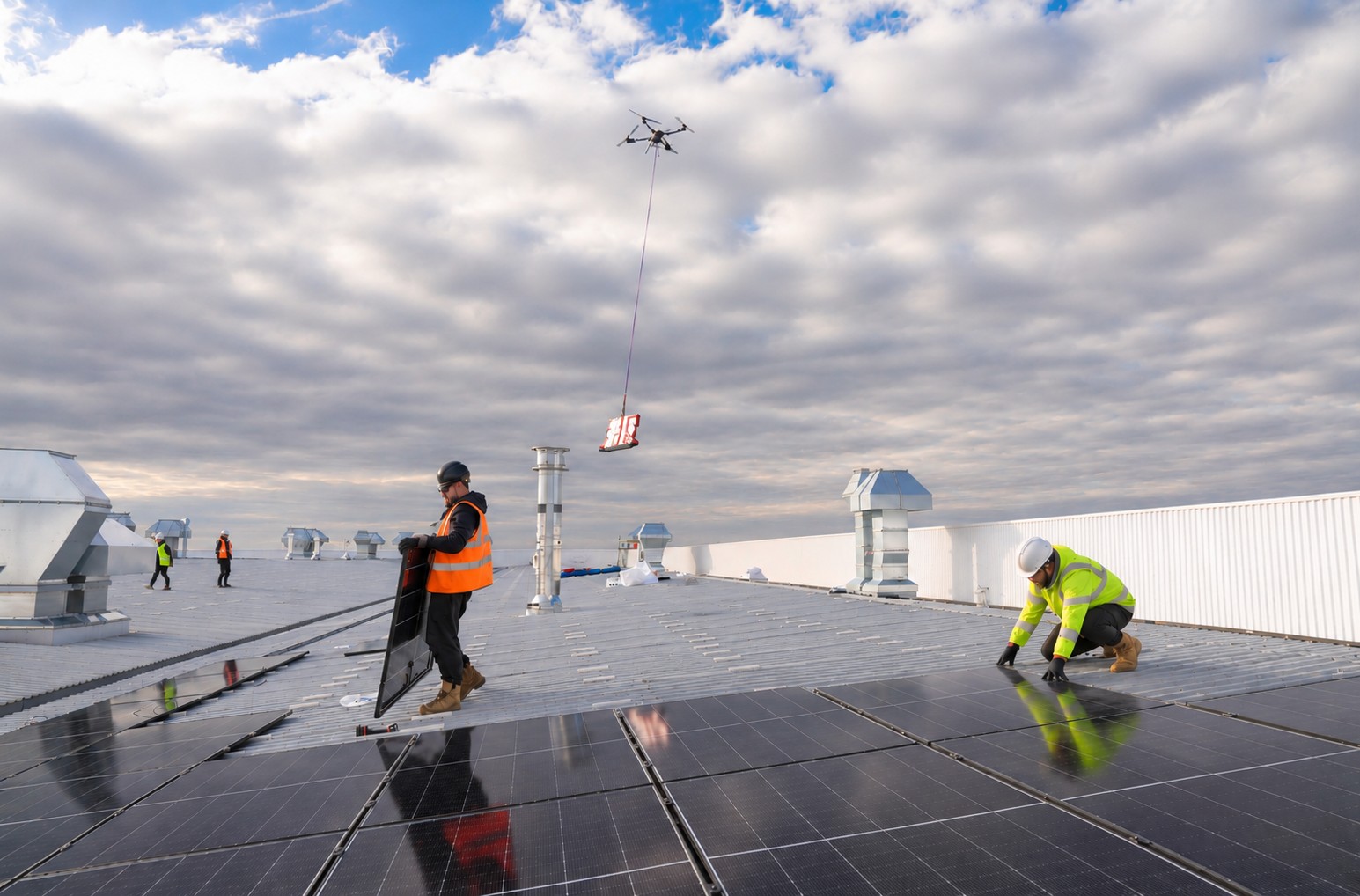
Researchers from China’s Zhejiang Normal University have investigated the potential of integrating rooftop photovoltaics with vertical farming to improve land productivity, reduce reliance on grid electricity, and ensure economic viability. Their study combines a year-long experiment using flowering plants with simulations across 40 Chinese counties to assess the trade-offs between land use, energy performance, and profitability.
“Vertical farming saves land but multiplies the energy needed for lighting and climate control,” the team explained. “Photovoltaics can supply that energy, but only by taking up land that vertical farming was meant to free. Whether the trade is worthwhile then comes down to what the crop is worth and whether a market exists for it.”
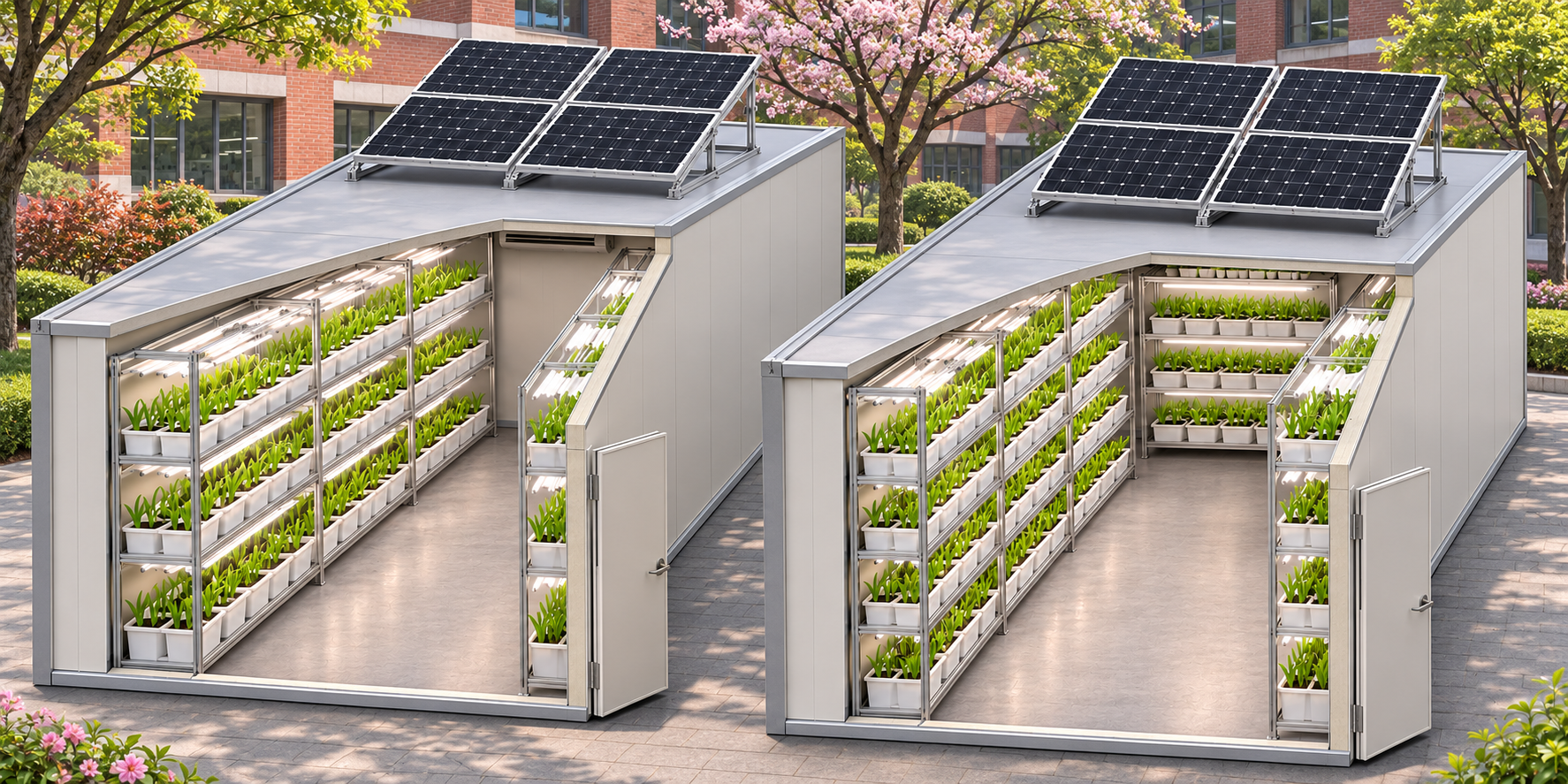
The scientists conducted a 12-month rooftop vertical farming trial in Jinhua, eastern China, from August 2023 to July 2024. They grew 10,500 Hippeastrum Lemon Sherbet plants in two insulated units, each occupying 17.4 m² and equipped with four 670 W monocrystalline solar modules, for a total installed PV capacity of 2.68 kW per unit.
One unit featured a three-layer configuration with 4,500 plants, while the other featured a four-layer configuration with 6,000 plants. In both units, LEDs provided a 12-hour photoperiod at three daily light integral (DLI) levels of 1.73 mol/m²/day, 2.89 mol/m²/day, and 3.54 mol/m²/day. The temperature was set at 22 C, with a target relative humidity of 60% to 70%. Light intensity was fixed for each shelf.
At harvest, the team measured each bulb at its widest point and compared the results with a greenhouse cultivation benchmark derived from the scientific literature.
Source link