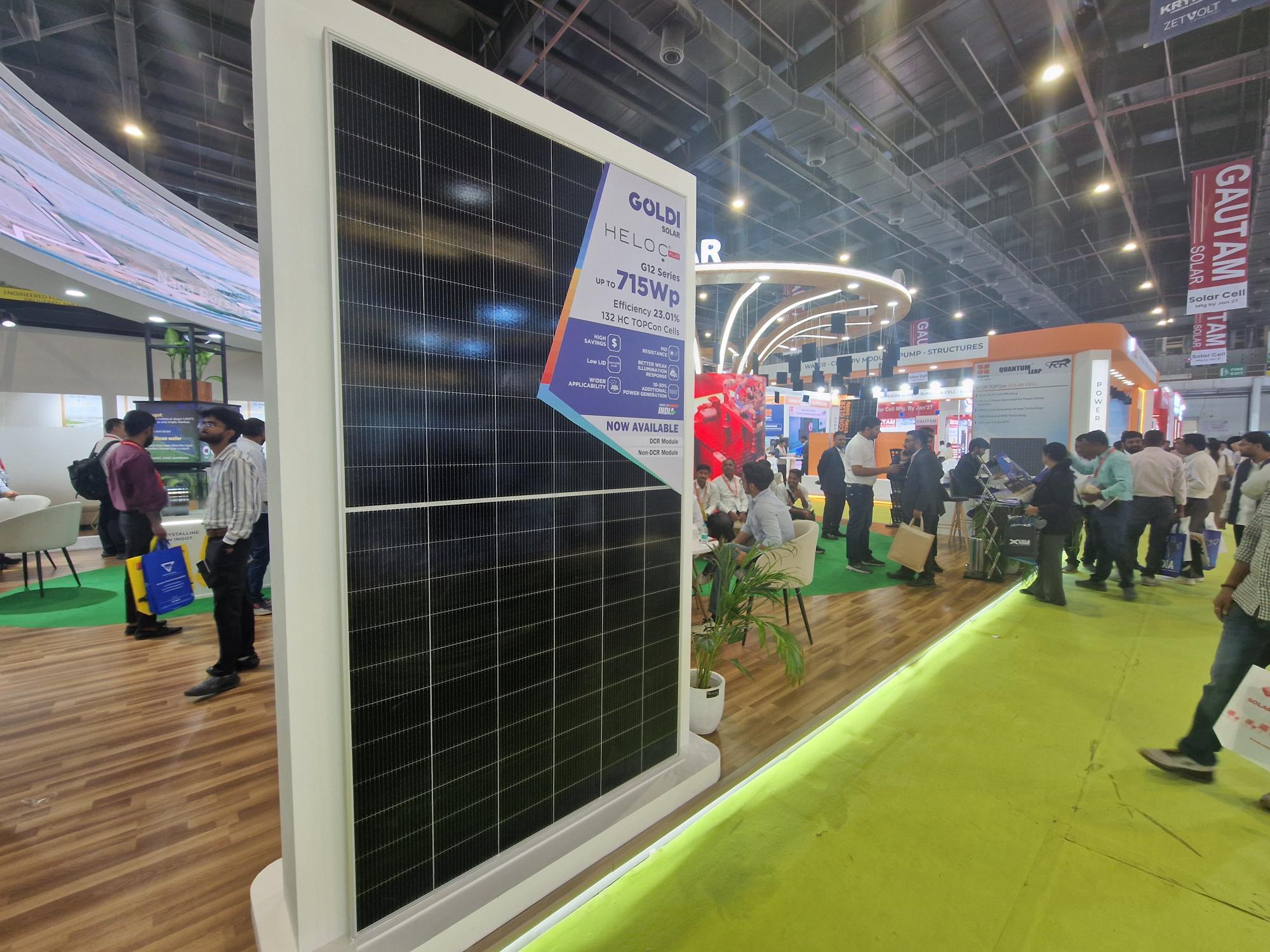
India’s solar and energy storage industry has grown to massive proportions, reflected in the more than 54,000 visitors that descended on Greater Noida’s India Expo Center this week for Renewable Energy India Expo (REI) and the Battery Show India, and the more than 1,000 exhibitors that filled the center beyond its capacity, with temporary buildings added and exhibits flowing out into the car park.
After three days navigating the halls and meeting with companies from up and down the solar supply chain, pv magazine has these three key takeaways from REI 2026.
Previous years at REI saw a PV industry highly focused on bringing module assembly to India. And now, analysts estimate the country has more than 200 GW of annual module capacity – far beyond its expected demand for 50-60 GW of PV installations per year out to 2030.
This has many predicting a market shakeout beginning in 2027, where manufacturers operating module capacity only will struggle to find demand, and also to source cells since the country extended its domestic content requirements to the cell sector earlier this year.
Many manufacturers at the show were keen to emphasize their ability to supply “domestic content requirement” modules. Nonetheless, 2027 may be a difficult year for some. India’s market is led by those companies that have been able to invest early in building out local cell manufacturing capacity – expected to reach 80 GW by the end of 2027.
Quality is also emerging as a key differentiator as module manufacturing heads into a highly competitive period.
Source link