This article has been reviewed according to Science X's editorial process and policies. Editors have highlighted the following attributes while ensuring the content's credibility:
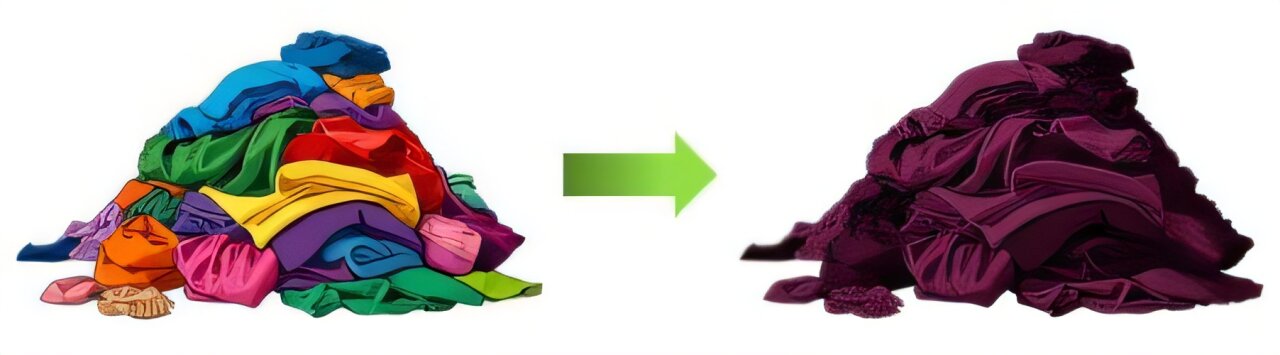
Colored polyester is difficult to recycle because the dyes are hard to remove without using large quantities of chemicals, water or energy. Researchers have developed a supercritical carbon dioxide treatment that redistributes existing dyes between polyester fibers, creating uniform colors without removing the original dyes. By controlling fiber proportions, they tuned shades and developed a model that accurately predicted color strength.
This approach, reported in The Journal of Supercritical Fluids, could support sustainable polyester recycling, although testing with real textile waste is needed.
From the clothes we wear to our living spaces, colorful textiles add vibrancy to our everyday lives. However, more than 92 million tons (83 million metric tons) of textile waste are generated each year, yet less than 1% of colored textiles undergo closed-loop recycling.
Polyester is one of the most commonly used synthetic fibers in the textile industry. Removing dyes from polyester can require substantial amounts of toxic chemicals, water or energy-intensive processing, thereby creating barriers to fiber-to-fiber recycling.
Against this backdrop, a new study explores a different approach to fiber-to-fiber recycling: Researchers use supercritical carbon dioxide (scCO₂) to redistribute dyes already present in polyester fibers and create a new shade.
The research was conducted by senior assistant professor Jianhua Ren from the Headquarters for Carbon Neutral Initiatives, University of Fukui, along with professor Kazumasa Hirogaki and researcher Isao Tabata from the School of Engineering, University of Fukui, Japan.
Source link