Researchers at the University of Illinois Urbana-Champaign have developed a learning method that helps robots improve task performance while maintaining stability.
The approach combines reinforcement learning with control theory to provide stability guarantees and improve tracking performance by up to 15 percent compared with existing methods.
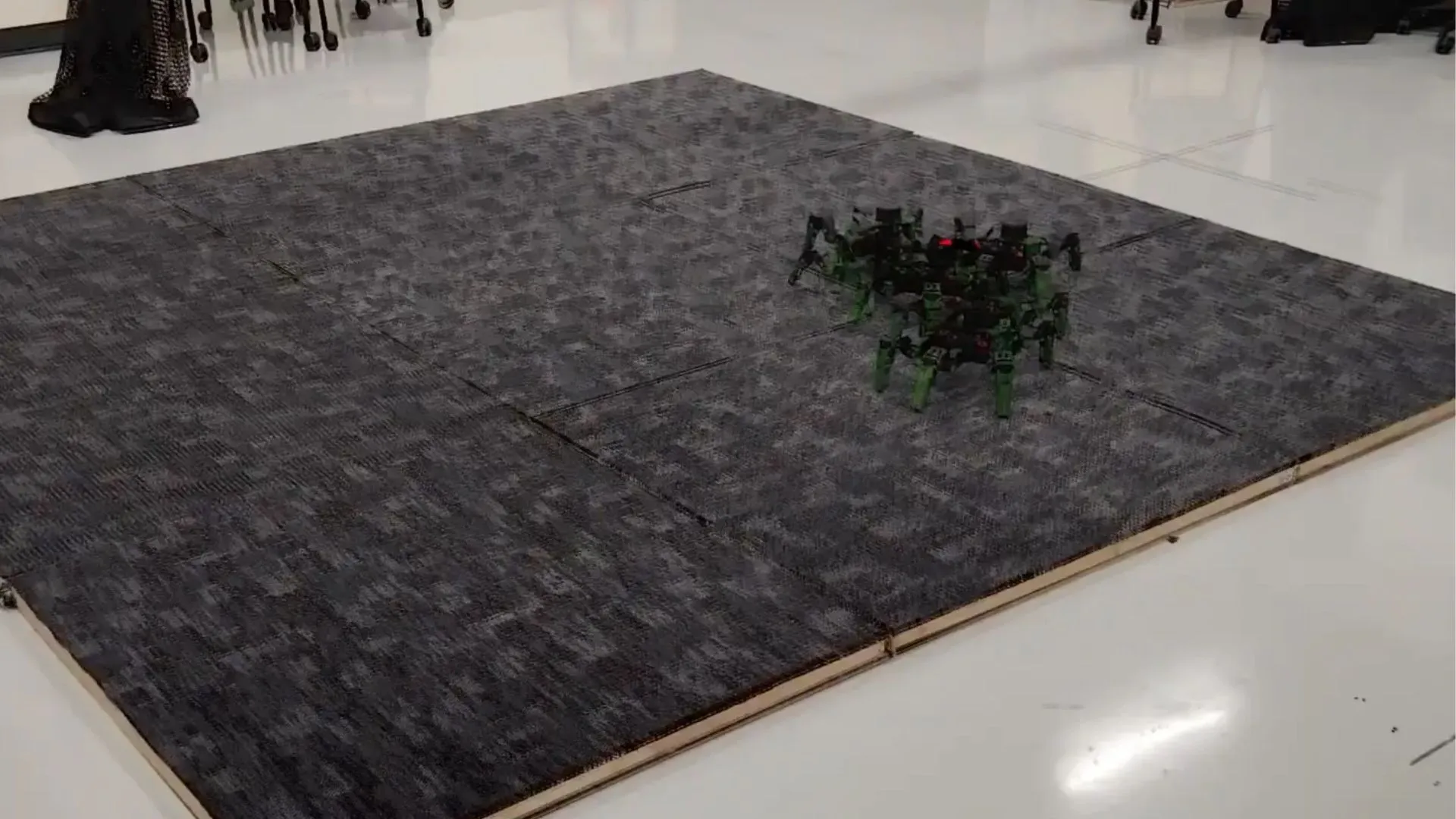
The method, called contraction-aware reinforcement learning, is designed for robots with different forms of movement, including wheeled, flying, and six-legged platforms.
The researchers said the approach could make deploying learning-based robotic systems more practical by reducing the risk of instability and costly damage during operation.
The reinforcement learning method helps robots follow desired paths while maintaining stability. Called Contraction-Aware Reinforcement Learning (CARL), the technique combines reinforcement learning with contraction theory to improve control performance and provide mathematical guarantees on how tracking errors behave.
The researchers tested the method on three different robotic platforms: a wheeled TurboBot 3 Burger, a flapping aerial drone, and a six-legged Jethexa robot. The experiments showed that CARL improved tracking performance by up to 15 percent compared with existing methods, including during tests on physical robots.
Reinforcement learning allows robots to develop control strategies through repeated interactions with their environments. The system learns from feedback, adjusting its actions to improve performance and achieve a target objective.
However, reinforcement learning does not inherently guarantee that a robot will remain stable while executing a learned policy. A robot may learn an effective way to complete a task but still exhibit unpredictable behavior or deviate excessively from its intended trajectory.
CARL addresses this challenge by integrating reinforcement learning with contraction theory, a mathematical framework used to analyze the stability of dynamic systems.
Source link