

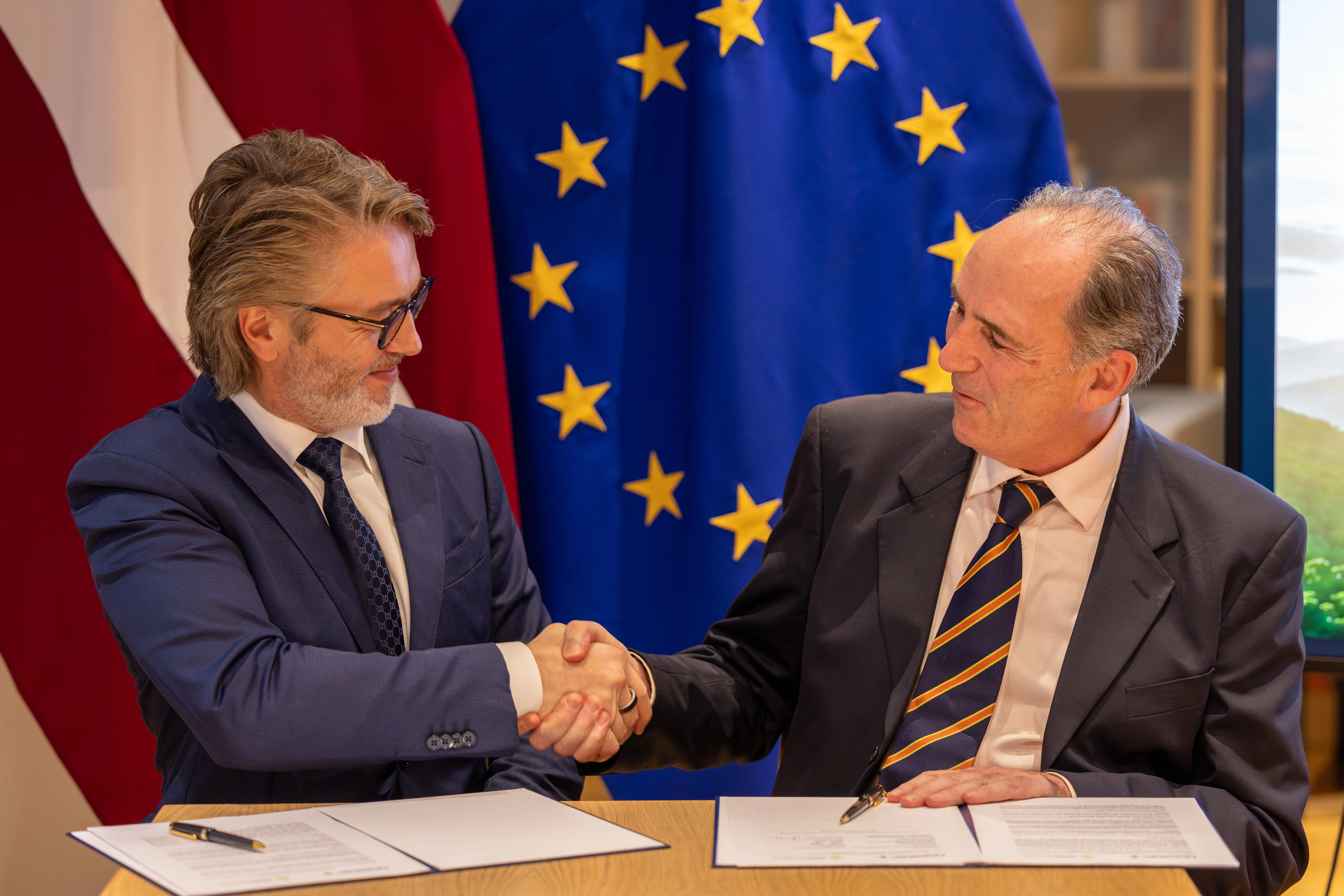
Latvian aviation fuel developer NorSAF has entered into a Memorandum of Understanding (MoU) with UK-based Nova Pangaea Technologies to build a dedicated advanced ethanol facility in Latvia, establishing a domestic feedstock supply chain for regional Sustainable Aviation Fuel (SAF) production.
Under the agreement, the facility will process locally sourced forestry residues and agricultural waste using Nova Pangaea’s proprietary REFNOVA technology. The process converts low-value biomass into industrial ethanol and biochar to serve as the primary alcohol feedstock for NorSAF’s downstream fuel processing operations.
The partnership addresses a structural vulnerability in the European Union’s SAF supply chain. While EU regulations mandate a ramp-up in SAF blending from 2% in 2025 to 6% in 2030 and 20% by 2035, current European output relies heavily on Hydroprocessed Esters and Fatty Acids (HEFA) pathways, which depend on imported feedstocks such as used cooking oil.
The proposed ethanol processing asset will supply NorSAF’s planned SAF and eSAF production facility located in the Liepāja Special Economic Zone (LSEZ).
NorSAF’s Liepāja facility is engineered to utilize KBR’s PureSAF technology – originally developed by Swedish Biofuels – to process ethanol into drop-in jet fuel via the Alcohol-to-Jet (AtJ) pathway, with commercial operations targeted for 2031.
“Europe cannot strengthen its energy security simply by reducing fossil-fuel imports. We also need to build the industrial capacity to produce the clean fuels that will replace them,” said Janis Kisiels, founder and Board Member of NorSAF.
“By tapping into Europe’s own abundant waste resources, particularly those available in the Baltic region, we can build a resilient, domestic supply chain from the ground up.”
Source link





