
This article has been reviewed according to Science X's editorial process and policies. Editors have highlighted the following attributes while ensuring the content's credibility:
A minimally invasive ultrasound-guided technique offers long-term relief for patients with carpal tunnel syndrome with fewer side effects than steroids, according to a new study published in Radiology.
Carpal tunnel syndrome occurs when the median nerve, a major nerve that runs from the forearm through a narrow space in the wrist called the carpal tunnel, becomes squeezed or compressed. It is associated with repetitive motions of the wrist and hands that lead to numbness, tingling, weakness and pain. Research has shown that the condition affects roughly 5% to 10% of the general population over their lifetimes, and incidence is rising.
Corticosteroid injection, a common treatment to reduce swelling and relieve pressure on the nerve, has limitations.
"Traditional steroid injection for carpal tunnel syndrome often provides only temporary relief, thus requiring repeats of the procedure," said study co-author Anupama Tandon, M.D., professor in the Department of Radiodiagnosis and Imaging at University College of Medical Sciences and Guru Teg Bahadur Hospital in Delhi, India. "Further, steroids carry a risk of localized skin changes, fat thinning and tendon weakening."
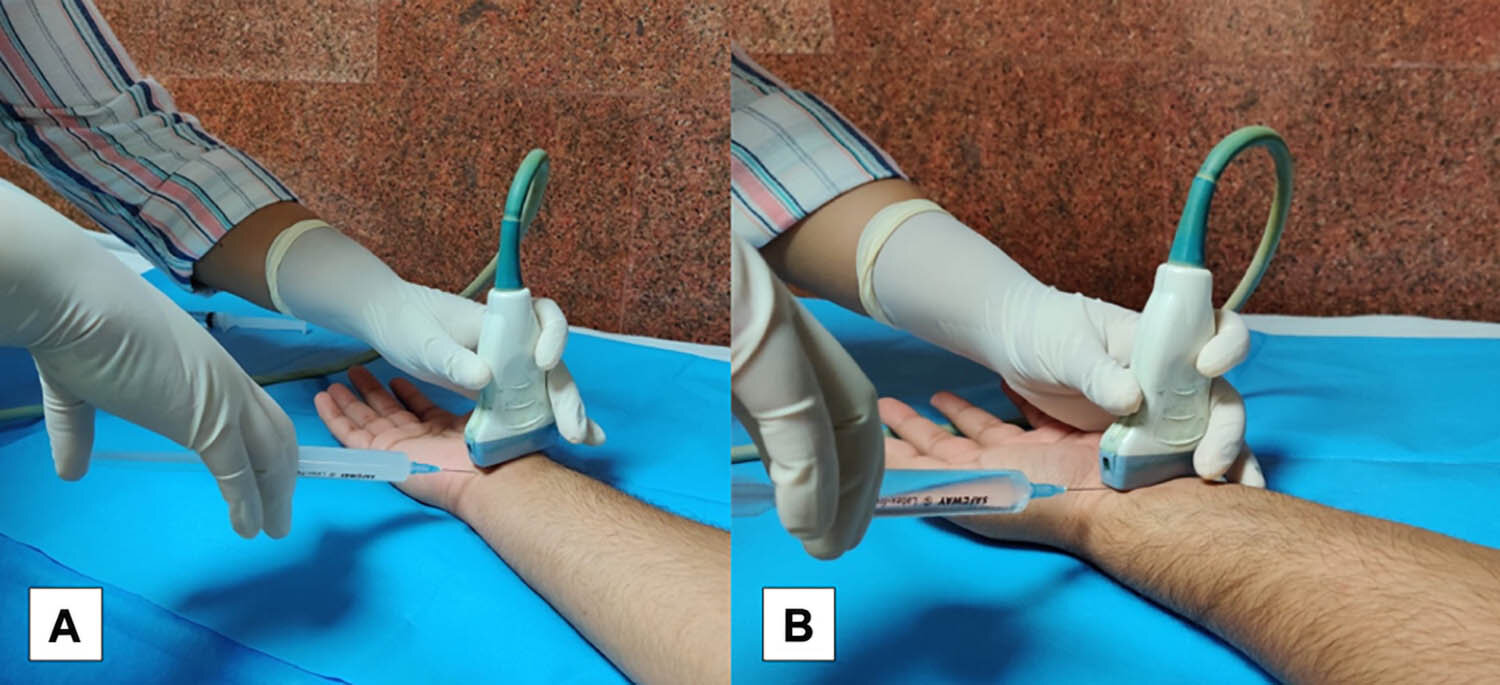
Nerve hydrodissection is a steroid-free alternative that involves careful injection of fluid around the affected nerve under ultrasound guidance to release the nerve from surrounding adhesions and improve its mobility. Hydrodissection is generally used in conjunction with steroid treatment, but little is known about its effectiveness as a stand-alone treatment.
Source link





