This article has been reviewed according to Science X's editorial process and policies. Editors have highlighted the following attributes while ensuring the content's credibility:
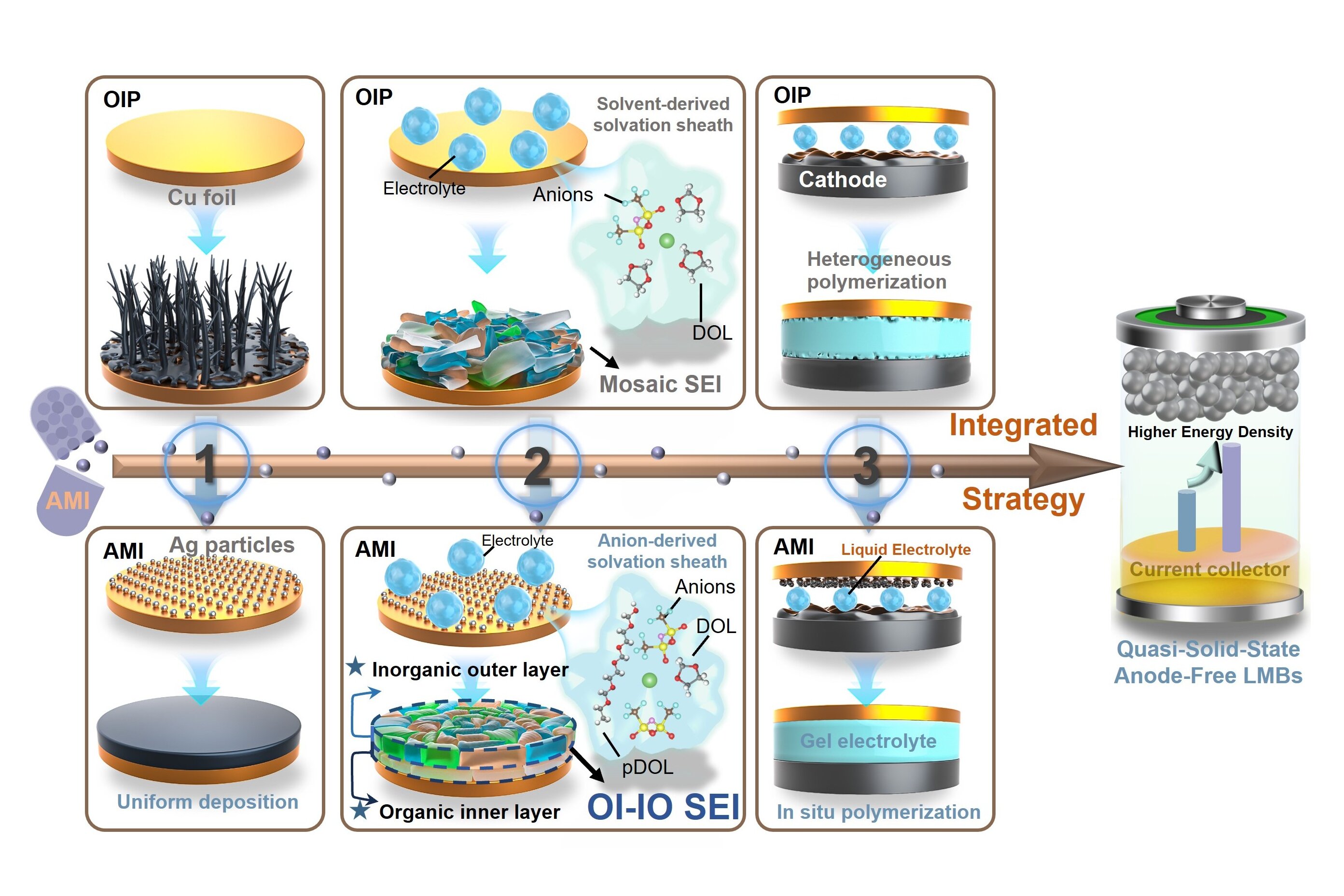
A research team at The Hong Kong University of Science and Technology (HKUST) has developed a dynamic integrated interface engineering strategy that enhances the energy density and stability of anode-free lithium metal batteries by reconfiguring key battery interfaces.
A pouch cell using the strategy achieved a specific energy of 467 Wh kg⁻¹, comparable to conventional commercial batteries. A full coin cell retained 90% of its capacity after 200 cycles. The study opens a new pathway toward lighter and longer-lasting next-generation batteries.
The study was led by professor Shao Minhua, Cheong Ying Chan Professor of Energy Engineering and Environment and head and chair professor of the Department of Chemical and Biological Engineering (CBE) at HKUST. Other team members, all from Shao's research group in the CBE department, include postdoctoral fellows Dr. Chen Yunyi (first author) and Dr. Lu Siqi, former postdoctoral fellow Dr. Qian Xitang, 2026 Ph.D. graduate Dr. Lyu Yuxiang and current Ph.D. students Qiu Yican, Zhou Siyu and Lan Xinyi.
This research was recently published in Nature Communications under the title "Highly stable quasi-solid-state initially-anode-free lithium metal batteries enabled by dynamic integrated interface engineering."
Lithium metal is regarded as a promising material for next-generation batteries because of its high theoretical specific capacity and low reduction potential. Anode-free cells use a bare copper (Cu) current collector instead of a lithium metal anode, maximizing energy density and simplifying manufacturing.
Source link