
This article has been reviewed according to Science X's editorial process and policies. Editors have highlighted the following attributes while ensuring the content's credibility:
Most electricity is generated by using heat to produce steam, which then turns a turbine. Although this approach performs exceptionally well in the high-temperature, superheated-steam regime, we currently lack widely applicable technologies that can exploit the much more abundant resource of low-temperature heat.
This heat is released into the environment by industry, buildings, data centers, humans and other sources and is even produced when sunlight warms an ordinary surface. The individual temperature differences may be relatively small, but the enormous quantity and widespread availability of this heat make it an important potential source of sustainable electricity.
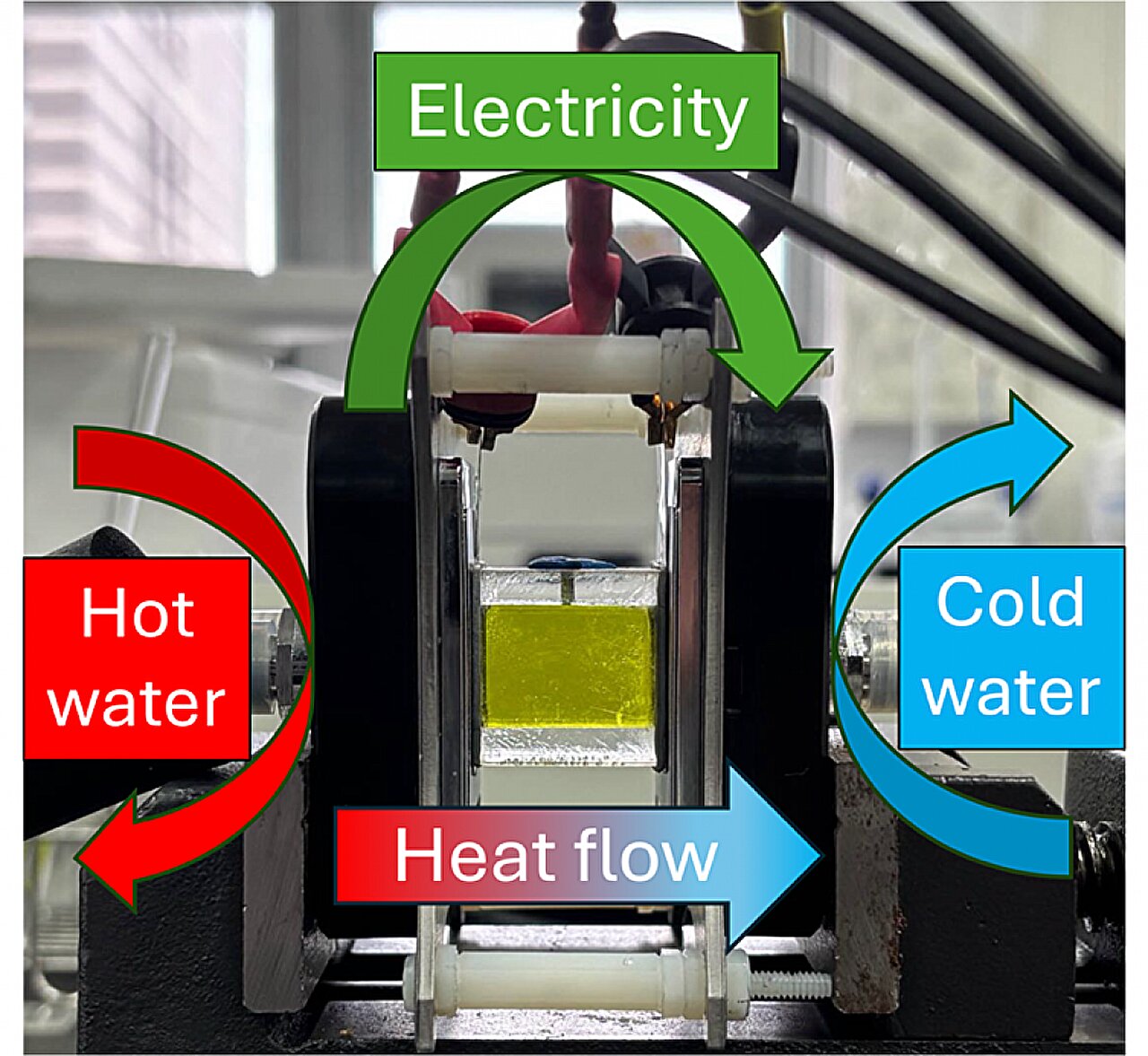
Thermogalvanic cells, or thermocells for short, offer a potentially simple and sustainable solution. These devices use two electrodes and a water-based electrolyte to convert a temperature difference directly into electricity. They do not require any moving mechanical parts.
Unlike many conventional solid-state thermoelectric devices, which can depend on costly, scarce and toxic elements, thermocells can be constructed from comparatively abundant and sustainable materials.
However, this abundance of water also creates a fundamental problem. Water transfers heat readily, particularly when temperature differences cause the liquid to circulate. This convection can carry large quantities of heat directly from the hot side of the device to the cold side without generating additional electricity.
Efficiency is the ratio of electricity produced to heat transferred; too much heat transfer will remove the temperature gradient, lowering electricity production.
Source link





