This article has been reviewed according to Science X's editorial process and policies. Editors have highlighted the following attributes while ensuring the content's credibility:
Neodymium magnets are among the world's strongest permanent magnets. Made from neodymium, iron and boron, they are used in electric vehicles, wind turbines and electronic products such as speakers, smartphones and hard drives. Global demand for permanent magnets is rising, with estimated annual growth rates of up to 8.3%. This makes it essential to recycle scarce rare earth elements such as neodymium, although the process is highly complex.
Neodymium must be extremely pure before it can be reused in new magnets. Developing an economically viable process that meets this requirement is challenging. As a result, very few magnets are recycled in Europe. Instead, most are collected and shipped to China for reprocessing. About 90% of materials such as neodymium are subsequently reimported.
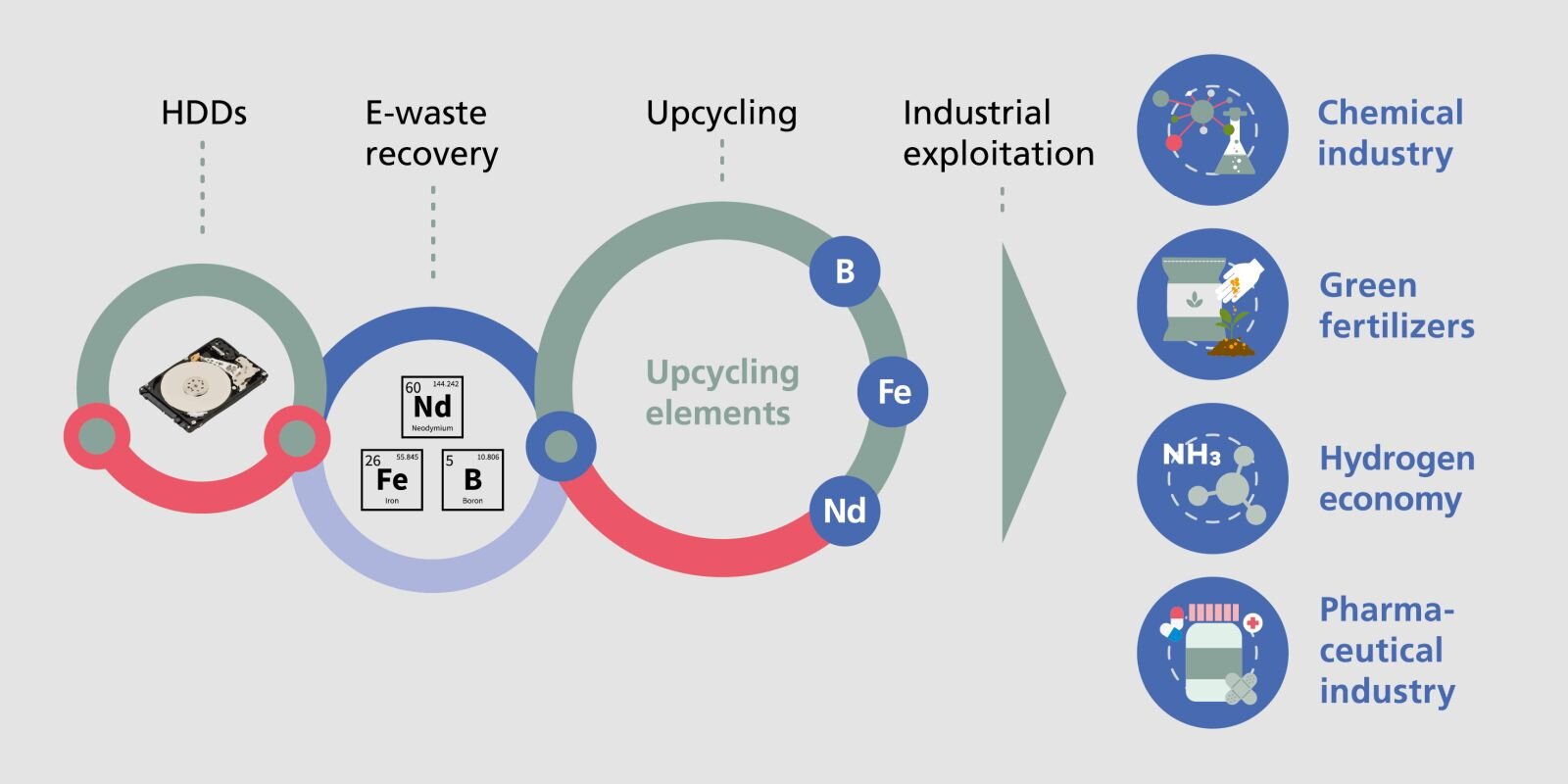
Together with partners in the EU project NEO-CYCLE, Sandra Pavón is developing a process for extracting valuable raw materials in Europe. "We aim to recover rare earth elements from electronic waste and use them in high-value products such as green fertilizers and in the production of pharmaceuticals," says Pavón, who heads the Hydrometallurgical Recycling and Raw Materials Chemistry group at Fraunhofer IKTS in Freiberg. "This will close the materials loop, protect the environment and help reduce global dependence on strategic resources."
A range of magnets can be upcycled in this way. The NEO-CYCLE project focuses on hard disk drives (HDDs) from discarded computers and laptops, which contain neodymium magnets.
Source link