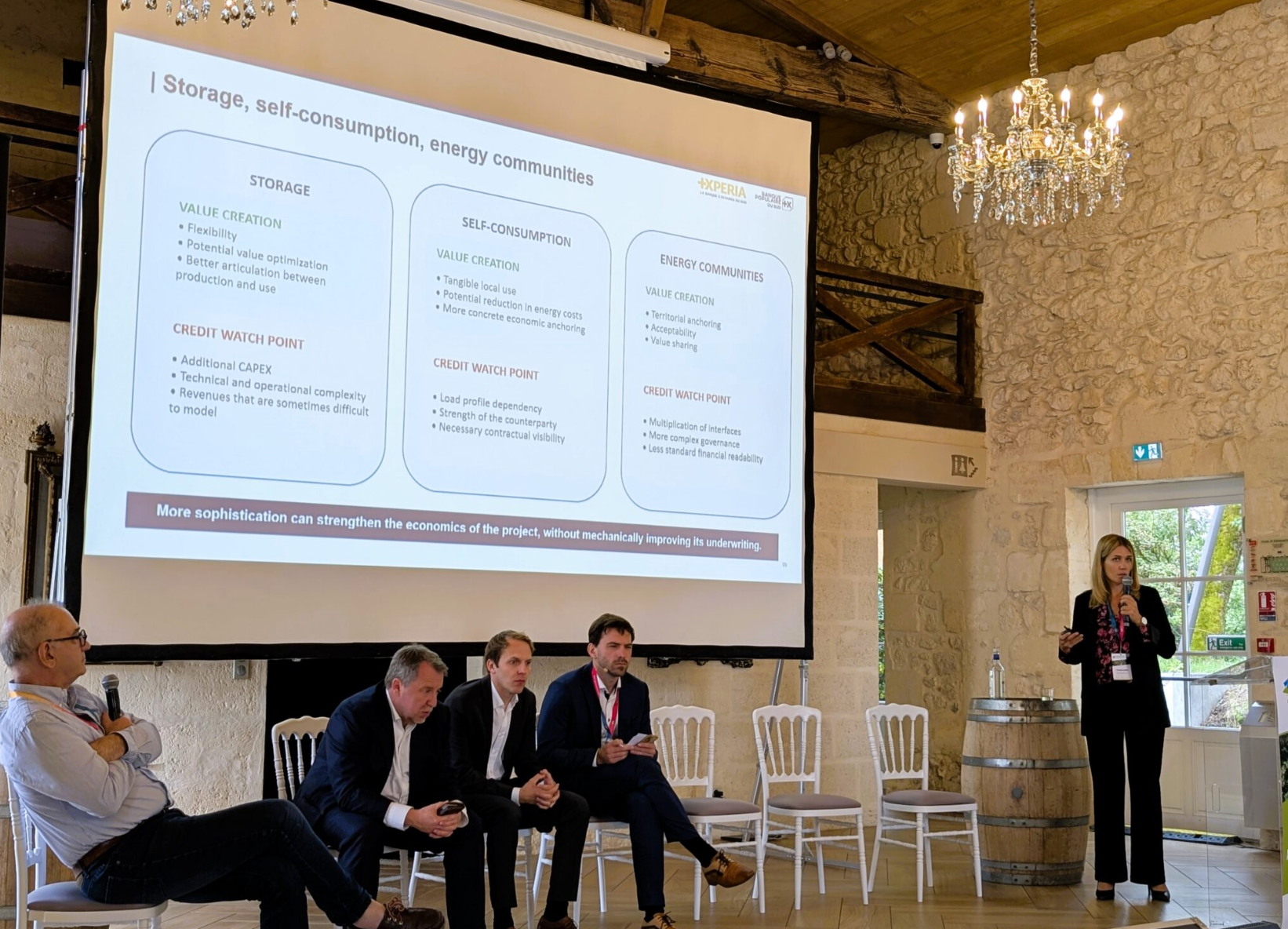
“Financing an agrivoltaic project is not simply a matter of financing a solar power plant. For banks, this hybrid asset must demonstrate its ability to generate electricity while maintaining a viable agricultural activity,” said Laetitia Limongi, renewable energy structured finance manager at Banque Populaire du Sud, speaking at the AgriVoltaics Industry Forum Europe 2026, held in Bordeaux, France, on October 13 and 14, 2026.
In a less favorable financial environment, this complexity is weighing on the bankability of projects and prompting stakeholders to seek new sources of revenue and capital.
Rising interest rates are increasing the cost of debt, while investors can now choose between renewable energy projects and other investments, such as bonds, whose risk-adjusted returns may prove more attractive. Their return requirements are rising, potentially undermining the financial viability of some projects.
According to Jochen Hauff, founder of the Think Resiliency think tank, “reduced visibility over electricity revenues is adding to this pressure on financing.” He notes that “curtailment, periods of negative prices, difficulties connecting to the grid and regulatory changes make cash flows harder to predict.” On the agricultural side, meanwhile, rising diesel, fertilizer and labor costs are squeezing margins, while farmers must also finance their equipment.
Under these conditions, banks closely examine four criteria when assessing an agrivoltaic project: revenue predictability, the allocation of contractual responsibilities, the sustainability of the agricultural activity and the project’s resilience under adverse scenarios. A fall in revenue or an increase in operating costs must not jeopardize debt repayment.
Source link