

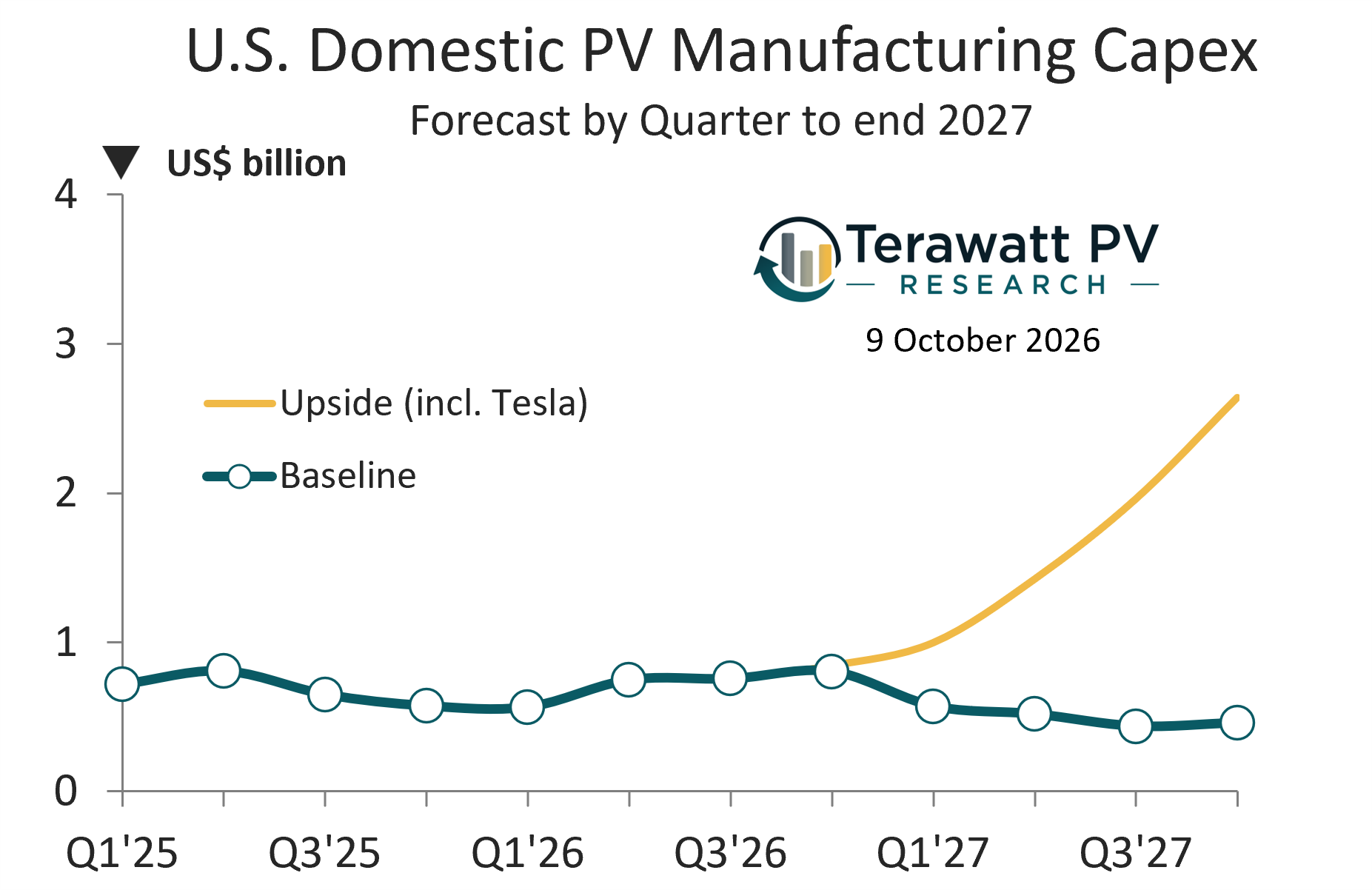
In the final part of the special Austin-debrief series of articles this week in pv magazine, I review the outlook for U.S. solar manufacturing capital expenditure (capex) by quarter to the end of 2027.
For reference, Part 1 of the series addressed domestic U.S. module production forecasting, capturing themes covered at the recent Solar Manufacturing USA 2026 event in Austin, Texas on 22-23 September, with Part 2 looking at cell production by quarter to the end of 2027.
The analysis underpinning the data and conclusions within each of the articles is taken directly from the new Solar Manufacturing USA Quarterly report.
The bottom-up analysis from more than 50 companies in the U.S. manufacturing space for 2027 shows that solar PV manufacturing capex is forecast to see a year-on-year decline compared to the final numbers expected for 2026 (circa. $3 billion).
U.S. solar manufacturing capex peaked in 2024 (almost $4 billion), with more than half this spending coming from just two companies; First Solar and Qcells.
The forecast for 2027 solar manufacturing capex reveals that more than 70% of the announcements made by companies over the past 12-18 months (that would have necessitated spending in 2027) are either unfunded or stranded.
Waiting in the wings however is potentially the most disruptive play ever to be seen in the history of U.S. solar PV manufacturing; Tesla’s mega-sized ingot-to-module manufacturing plans.
It is getting close to factoring in Tesla’s manufacturing capex plans to the analysis that forms the basis of the new Solar Manufacturing USA Quarterly report and indeed using the capex phasing to drive the incremental production volumes across the silicon-based value-chain in the United States.
Source link





