

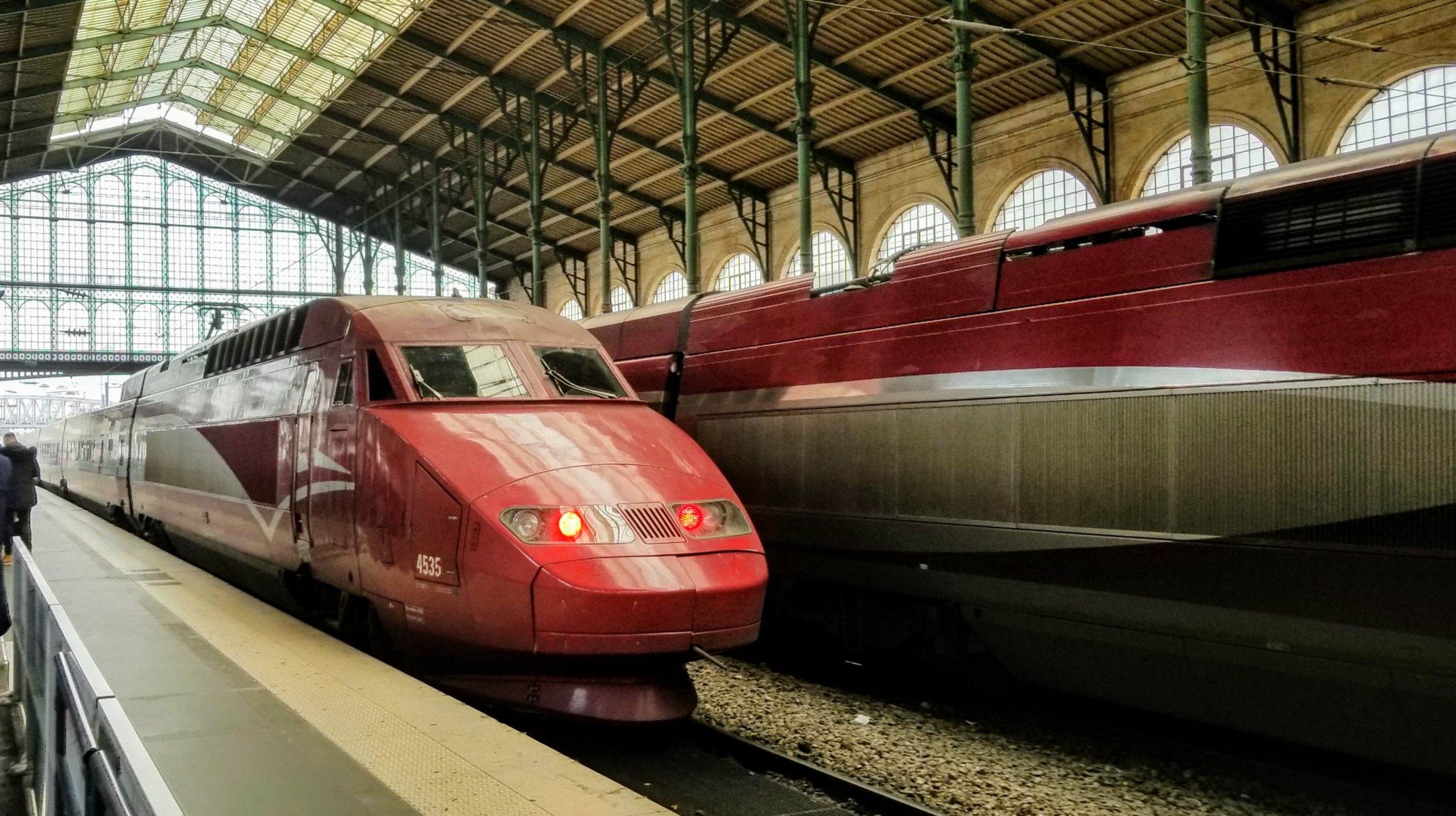
Higher speed is the main cause of mobility growth. When people go faster, they will travel further. This is the shortest summary of the history of passenger mobility.
An illustrative example is the high-speed rail connection between Paris and Lyon. After its opening in 1981, commuters were able to travel daily between these two cities. This was not possible before.
More generally, the rise in both ownership and speed of the car after the second World War, allowed for increasing distances from home to work, to school, shops, hospitals and friends.
The average distance a person travels per day tripled since 1960: from 10 to 30 (Dutch data). This growth is entirely caused by car use, being from door-to-door faster than both public transport and the bicycle.
Many empirical studies underpin that speed is the main cause of mobility growth. Total travel time is roughly constant: a person in a city or country travels on average 1.1 hour per day. When travel time is constant, higher speed inevitably leads to longer trips.
However, conventional wisdom makes us believe in other causes of mobility growth. Such as, rising income, decreasing costs of car driving, working from home or changing preferences in favour or against cars. The dominance of speed is overlooked in standard views by traffic engineers and politicians alike. Even statistics on average speed in urban and rural areas are scarce. This omission hides important consequences for transport policy. Here are three:.
Source link