
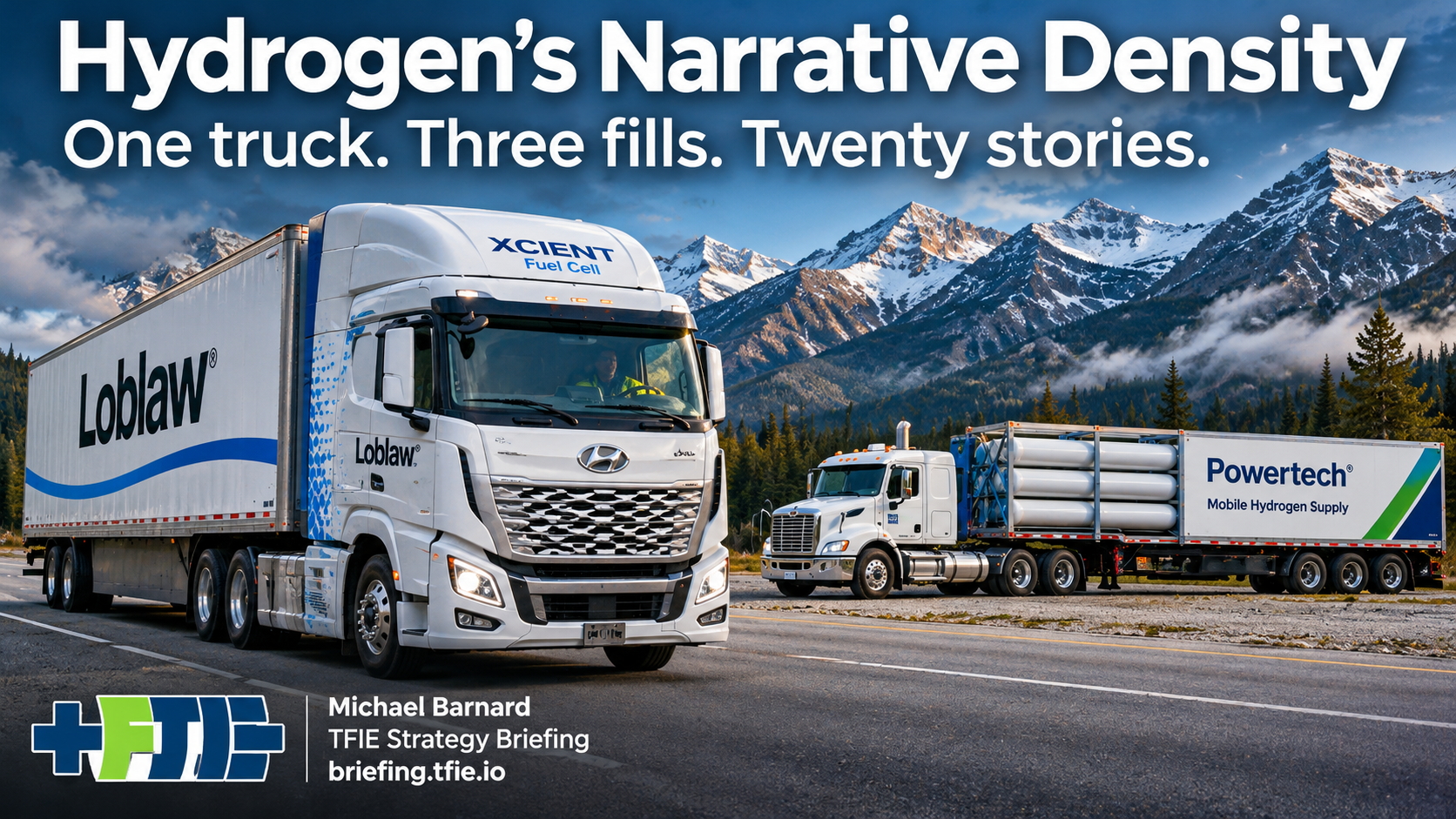
Loblaw’s Hyundai XCIENT hydrogen fuel-cell truck crossed the Canadian Rockies from Vancouver to Calgary on November 18. The 1,046 km journey attracted enthusiastic coverage as a Canadian heavy-freight milestone. It also illustrated an infrastructure problem that gets much less attention than a successful crossing: the hydrogen had to be brought to the truck.
The Edmonton Region Hydrogen Hub announcement describes three fuelling occasions. The truck started with a fill at HTEC’s Vancouver hydrogen station, then refuelled at Sicamous and Golden from a mobile tube trailer supplied by Powertech. Other project partners arranged the trailer’s transportation and logistics. The tractor hauling the mobile fuel was almost certainly diesel-powered. The public account did not include that support truck’s fuel consumption, emissions or cost.
The hydrogen truck completed the trip, and the project partners demonstrated that a mobile hydrogen supply operation could support a freight vehicle across the mountains. Those are achievements, albeit not novel ones. A fleet operator considering hydrogen needs a more demanding result: dependable places to refuel on repeated journeys, delivered hydrogen prices, vehicle availability, maintenance requirements and the complete cost of the support system. Moving a fuel trailer between planned stops is not the same thing as operating a commercial refuelling corridor.
The three fills also complicate the familiar argument that hydrogen offers heavy trucks a decisive range advantage. Hyundai’s fuel-cell truck has marketed range specifications, but the crossing did not establish that range advantage against battery-electric heavy trucks. Battery trucks had completed demanding Alpine journeys years earlier, and commercial electric freight operations have progressed since then.
Source link