This article has been reviewed according to Science X's editorial process and policies. Editors have highlighted the following attributes while ensuring the content's credibility:
Hydrogen is expected to become an important energy carrier of the future, particularly for industrial applications. But this requires climate-friendly technologies that split water into hydrogen and oxygen. One major challenge is cost: PEM water electrolysis requires components that can withstand highly corrosive conditions. Some of these components are coated with platinum.
Experiments at TU Wien have now taken a closer look at the electrochemical processes occurring in such platinum coatings. The results show that, if the coating is designed correctly, significantly less platinum is needed than is commonly used today. This could make electrolysis noticeably less expensive.
The research is published in the journal ACS Applied Materials & Interfaces.
The basic principle of water electrolysis is simple: Electric current is used to split water molecules. At one electrode, oxygen molecules (O₂), positively charged hydrogen ions (protons) and electrons are produced. The protons migrate through a membrane to the second electrode, where they combine with electrons to form hydrogen molecules (H₂).
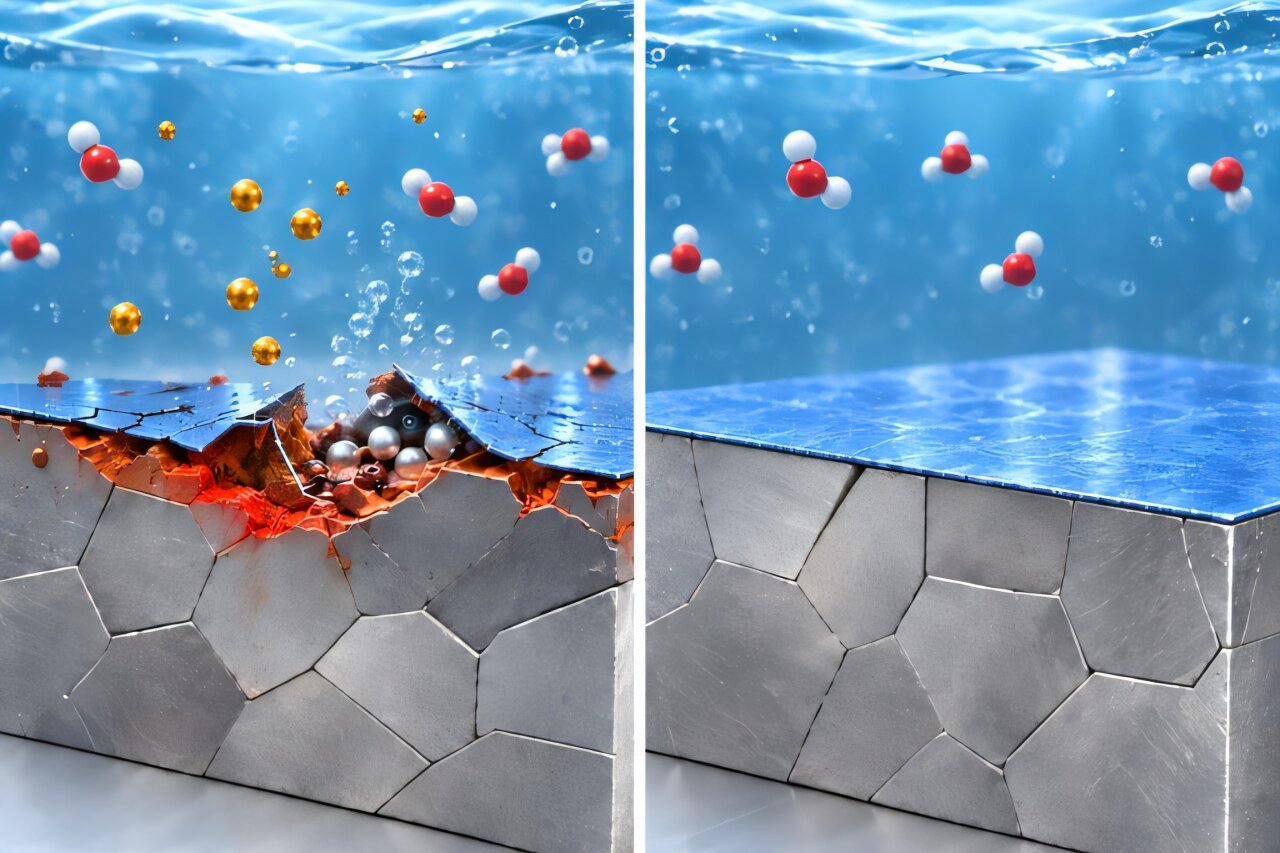
The technical implementation, however, is more complicated. "Electrolysis creates a chemical environment that is damaging to many metallic components. Metal can dissolve, while oxide layers can form at the same time and impede the flow of electric current," explains Helmut Riedl-Tragenreif from the Institute of Materials Science and Technology at TU Wien.
"If the system is to remain operational for a long time, the different components have to be carefully matched to one another.
Source link