
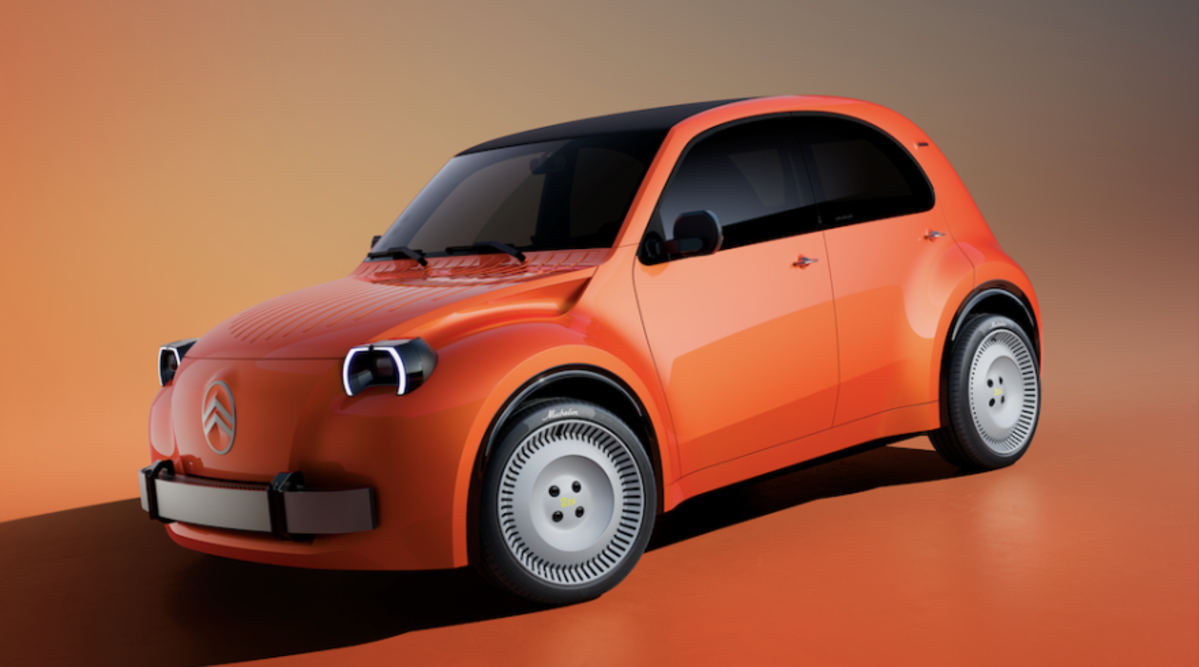
After World War II, manufacturing on the Continent was severely degraded. Automakers in France, Germany, and Italy began producing cars that were simple and cheap — cars like the Isetta, Messerschmidt, and Fiat Cinquecento. In 1949, the Citroen 2 CV went on sale, a car that looked like it was made from recycled Quonset huts. It was powered by a 9 horsepower, air cooled, horizontally opposed, 375 cc, two cylinder engine. The cooling fan was attached directly to the crankshaft and the car featured enormous suspension travel that allowed it to soak up the potholes in France’s bombed-out roads.
The whole car, including the engine, was so simple that owners could repair them themselves. They weren’t much to look at, but they were cheap, sturdy, and better than walking. Between 1949 and 1990, Citroen sold more than 5 million of the little beauties. Toward the end, the engine size was increased to 602 cc and output went up to a lofty 29 horsepower! There is still an active group of 2 CV owners who race their cars. It is a sight to see them slugging it out on track, where “acceleration” is measured in furlongs per fortnight rather than 0 to 100 km/h times.
Now the 2 CV is back, this time in battery electric form. In a press release , Stellantis said it will reveal its new 2 CV Concept at this year’s Paris Motor Show. It calls the concept car “a modern, ingenious ,and refreshing response to the mobility challenges of tomorrow.
Source link