This article has been reviewed according to Science X's editorial process and policies. Editors have highlighted the following attributes while ensuring the content's credibility:
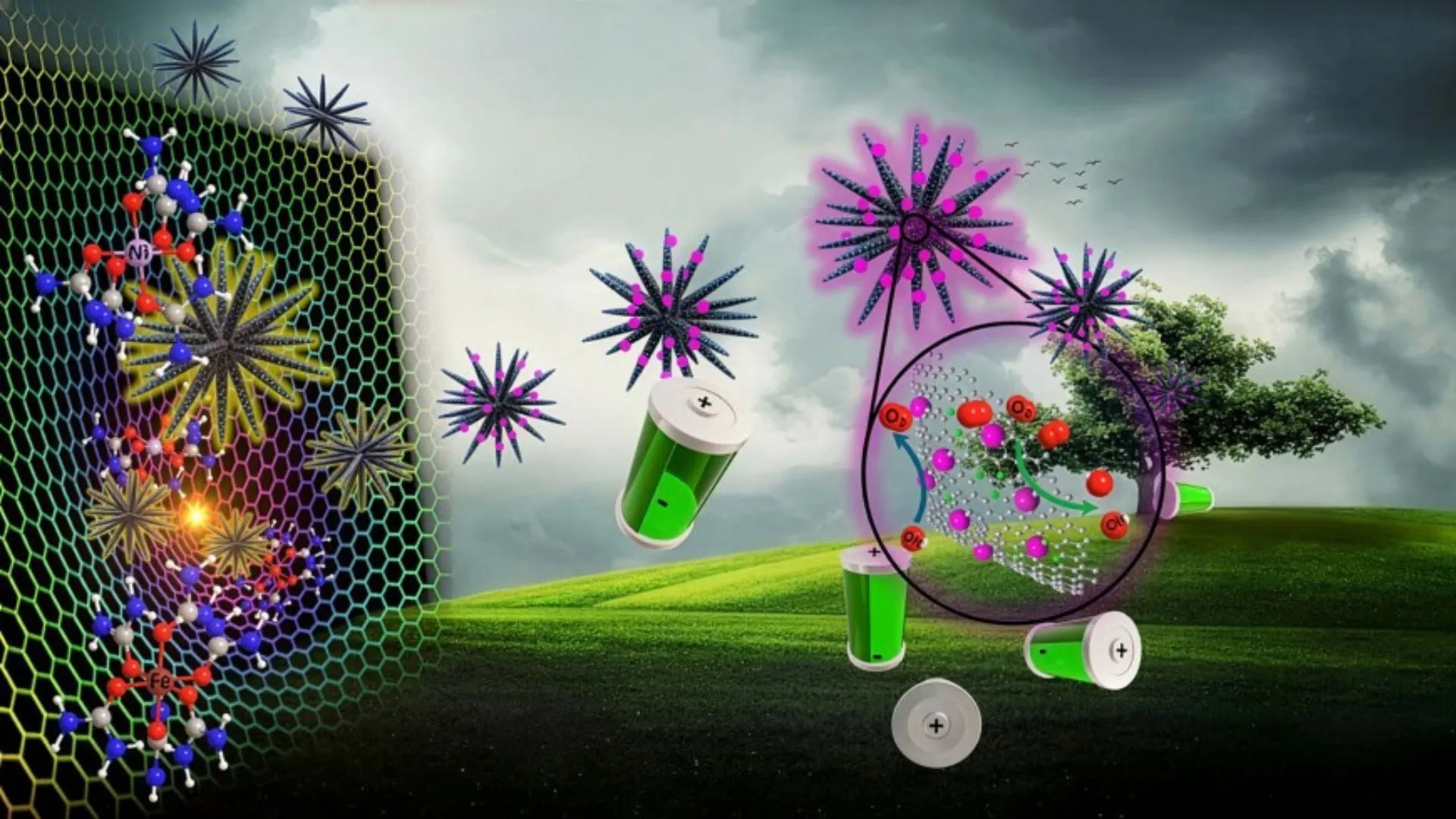
A new battery binder—the glue that holds together a battery's internal parts—could make lithium-ion batteries more environmentally friendly and easier to recycle without sacrificing performance.
By creating a binder that is fluorine-free and dissolves in water, engineers at the University of California San Diego showed that they can simplify both battery manufacturing and recycling by cutting down on toxic ingredients, energy use and waste. Batteries made with the new binder performed just as well as conventional lithium-ion batteries.
The advance, published Oct. 9 in Nature Communications, was a collaboration between the lab of Zheng Chen, a professor in the Aiiso Yufeng Li Family Department of Chemical and Nano Engineering at the UC San Diego Jacobs School of Engineering, and John Muldoon at Toyota Research Institute of North America.
The binder is the gluelike material that gets mixed with electrode powders to form solid layers, which are then stuck to thin metal foils inside the battery. These layers are stacked and rolled to create a battery. Although the binder makes up a small fraction of a battery's weight, it has a big impact on how the battery is manufactured and recycled.
Lithium-ion batteries typically use a fluorine-containing binder because it produces strongly adhesive, uniform electrodes that remain stable throughout numerous charging and discharging cycles. That enables batteries to perform better and last longer.
"But that same stability also makes batteries much harder to recycle," said Chen, whose Sustainable Materials and Energy Lab at UC San Diego specializes in developing efficient and environmentally friendly methods to recover and restore materials from spent lithium-ion batteries.
Source link