This article has been reviewed according to Science X's editorial process and policies. Editors have highlighted the following attributes while ensuring the content's credibility:
A collaboration between researchers at Cornell and City University of Hong Kong has produced a new computational tool that could help overcome one surprisingly persistent obstacle to the efficient production of so-called green hydrogen: bubbles.
Green hydrogen, produced by splitting water using electricity from renewable sources, offers a promising alternative to fossil fuels, particularly for industries such as steelmaking and chemical manufacturing.
The researchers developed a computer model that reveals how bubbles forming during water electrolysis interfere with the process and increase the energy required to produce hydrogen. Their findings, published Nov. 9 in the journal EES Catalysis, identify a critical bubble size beyond which energy losses increase dramatically, providing a potential roadmap for designing more efficient hydrogen-producing equipment.
The study was led by Lenan Zhang, assistant professor in Cornell's Sibley School of Mechanical and Aerospace Engineering, and Weihong Li, associate professor of mechanical engineering at City University of Hong Kong. Muhan Zhang of the City University of Hong Kong and Kaiyu Li of Cornell, who contributed equally to the research, are co-first authors.
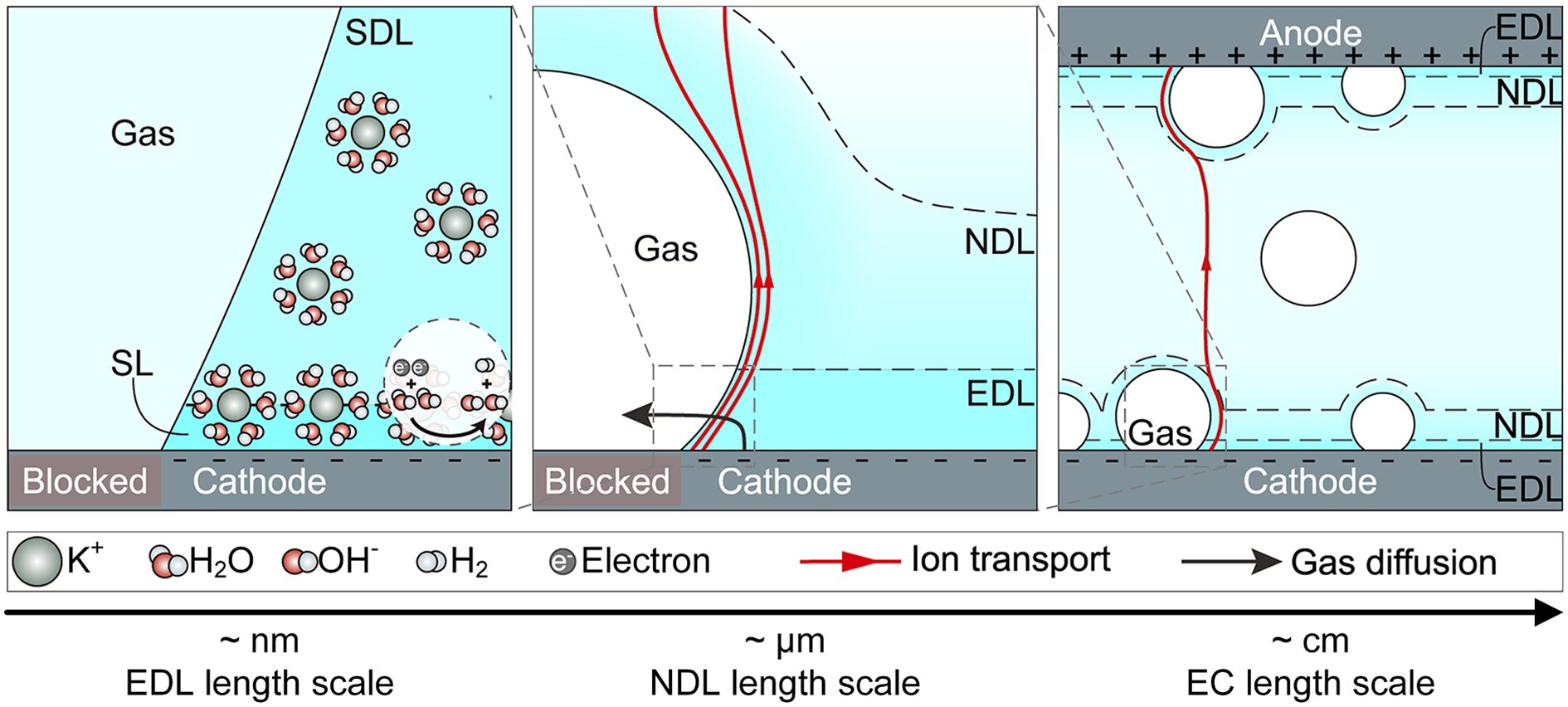
One challenge to efficient production is that the water electrolysis process creates its own obstacles. As electricity passes through an electrolyzer, hydrogen and oxygen bubbles form on the electrodes where the chemical reactions occur. Those bubbles can cover active reaction sites, prevent liquid from reaching the electrode surface and interfere with the movement of electrically charged particles, forcing the system to consume additional energy.
Source link