This article has been reviewed according to Science X's editorial process and policies. Editors have highlighted the following attributes while ensuring the content's credibility:
Predicting how much energy individual homes consume is a persistent challenge for researchers and urban planners. Models often group houses into broad categories based on their age or other characteristics, overlooking differences in their size, construction and energy performance.
A new approach developed by Concordia researchers with colleagues at McGill University, Natural Resources Canada and the National Research Council Canada could make these predictions considerably more accurate. As described in the journal Energy & Buildings, the model offers a better way to assess energy use across residential neighborhoods and identify opportunities for reducing consumption.
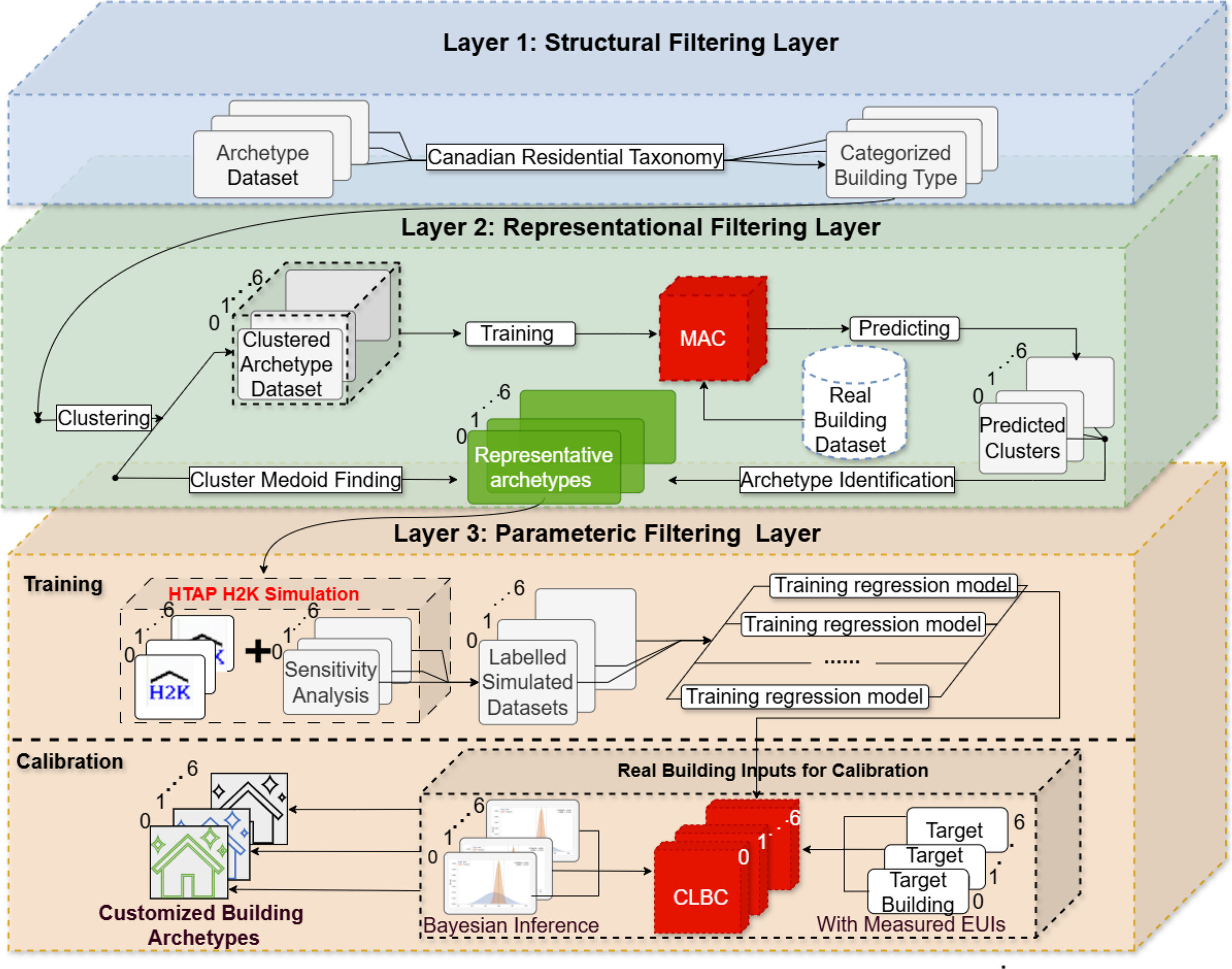
Their method, called Three-Layer Filtering, progressively refines how buildings are represented in urban building energy modeling. These computer models help researchers understand energy consumption across neighborhoods and cities, and can inform decisions about building efficiency and decarbonization, the researchers say.
The team tested its model on 100 randomly selected detached houses in Montreal that use electric baseboard heating. They found their approach reduced the average error in predicting individual homes' annual electricity consumption from 80.7% when using existing methods to just 4.3%, providing more accurate data for urban planners and utility officials.
The first step narrows the analysis to comparable buildings, avoiding comparisons between fundamentally different types of homes. The second groups houses according to several characteristics, including construction year, floor area, number of stories, volume and estimated energy performance, rather than relying on age alone.
Source link