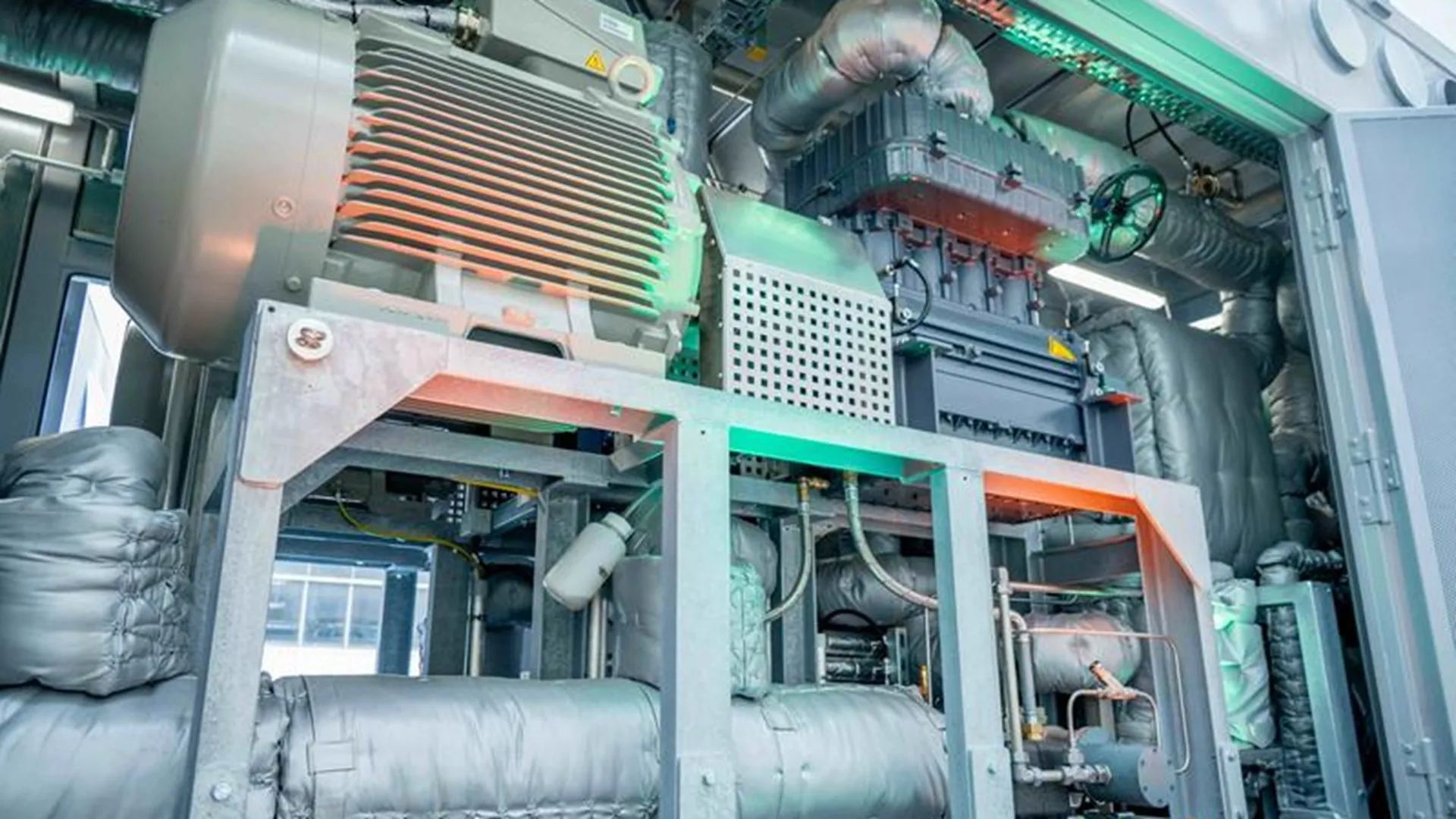
Engineers have just unveiled a powerful 1.2-megawatt (MW) heat pump that can convert waste heat from paper production into industrial steam at temperatures of around 248 degrees Fahrenheit (120 degrees Celsius).
The heat pump was made by a research team involving the Fraunhofer Institution for Energy Infrastructures and Geotechnologies (IEG) in Germany. It was tested at a paper mill run by Felix Schoeller GmbH & Co. KG in Weißenborn, Hesse. The trial was conducted under the EU-funded PUSH2HEAT project.
The system uses otherwise wasted heat to produce steam for industrial processes. According to the institute, it could reduce carbon dioxide (CO2) emissions by up to 600 tons annually. This means it could also lower natural gas reliance.
“Industrial companies need solutions that combine climate protection, energy supply security, and competitiveness,” Reuven Paitazoglou, the project’s manager, said. “High-temperature heat pumps make it possible to economically harness previously unused energy sources for production.”
Industrial processes operate steam systems well above atmospheric pressure at temperatures exceeding 212 degrees Fahrenheit (100 degrees Celsius). In most cases, producing this steam involves burning fossil fuels, especially natural gas.
On the other hand, fossil fuel combustion releases CO2 and other greenhouse gases that drive climate change and air pollution. To address this challenge, the team developed a two-stage heat pump capable of upgrading low-temperature waste heat into usable industrial steam.
The system captures excess heat from paper production at temperatures ranging from 86 to 158 degrees Fahrenheit (30 to 70 degrees Celsius). It then raises the temperature to approximately 248 degrees Fahrenheit.
Source link