Picture a buoyant triangular steel or concrete platform roughly the dimensions of a baseball field. Now place a wind turbine taller than the London Eye on top, connect mooring lines to the seabed and power cables to the grid, and you’ve got a floating wind turbine.
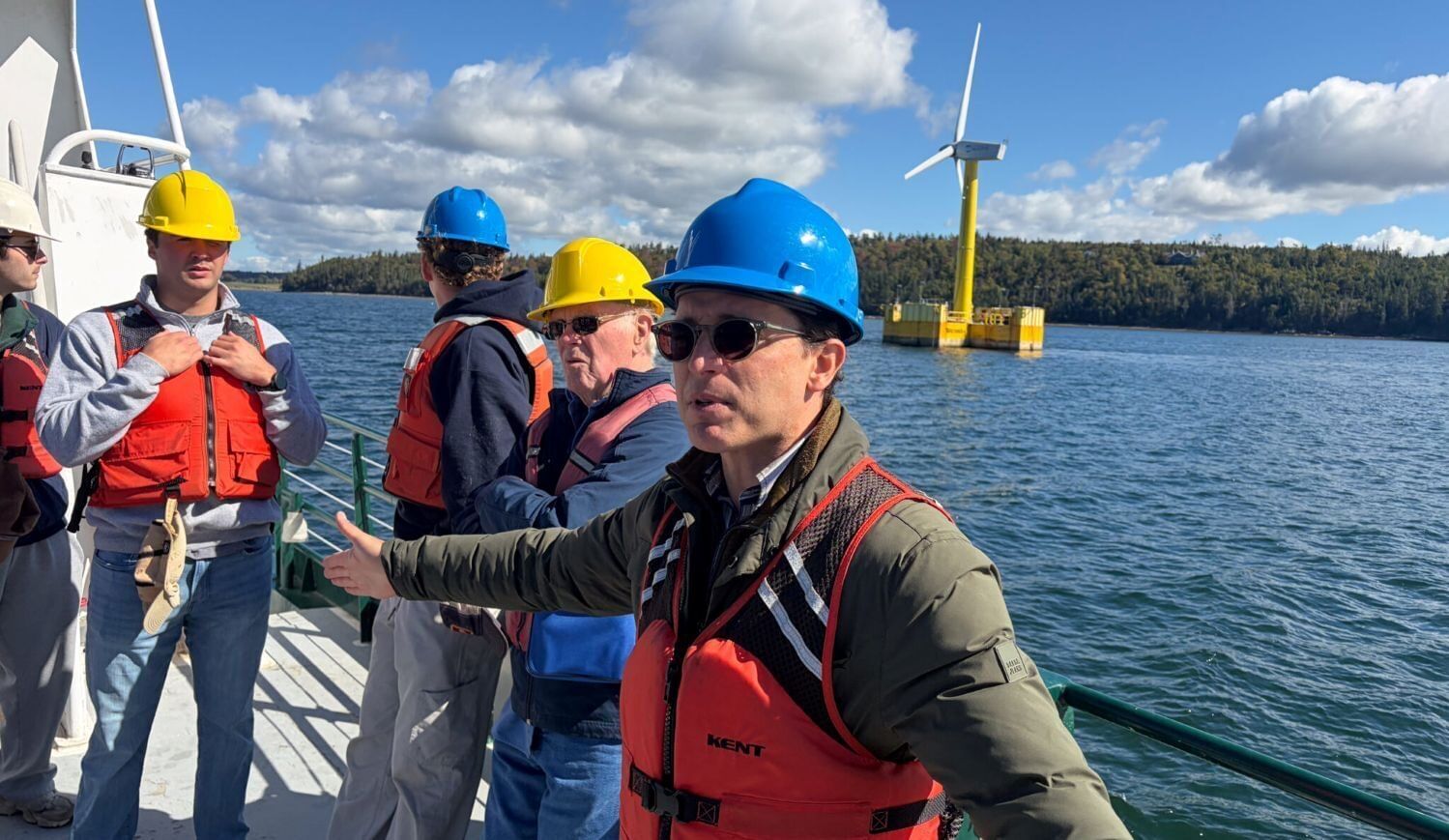
This fantastical-sounding technology is real. At demonstration and small-scale projects in Europe, Asia, and a single U.S. site in Maine, floating turbines are producing power. Multiple different platform designs have been field tested, from the aforementioned triangle to a single massive cylinder. But plans to build larger projects of 10 or more turbines, each capable of powering a neighborhood, have lagged behind early projections.
The business case for floating turbines, as opposed to their fixed-bottom counterparts, boils down to two points: They can do their thing making power farther from shore, where the high winds are and the people generally aren’t. In some places like California, the coastal shelf slopes so steeply that floating wind has been seen as the only option. But the engineering challenges of keeping buoyant, vibrating skyscrapers stable — and the high costs of solving them — serve as a potent counterweight.
An army of researchers, engineers, and policymakers across the globe have thrown themselves at the problem. In the U.S., the Biden administration declared a national goal of installing 15 gigawatts — up from zero — of floating wind turbines by 2035, comparing it to efforts to put a man on the moon.
While such announcements often have a nationalistic, competitive edge , a robust network of collaboration has driven the development of this technology.
Source link