
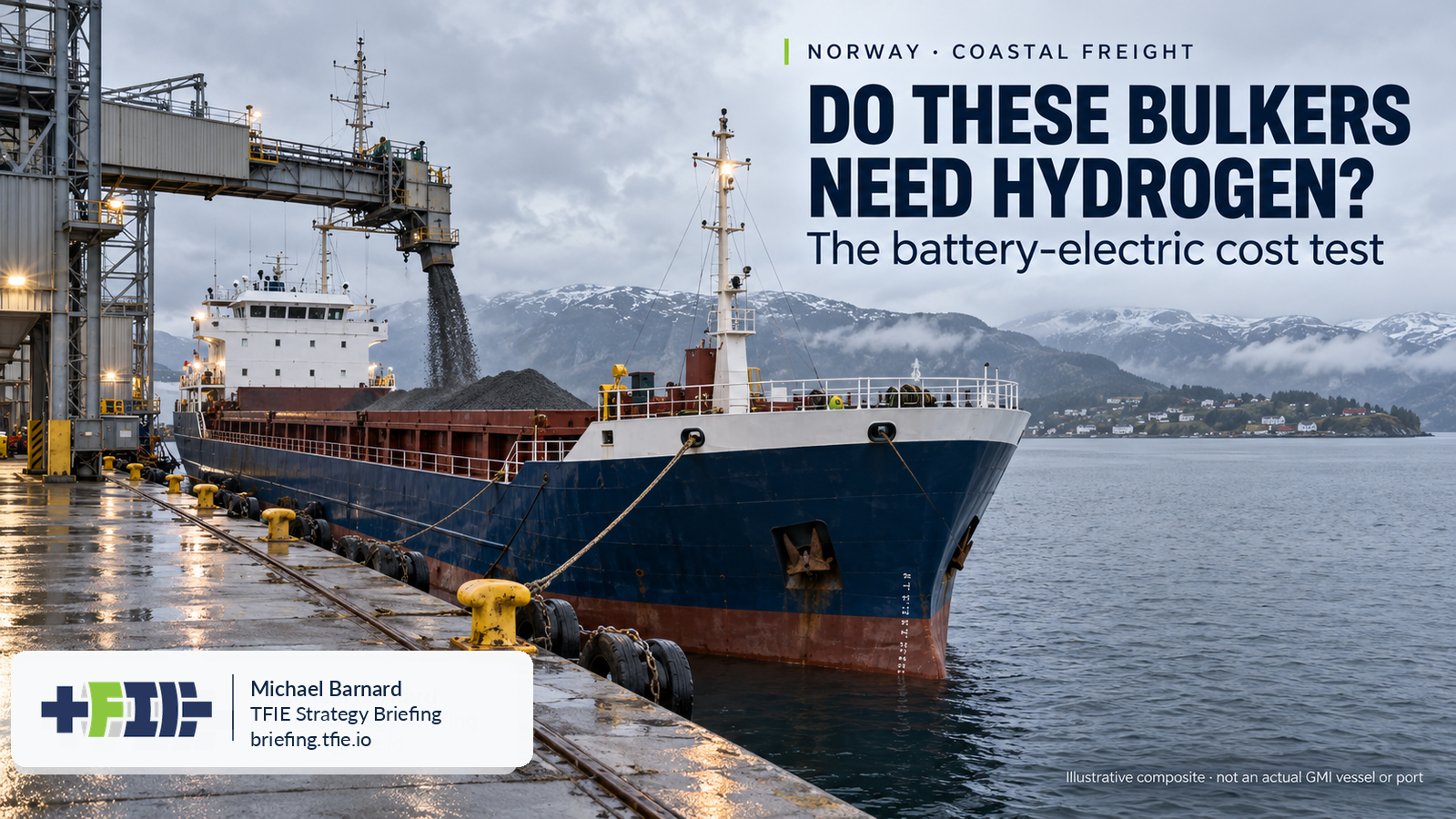
Norwegian shipping company GMI Group is moving ahead with four hydrogen-electric bulk carriers for coastal freight. In October 2026, PowerCell confirmed a follow-up order that brings the program to 24 marine fuel-cell units with 5.4 MW of combined installed capacity. The first two ships, rated at 4,000 deadweight tonnes, are planned for 2027, while two additional 3,000-tonne vessels are expected in 2029.
The project has real shipbuilding commitments and substantial public support. The question is whether hydrogen makes economic sense for the freight services these vessels will provide.
GMI says its design can deliver lifetime costs 9–10% below conventional ships. Its argument combines fuel cells, batteries, an efficient hull and wind assistance. Those are useful engineering features, but most are not exclusive to hydrogen propulsion. A diesel or battery-electric ship can have a similarly efficient hull and sails. The fuel and energy systems still need to be compared on equivalent terms.
I modeled two hypothetical 3,000-tonne coastal bulk services, covering 80 and 55 nautical miles, using comparable hull performance and operating requirements. Over fifteen years, hydrogen propulsion came out 50–58% more expensive than conventional diesel, even after assuming approximately €13.1 million in public vessel support was received upfront. Battery-electric alternatives were €11.64–14.13 million cheaper than the subsidized hydrogen vessels. These are scenario results, not estimates of GMI’s actual operating contracts.
The company has not published the route and commercial data needed for a direct assessment, and the model’s vessel acquisition prices remain important uncertainties. The battery alternatives were not the cheapest option under every assumption.
Source link