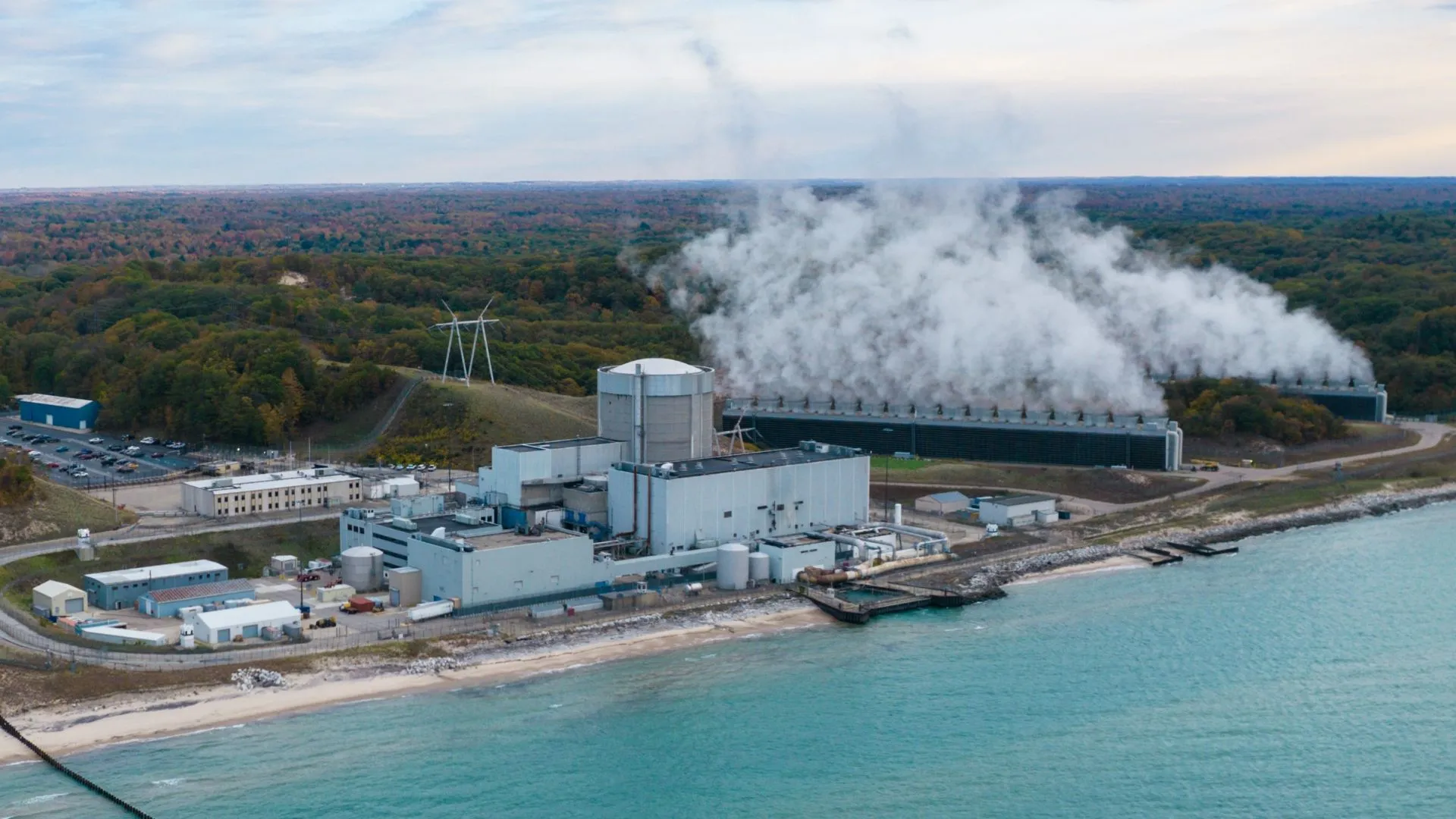
Small nuclear reactors cannot compete on the open electricity grid against cheap renewables and giant conventional power plants. Instead, their financial survival in the United States depends on powering heavy manufacturing hubs and producing clean hydrogen.
That is the result of a new analysis published in Nature Communications. Researchers from the University of Michigan examined the business case for small modular reactors, or SMRs. Their goal was to map where these compact systems can actually turn a profit without being crushed by ballooning construction costs.
“There’s a lot of momentum around increased deployment of nuclear energy and small modular reactors, but this study provides the first comprehensive analysis of where it actually makes business sense to build and operate them,” said Brendan Kochunas, an associate professor of nuclear engineering and radiological sciences at U-M and co-author of the study.
Conventional nuclear plants require massive, bespoke civil engineering works constructed entirely on site. SMRs take an assembly-line approach. These compact units could be manufactured in centralized factories, transported via rail or barge, and installed in clusters. Therefore, SMRs allow operators to scale energy generation up or down depending on site-specific needs.
A primary operational advantage of these systems is their ability to drive water-splitting chemistry. By producing steady, simultaneous streams of high-temperature heat and electricity, SMRs can run thermal and electrochemical processes that strip hydrogen atoms from water molecules. This clean hydrogen can replace fossil gas in several hard-to-abate industrial operations.
Researchers from the University of Michigan and the Idaho National Laboratory evaluated how this thermal integration would perform across the American industrial footprint.
Source link