This article has been reviewed according to Science X's editorial process and policies. Editors have highlighted the following attributes while ensuring the content's credibility:
Integrated circuits are electronic chips containing the interconnected components that process information or control electrical signals inside many electronic devices. These chips are known to generate heat as they operate, which can affect the safety and performance of electronics.
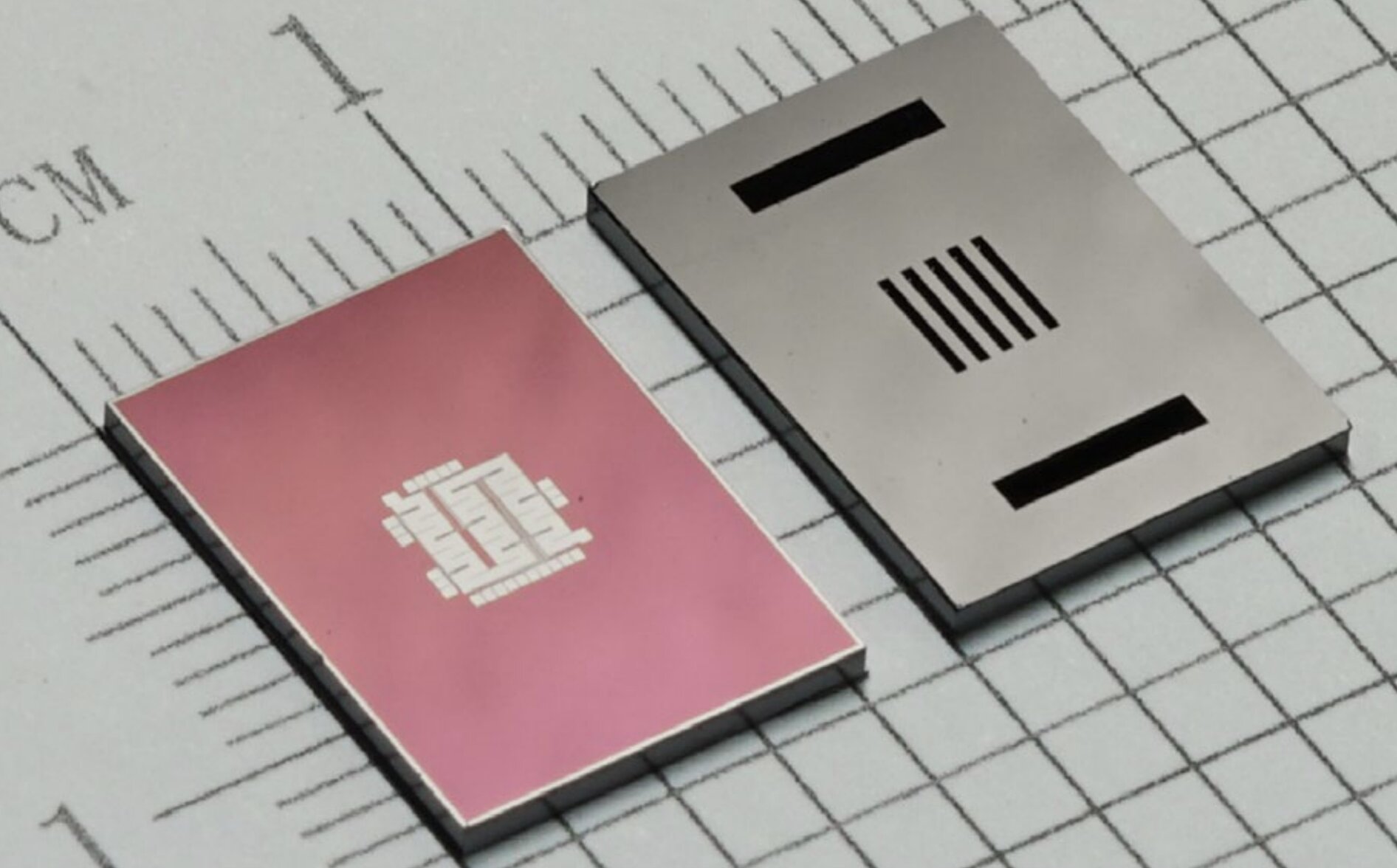
Removing excess heat from electronic chips is thus of great importance, as it ultimately helps ensure their reliable operation over time. One approach for cooling integrated circuits, known as embedded cooling, involves carving tiny channels directly into the substrate of chips (i.e., the material supporting the circuits they contain).
The carved channels can carry small amounts of a coolant, a fluid that can absorb heat from its surroundings and carry it away. The coolant is delivered close to sites in the chip where heat is concentrated.
Many embedded cooling approaches use water as a coolant. However, impurities dissolved in water can make it electrically conductive, increasing the risk of short circuits that can damage a chip's components. An alternative is to use electrically insulating liquids called dielectric fluids, which are far less likely to cause short circuits but are typically less effective at removing heat.
Researchers at Peking University recently introduced a new embedded cooling approach that relies on a dielectric coolant called HFE-7100 and a two-phase cooling process, in which the coolant absorbs heat as it changes from liquid into vapor. Their proposed strategy, introduced in a paper published in Nature Electronics , could help cool powerful electronic chips more effectively.
Source link