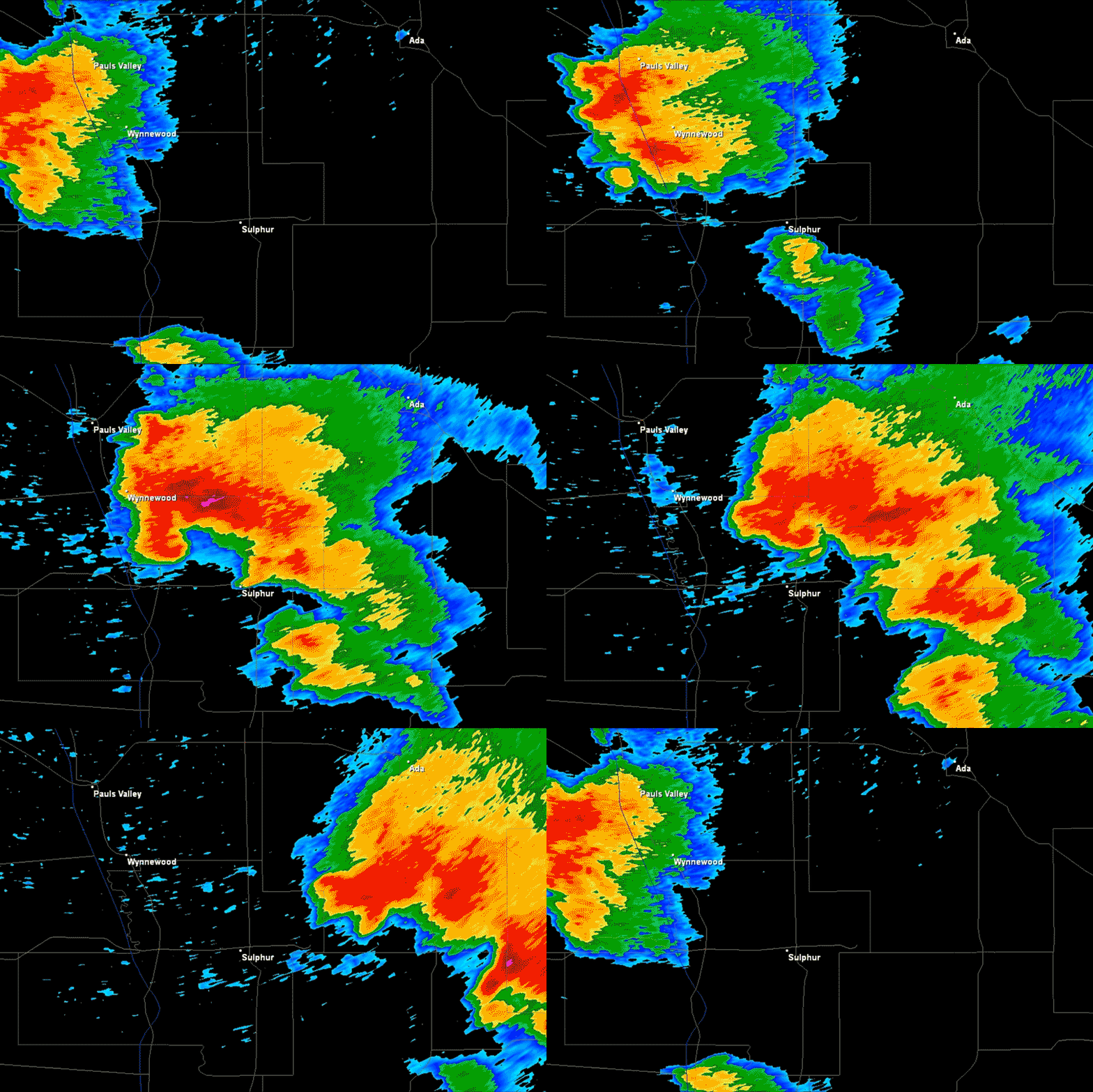
In 2021, Texas suffered the worst energy infrastructure failure in state history, following three severe winter storms in February. At least 246 people were killed as a result of the disruptions, which led to food, water, heat and electricity shortages.
If energy officials had had more time to prepare for the storms, for example by bringing in more trucks of natural gas to disrupted areas, damage from the event could have been mitigated. Unfortunately, weather forecasts beyond two weeks are notoriously unreliable, making for a tighter window for energy operators, farmers, and emergency response officials around the globe.
A new technique by a team including researchers at MIT significantly improves weather forecasting beyond two weeks. The researchers developed a machine-learning model that learns to correct errors in existing forecasting models to improve their output over the two-to-six-week time frame. When applied to a gold-standard forecasting model, it doubled forecasting accuracy over that time frame, placing first in a prominent international forecasting competition.
In a new paper in Nature, the researchers describe their approach and show how it enables forecasts that for the first time beat climatologic averages between two and six weeks.
“Not only does this do better on time averaged forecasts for this range, which is already very useful for farmers and members of the energy industry trying to match supply with demand, but it also improves predictions of extreme weather events, whether it’s flooding or cold spells or something else,” co-author and MIT Research Scientist Judah Cohen says.
Source link