The race is on to develop physical AI fit for widespread use, but building these sensor-powered systems will require engineering teams to address a variety of technical challenges concurrently and continuously.
Analysts predict significant market growth for physical AI, with the promise that autonomous systems will fundamentally reshape industries spanning transportation, manufacturing, medicine, energy, and more. PwC’s Strategy& projects that the global physical AI market could reach approximately €430 billion by 2030, reflecting the potential commercial impact of autonomous systems across multiple industries.
“Physical AI systems are expanding beyond automotive to robotics and drones, and the bottlenecks for development of these applications cover the entire system,” said Licinio Sousa, senior director of Interface IP for Automotive and Physical AI at Synopsys. “AI is expanding from the data center to the edge, and with machines such as robots, drones, and vehicles, all driven by the need for autonomy, privacy, personalization, faster response, and less reliance on the cloud.”
The list of technical challenges that need to be addressed is long and intertwined. Memory capacity and bandwidth need to be increased, latency and power consumption need to be decreased, product lifespans need to be stretched, and safety needs to be verified. And if that isn’t hard enough, addressing any one of these can create problems elsewhere.
Specialized architectures
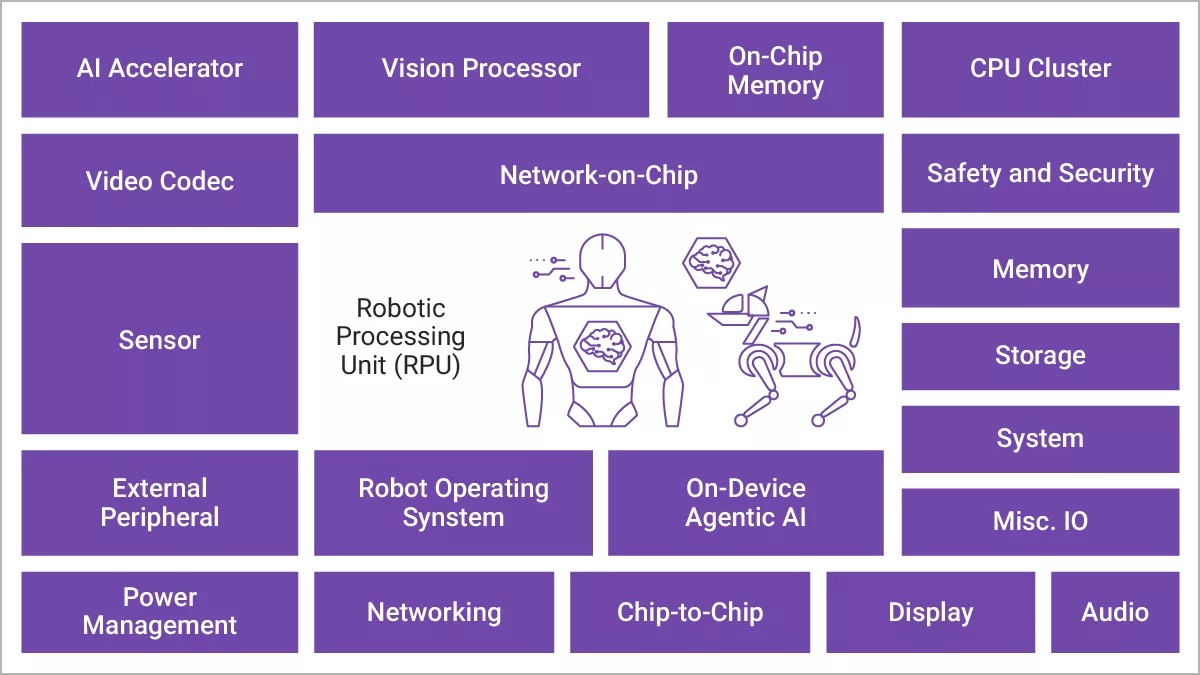
Solving these system-wide bottlenecks requires highly specialized hardware and software that are optimized for specific use cases.
“We need to start talking about optimized, more tailored compute that you build for the specific workload, and this is where physical AI gets more interesting,” said Michal Siwinski, executive vice president and chief product and marketing officer, and general manager for Security Solutions at Arteris .
Source link