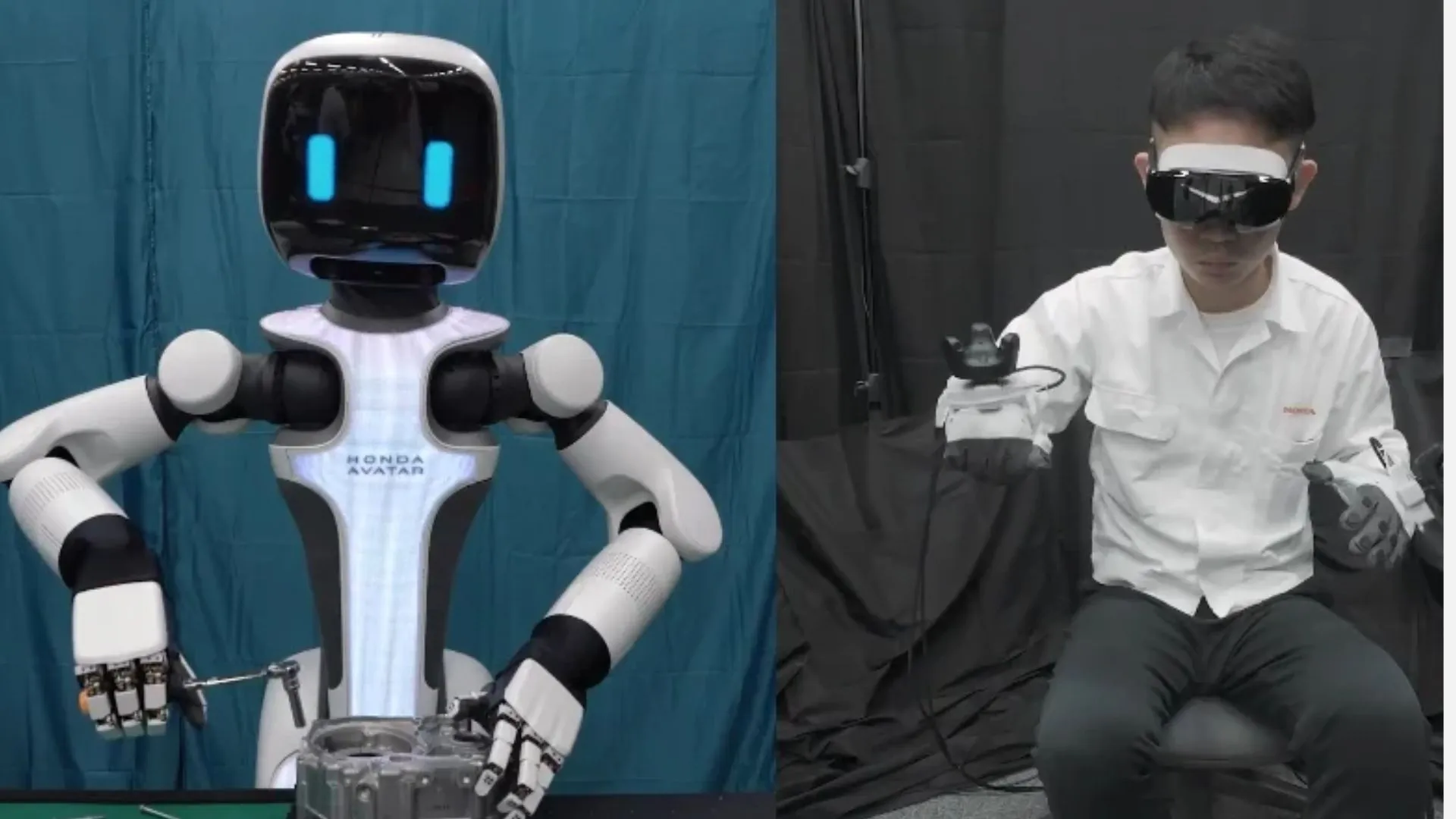
Honda has demonstrated a robotic hand designed to tackle tasks requiring human-like precision and strength. The demonstration took place at CEATEC 2026 in Japan, showcasing technology that could let people perform physical work remotely.
The Japanese automaker’s Honda Avatar Robot combines a multi-fingered hand with an assistance system that helps users control its movements. Honda envisions applications ranging from equipment maintenance and medical support to disaster response and space operations.
The demonstration highlights a persistent challenge in robotics. Machines can increasingly navigate complex environments, but manipulating everyday objects reliably remains difficult.
Honda’s human-scale robotic hand features 16 actuated joints, with each joint reaching continuous speeds of up to 180 degrees per second. That movement allows the mechanism to perform delicate operations while retaining the strength needed for demanding physical tasks.
Each fingertip can apply up to 50 newtons of force continuously. Six-axis force sensors measure forces and torques at the fingertips, helping the system interpret physical interactions.
The hand also incorporates 288 tactile-sensor channels distributed across its fingers and palm. These sensors provide detailed contact information, helping operators handle objects with greater control.
Honda has tested the mechanism through more than 450,000 durability cycles. Those tests included 24,000 cycles involving the lifting of a 11-pound weight.
The engineering challenge extends beyond producing a convincing grip. A useful robotic hand must maintain control through repeated movements, withstand physical stress, and handle objects with different shapes and resistance.
Honda says its design can tackle jobs ranging from threading a needle to tightening screws.
Source link