Computer pioneer Alan Turing is best known for his eponymous experiment to test whether artificial and human intelligence can be distinguished. However, the more important test he faced during his lifetime was cracking the Enigma code used by Nazi Germany during World War II.
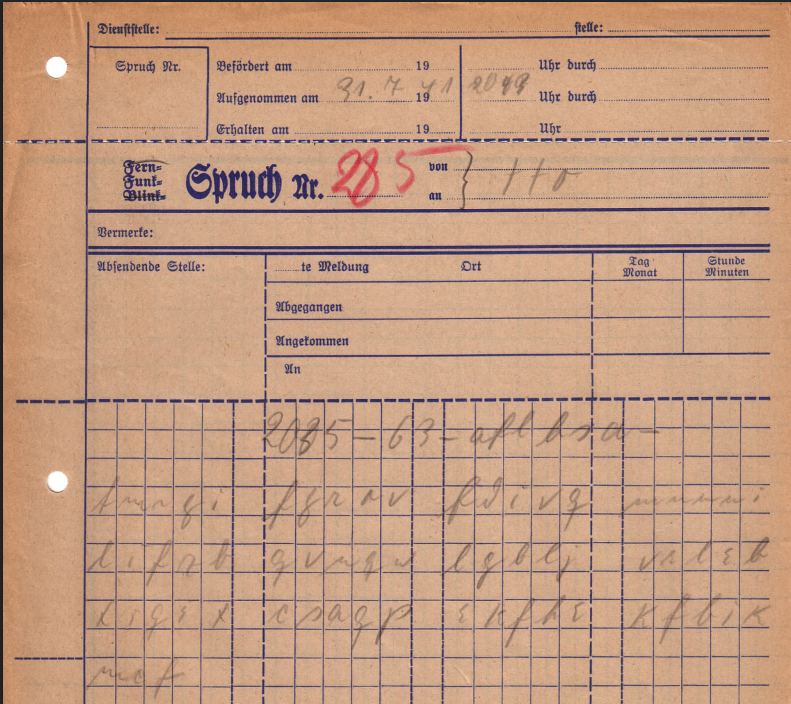
Now, a pair of cryptanalysts say they’ve cracked two long-unsolved messages encoded by Enigma machines using LLMs built by OpenAI and Anthropic.
While Turing and his team of cryptanalysts built an early computer, dubbed the Bombe, that allowed the United Kingdom to translate Enigma messages during the war, a handful of archival messages remain unbroken — usually due to mistranscription or errors by the original encoders.
Carter Leffen, a developer, simply told OpenAI’s newest model, Astra, to search a database of Enigma messages for an unbroken message and decode it. The model was able to do just that, after doing its own archival research, finding context clues, building a simulator of the Enigma machine, and ultimately recovering the plaintext of a message that had baffled researchers since 2005. He even used Astra to build an interactive website explaining the whole problem.
Frode Weierud, a retired electrical engineer with a lifelong interest in cryptology, maintains the website Crypto Cellar, which includes a variety of resources and records and a database of messages. Last week, Weierud validated Leffen’s solution, which he said left him in “awe.”
Notably, given the lengths that AI agents will go to answer the questions in front of them, the Astra model’s logs include discussion of archived messages in a “private collection” that aren’t hosted by Weierud.
Source link