Retaining local code can reduce repeated website delivery while leaving package updates, signatures and submission as separate trust decisions.
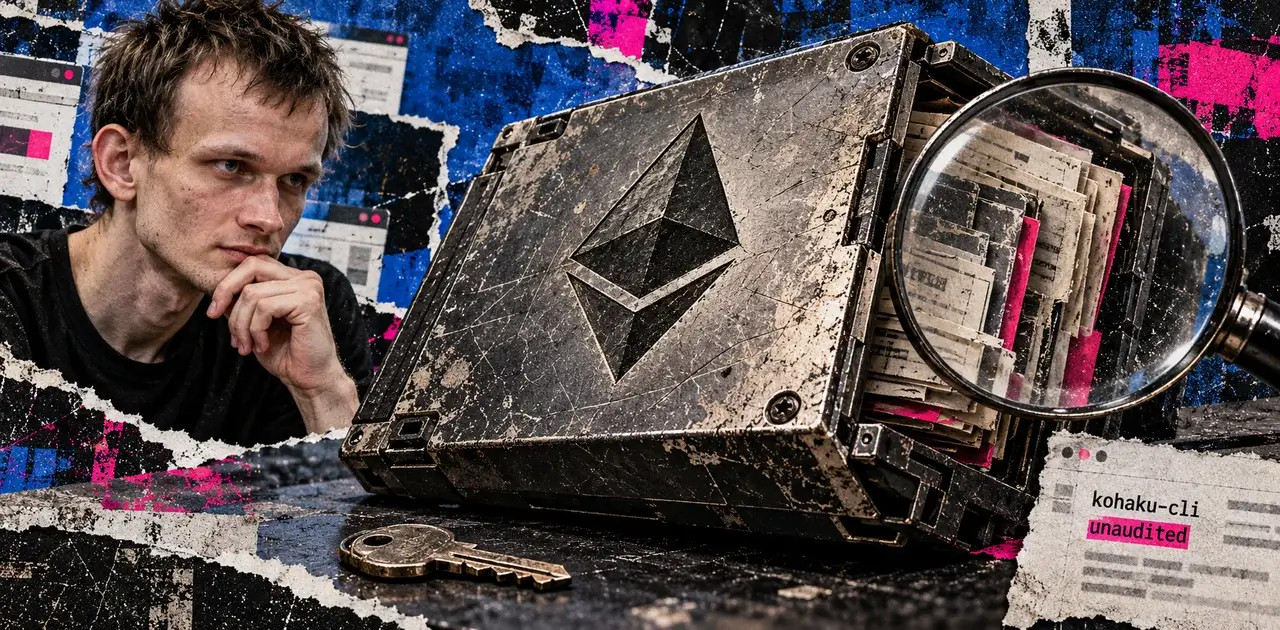
Vitalik Buterin is moving some of his Ethereum activity out of website interfaces. In his October 31 essay, the Ethereum co-founder said he had used an AI-written command-line tool for recent IPFS content-hash updates on ENS, Ethereum's naming system, and kohaku-cli, a command-line wallet, for many payments through privacy protocols. The ENS updater and payment wallet were separate tools.
His objection goes beyond screen clutter. A website can deliver application code again whenever someone returns, leaving the user dependent on what the server supplies each time. Keeping a local application can reduce that repeated delivery exposure. It also moves a consequential decision onto the user: which software revision to install, retain and eventually replace.
The wallet he linked makes the trade-off concrete. Its documentation warns that the CLI is unaudited, under active development and written with AI assistance. It tells users to avoid mainnet unless they understand what they are doing and the possibility of catastrophic fund loss.
Control over a downloaded interface matters because the accepted code sits between a payment instruction and the signature authorizing it. Choosing when that code changes can reduce one recurring exposure, while its dependencies and signing access determine what the installed software can do.
The practical gain is the ability to keep a chosen application revision rather than obtaining the website interface again on each visit. Accepting a replacement revision creates another delivery decision.
Source link