Ethereum co-founder Vitalik Buterin warned that AI-driven advances in mathematics could weaken both existing crypto signatures and some post-quantum defenses.
On Oct. 7, Buterin advised crypto holders to reduce exposure where practical but cautioned against rushing funds into new wallets, arguing that migration mistakes pose a more immediate danger than any demonstrated cryptographic break.
“I don't recommend anyone scramble to move their funds to new wallets today. But we should take the risks to cryptography from AI-accelerated math seriously.”
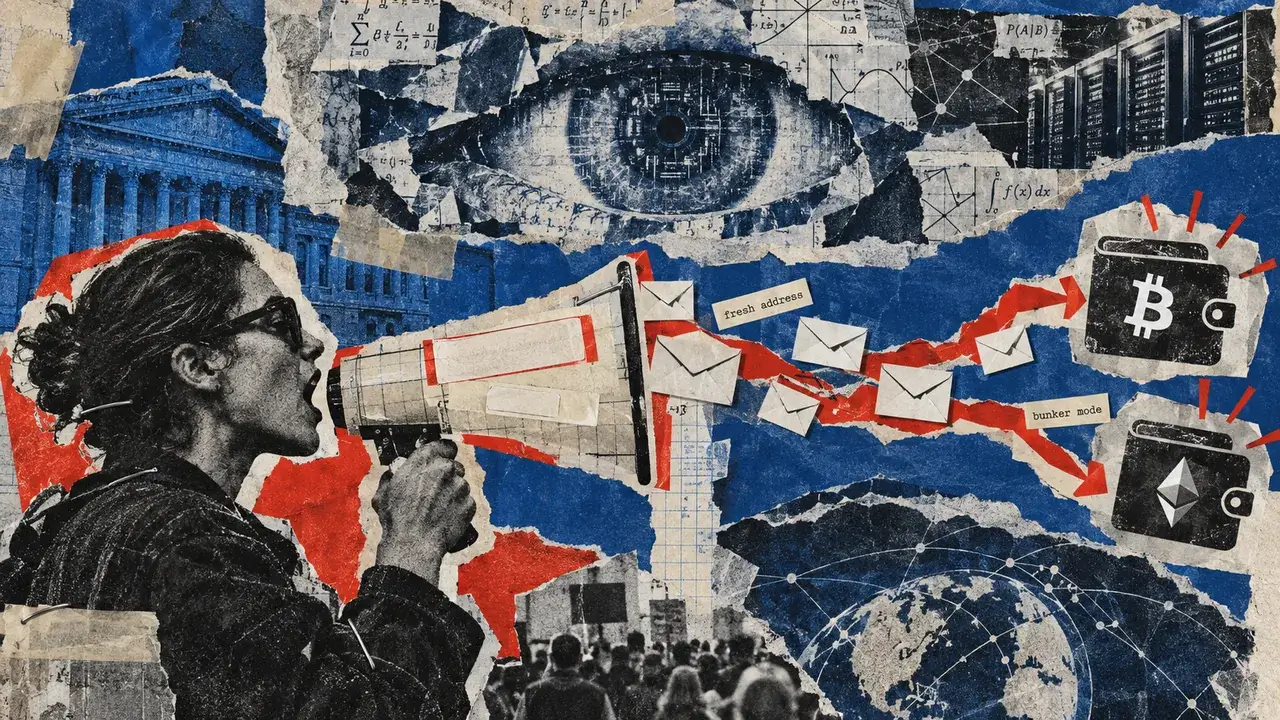
His comments followed Ethereum researcher Justin Drake’s call for the industry to begin preparing for “bunker mode,” including moving assets toward fresh addresses whose public keys have never been exposed onchain.
Drake raised the possibility that advances in artificial intelligence could accelerate mathematical attacks on the elliptic-curve cryptography used by Bitcoin and Ethereum.
The debate intensified after OpenAI published new mathematical results generated by an internal frontier model on Oct. 6, including machine-generated proofs formalized in Lean. OpenAI did not report any attack on blockchain cryptography, and neither Buterin nor Drake pointed to evidence that ECDSA has been practically broken.
Buterin’s warning extends beyond that immediate concern. He singled out lattice-based cryptography, including ML-DSA, as an area where AI-driven mathematical discovery could erode assumed security margins over the next two years.
That raises a harder problem for an industry already preparing for quantum computers. Lattice-based systems are among the leading technologies designed to replace cryptography vulnerable to sufficiently powerful quantum machines. NIST standardized ML-DSA in 2024 as a post-quantum digital-signature algorithm.
Source link