

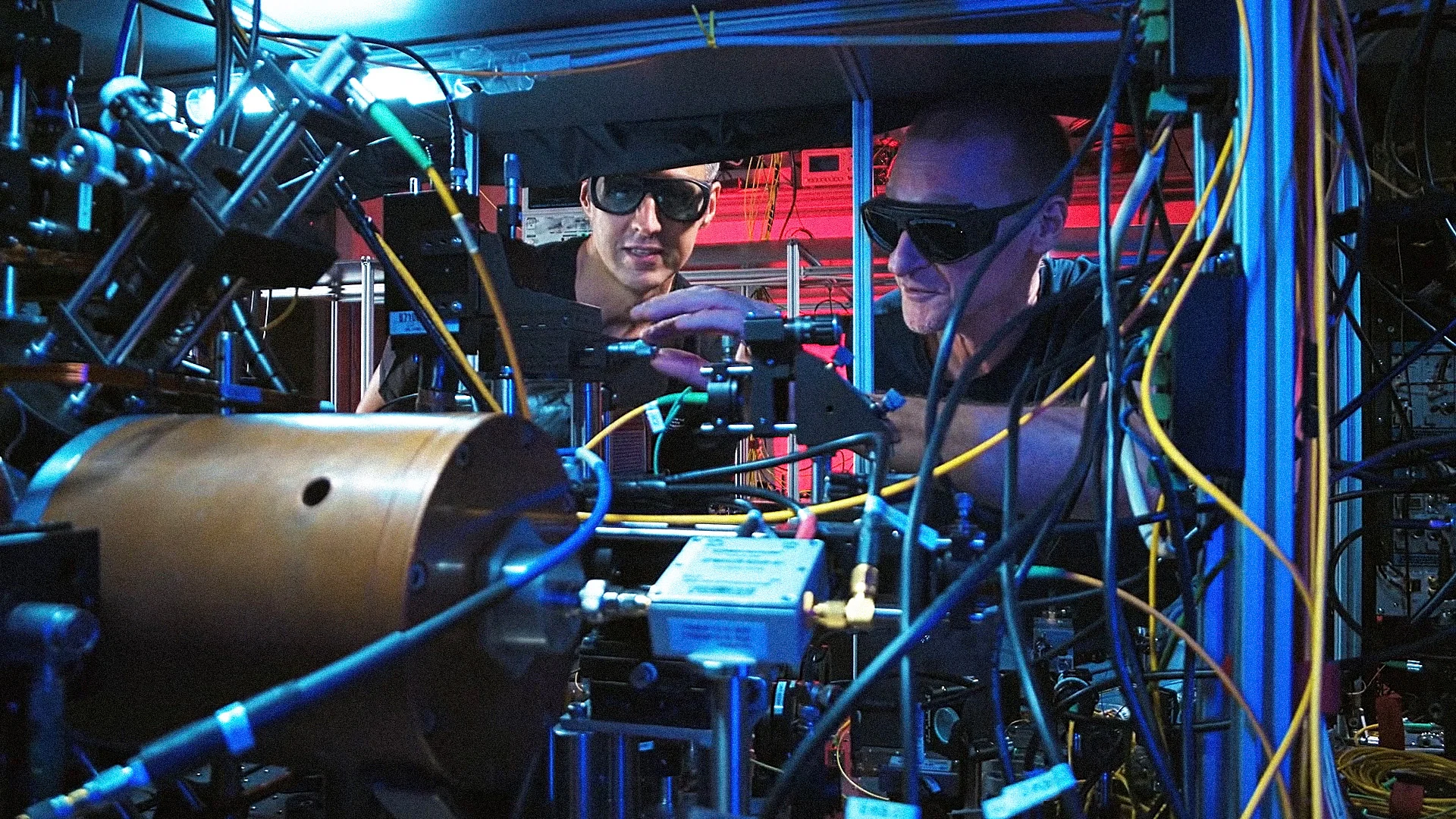
Physicists in Singapore have built an atomic clock so precise that it measures time down to the 19th decimal place.
A machine with this level of accuracy could run for hundreds of billions of years—far longer than the entire age of the universe—without gaining or losing a single second. This leaves the world’s reigning timekeeping superpowers in the dust.
Until now, the ultimate records belonged to elite laboratories in the U.S. and China, which spent years locked in an intense scientific duel using clocks powered by aluminum and deep-frozen calcium (both using ions, which are individual atoms stripped of an electron to give them an electric charge).
But Singapore’s new clock shatters anything else out there by delivering a fourfold leap in accuracy over the best American and Chinese machines, establishing a whole new league of precision, according to the research paper published in Nature.
Atomic clocks quietly run modern civilization. Without their ultra-precise timing, GPS navigation would fail, cellular networks like 5G would desynchronize, and real-time financial markets would descend into chaos. Today, the world’s official time is still governed by cesium atomic clocks, a global standard established in the 1960s.
At their core, these machines work just like a grandfather clock, but instead of counting the mechanical swings of a brass pendulum, they count the natural vibrations of light waves.
An atom is surrounded by orbiting electrons that inhabit distinct energy levels. When exposed to electromagnetic radiation vibrating at an exact frequency, those electrons absorb the energy and jump between levels.
Source link





