Circle's latest disclosure reveals the enormous cost of distributing and operating its stablecoin as competitors promise partners a bigger share of earnings.
Stablecoin issuer Circle spent 93% of its first-half revenue on distribution, operations, and investment as USDC processed more than $36 trillion in transactions.
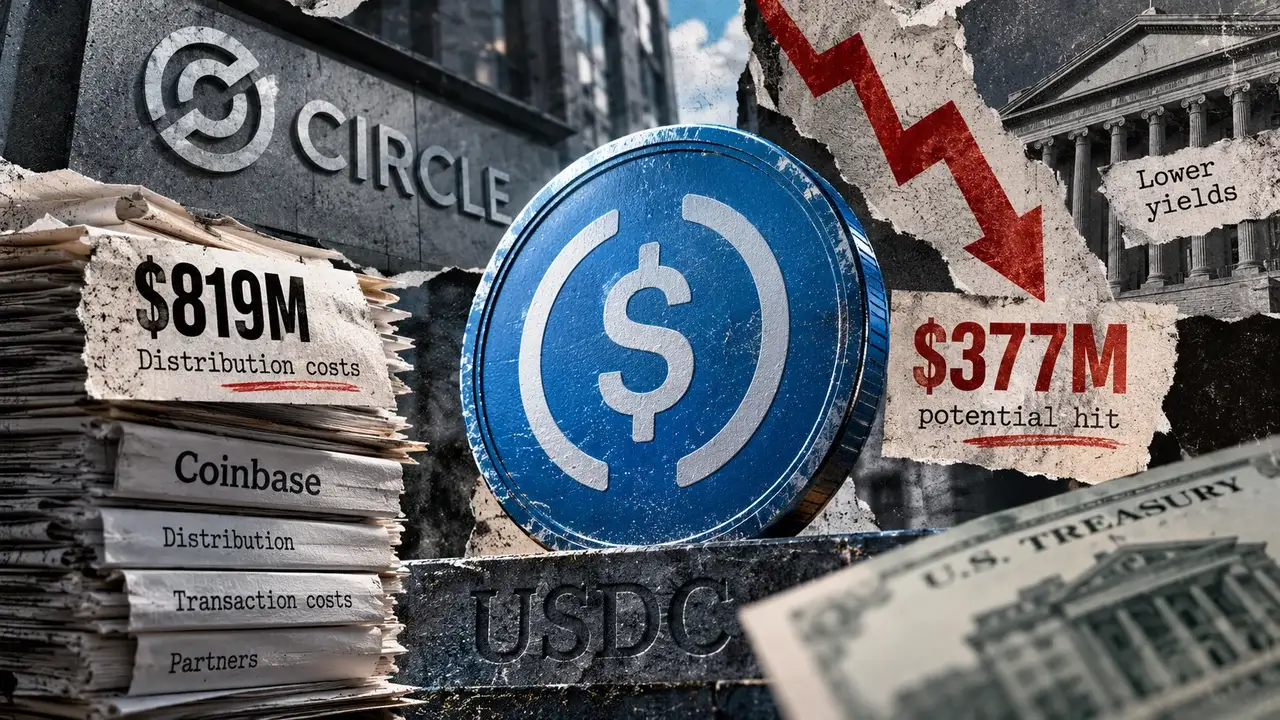
The stablecoin issuer generated about $1.4 billion in revenue in the first six months of 2026, but $819 million went to distribution partners and transaction costs, while another $473 million covered operating expenses and network investment.
Circle retained roughly seven cents of every dollar earned as net profit, about $103 million.
The figures, released Oct. 16 by Chief Commercial Officer Kash Razzaghi, form part of Circle's response to newer stablecoin providers promising businesses a bigger share of the earnings generated by digital dollars.
Circle argues that the money it retains must pay for the banking access, liquidity, and compliance systems that let USDC operate across international markets.
Circle earns most of its revenue from the assets backing USDC, which include cash and US government securities. Exchanges, wallets, and payment companies that attract users and maintain USDC balances receive a share of the income those balances generate.
That arrangement makes distribution a significant expense, but it also gives major partners a financial incentive to promote USDC. The more customers and balances a platform brings to the network, the more it can earn.
Coinbase remains Circle's largest and longest-standing distribution partner . Average USDC held across the exchange's products reached a record $20 billion in the second quarter, up 44% from a year earlier, according to figures Circle cited.
Source link