Uniswap says Robinhood uses TJAR for stablecoin fee receipts, while the chosen release price shapes outside traders’ surplus.
Uniswap outlined on Oct. 30 how its Token Jar (TJAR) fee converter lets outside traders buy accumulated fee tokens for a fixed payment.
Uniswap opened TJAR to other apps on Oct. 29, saying Robinhood already uses the system for fees collected through the Uniswap API across its supported chains and receives USDC and USDG.
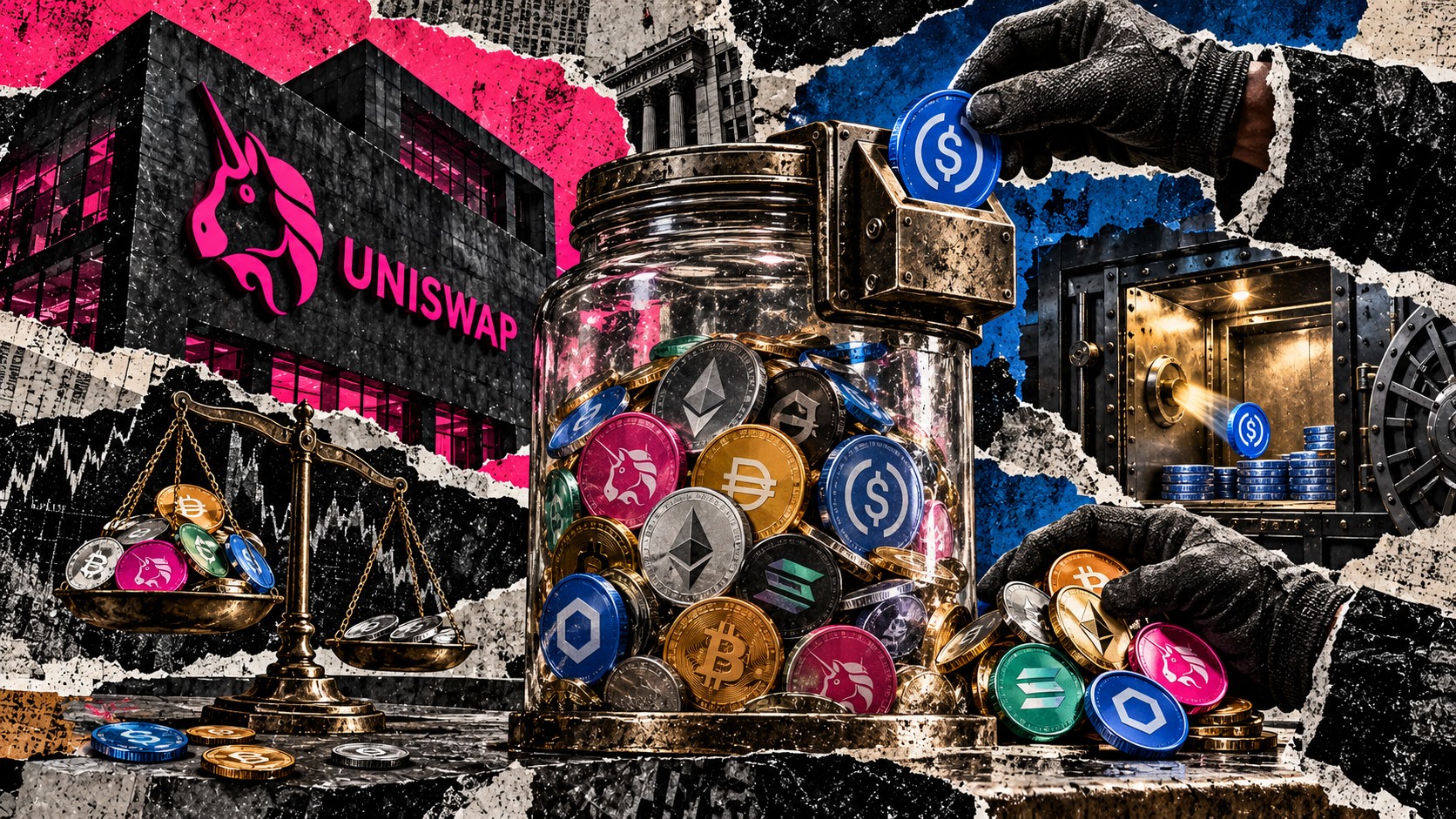
Those stablecoin receipts come from traders known as searchers, who exchange the required payment for fee assets held in an on-chain Token Jar. The arrangement sends the chosen token to a configured destination while leaving searchers to assess whether the assets are worth taking.
A Token Jar holds incoming assets, while a Releaser contract specifies the payment token, amount, and destination. The app’s operator chooses those terms.
The developer documentation says a searcher pays the full release amount even when selecting only some assets, and receives the entire balance of each asset it names. Anything unselected remains in the jar, and the payment goes to the operator’s configured recipient.
The jar does not value its holdings, and no price oracle automatically adjusts the payment, so asset balances and market prices can change while that amount stays fixed.
Searchers have an incentive to act when the recoverable value exceeds the payment and execution costs. Competition can narrow that margin, but the mechanism does not guarantee a profit.
Start with the stories that matter. Get the context behind the headlines and a clear view of what to watch next.
Source link