The FSC also requested stronger transfer monitoring, response staffing and reserves, while exchange implementation and any new custody threshold remain unspecified.
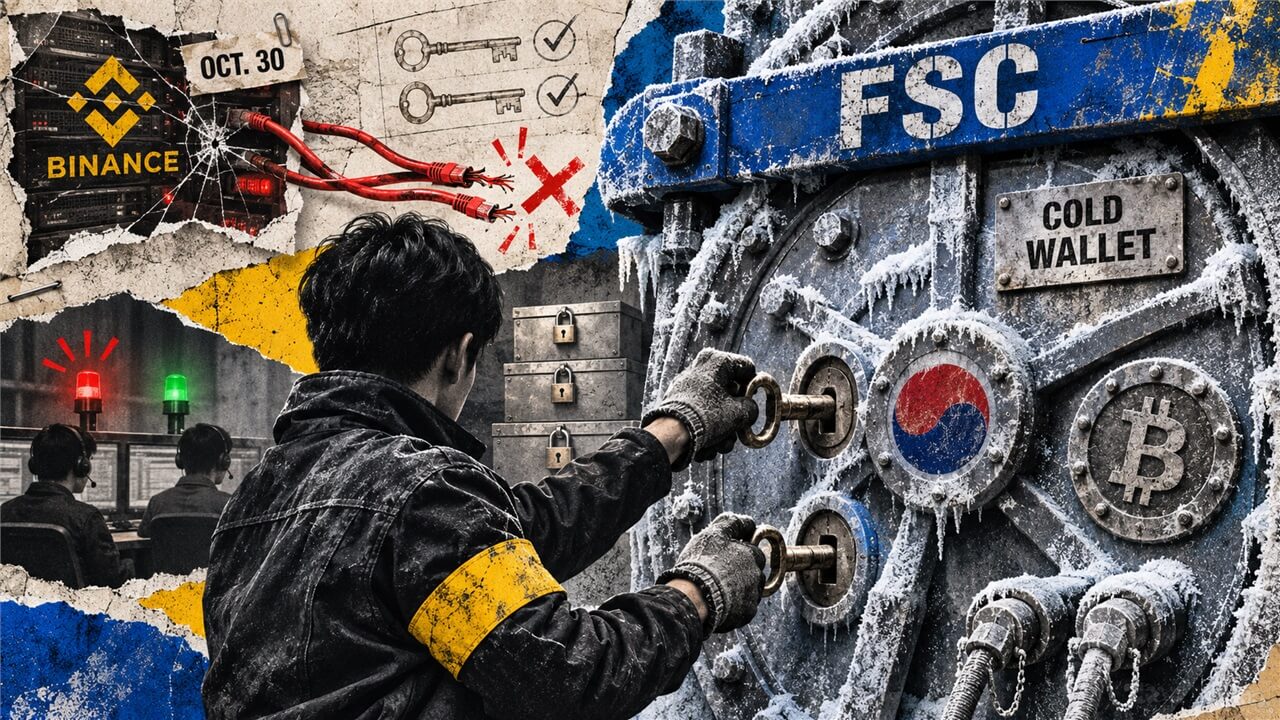
South Korea's Financial Services Commission has asked domestic crypto exchanges to keep a larger share of customer assets offline and strengthen their response to suspicious activity after the Binance hack.
The FSC urged operators to increase the proportion held in cold wallets, continuously monitor deposits and withdrawals, secure additional response staff, promptly report and share abnormal access attempts, and build additional reserves.
Together, the requests address how exchanges hold customer crypto, monitor transfers, respond to suspicious access, and maintain financial protection against incidents.
The regulator's Nov. 3 clarification said it immediately requested the measures at a meeting held at 10 a.m. on Nov. 2. Participants included the Financial Supervisory Service, Financial Security Institute, a crypto industry association, and major virtual-asset businesses. The FSC dates the Binance hack that prompted the review to Oct. 30.
The November meeting also examined controls over access to computer systems, approval and signing arrangements for wallet withdrawals, and administrator privileges. Those checks extend the review beyond the share of assets held offline to the systems and permissions used to move them.
The FSC's Nov. 2 requests, reaffirmed Nov. 3, build on a custody framework adopted in 2024.
The releases do not report exchange-by-exchange implementation. The 80% ratio is the 2024 standard, not a newly announced threshold.
Method: Source-bound qualitative safeguard map. Connectors identify the common subject of requested protections, not transfers of funds, execution order or confirmed implementation.
Source link