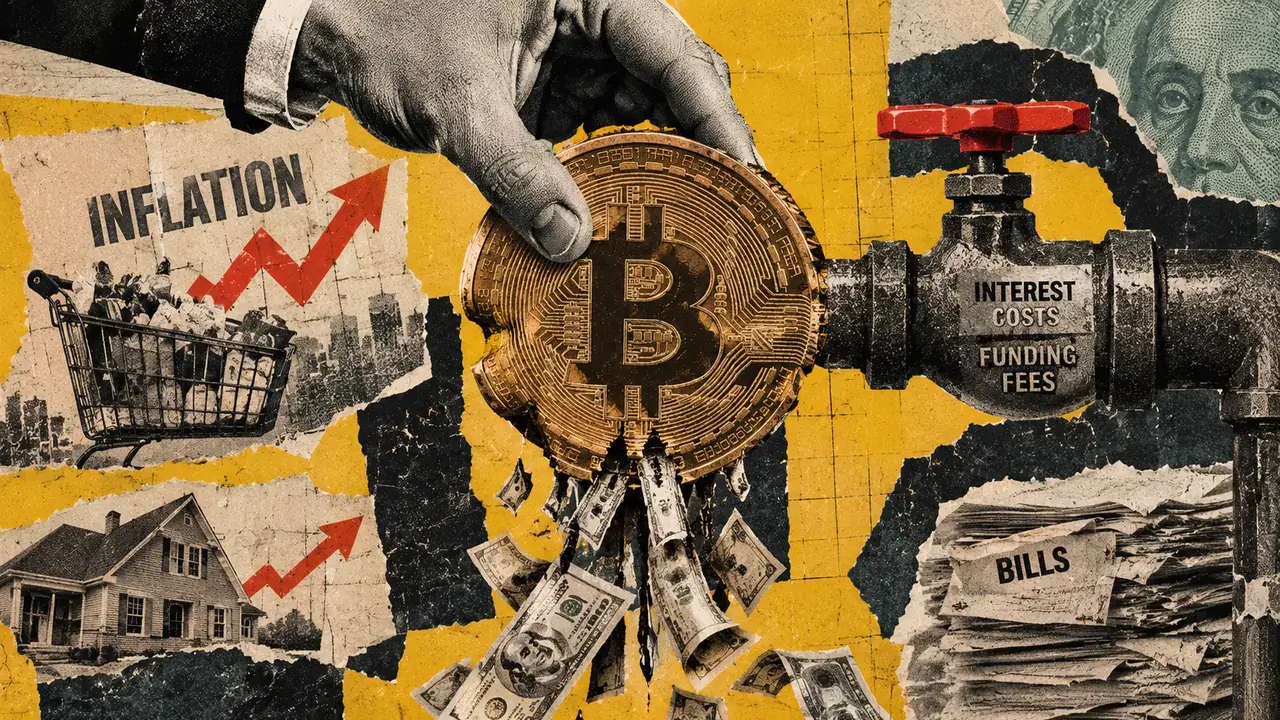
Inflation gives Bitcoin investors a reason to buy, while high interest rates make some of them pay dearly to wait.
Borrowing costs, missed interest income, and futures fees can all eat into returns even when Bitcoin holds its value. That's a big problem, and it gets even worse when inflation stays high.
September's US inflation report showed consumer prices up 3.7% year over year, fueling concerns about the dollar's purchasing power. That same inflation pressure keeps interest rates high, making it more expensive to borrow money to buy Bitcoin and hold it while waiting for it to rise.
Bitcoin reacted immediately to the inflation report, but the bigger question now is what happens next. Two people or companies can buy Bitcoin at the same price, hold it for the same period, and walk away with very different returns, all because they financed their purchases differently.
Someone who buys $10,000 of Bitcoin with cash has no interest payments to make while holding it. The coins can rise or fall in price without a lender demanding repayment.
The Federal Reserve's interest-rate release showed a 4.26% three-month Treasury constant-maturity yield for Oct. 13, the day before the CPI report. While that's an annualized market benchmark, it still illustrates what we call opportunity cost. If $10,000 could earn 4.26% for an entire year, the return would be $426 before taxes.
If Bitcoin ended the year at the same price it was bought for, its holder would have no trading loss, but they would have missed that hypothetical alternative return.
Source link