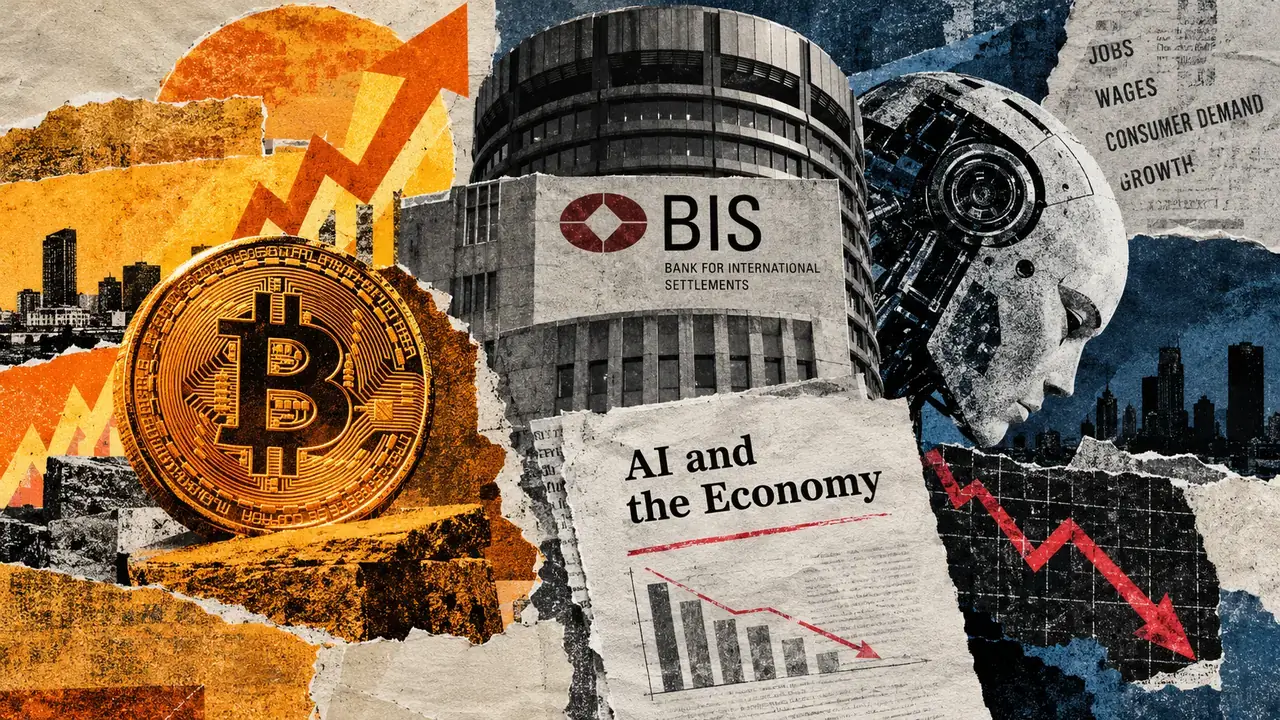
A BIS model warns that automation could shift income away from labor, leaving Bitcoin increasingly dependent on wealthy investors and institutional capital.
Bitwise CIO Matt Hougan argued in an Oct. 14 memo that nearly every macroeconomic path ends with Bitcoin higher, including an extraordinary AI productivity boom that makes scarce assets more valuable.
Two days earlier, the Bank for International Settlements published a working paper that models a fourth path. In it, AI automates work and lifts output, and consumer demand that funds further innovation thins out until growth fades.
Hougan's memo lays out three outcomes, starting with AI abundance that makes intelligence-based services cheaper and shifts value toward scarce assets.
A bursting AI investment bubble triggers a recession, policy intervention, and monetary expansion that eventually boost demand for Bitcoin. Modest productivity gains support gradual adoption, continued ETF demand, and higher institutional allocations.
He acknowledges interim drawdowns and risks outside the macro environment, and each path assumes that abundance, instability, or monetary expansion ends up as additional demand for Bitcoin.
BIS Working Paper No. 1381, “Transformative AI and demand bottlenecks” by Phurichai Rungcharoenkitkul, noted that AI productivity gains automate more tasks, and investment absorbs a larger share of output.
Consumption shrinks as a share of GDP, the consumer market that pays for innovation thins, and further AI innovation becomes less profitable.
1% when further innovation stops being profitable. 6%.
Source link