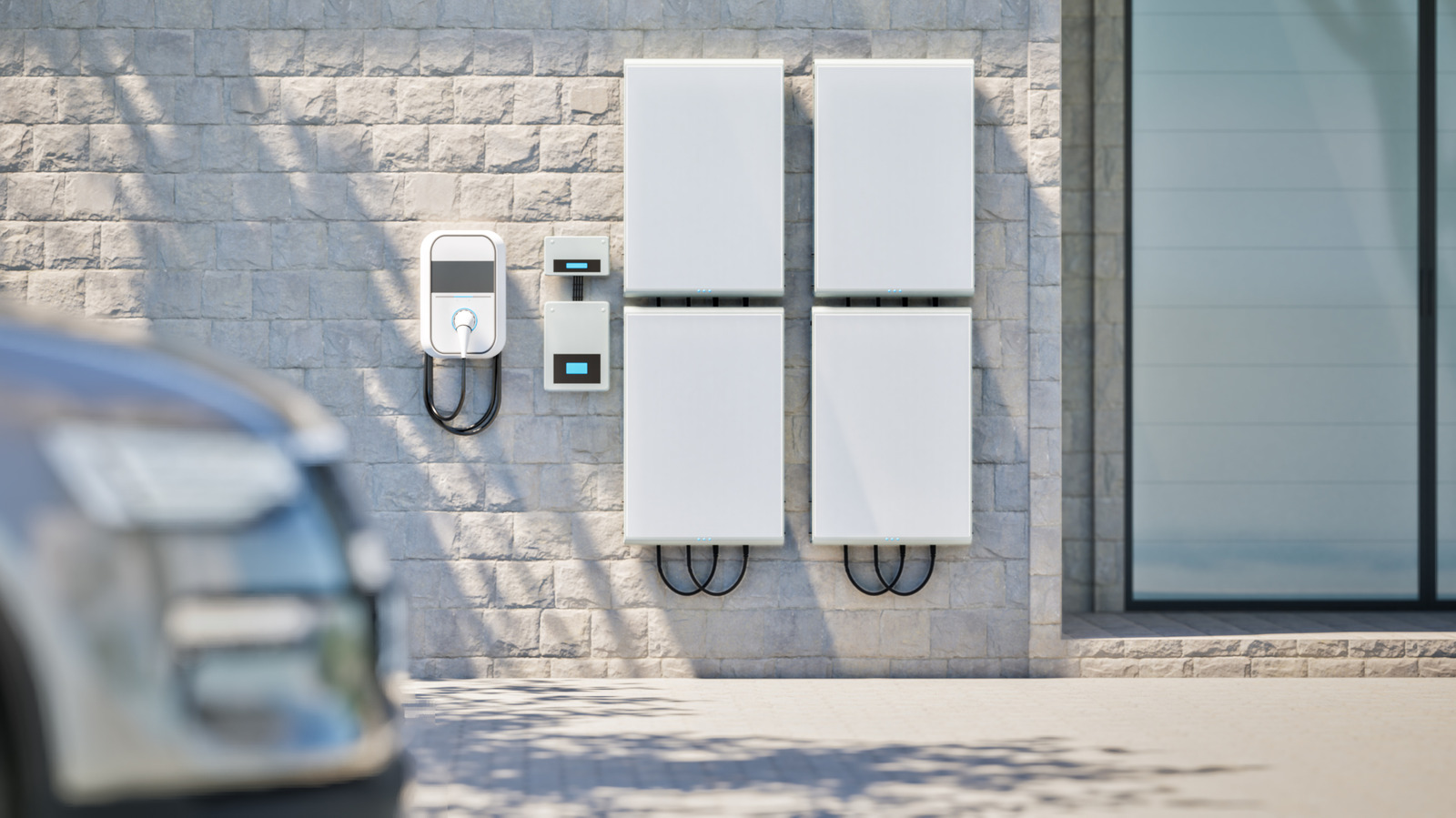
Most EV batteries have significantly more capacity than a standard home battery, so it makes sense to consider running the house with your car. But there are caveats. You have to consider the EV's battery capacity, power output and vehicle-to-home (V2H) compatibility. Battery capacity is measured in kilowatt-hours and helps determine how long you can keep things running. Power output is measured in kilowatts and determines which appliances you can run at the same time. The V2H system also needs to handle the brief startup surge when appliances such as air-conditioners and refrigerators kick on. The numbers are important, especially for startup surge.
Those numbers don't matter much, however, if you can't get energy out of the vehicle. To turn your EV into a home backup system, it must support bidirectional operation and come with a compatible V2H system. A typical charging connection doesn't necessarily work in reverse. Your charger also must be bidirectional and include DC-to-AC inverter hardware and an islanding/transfer switch.
V2H, powering your whole home, is often confused with vehicle-to-load (V2L), which powers individual devices using an EV. With V2L, you can power a refrigerator or your favorite electric foot massager. Some EVs can supply household circuits through a built-in power outlet and compatible transfer equipment, but this requires an approved installation and doesn't mean you can plug your EV into a standard wall outlet. All of this is to say that it's a little more complicated than a standard plug-and-play setup. And it doesn't end there.
Source link