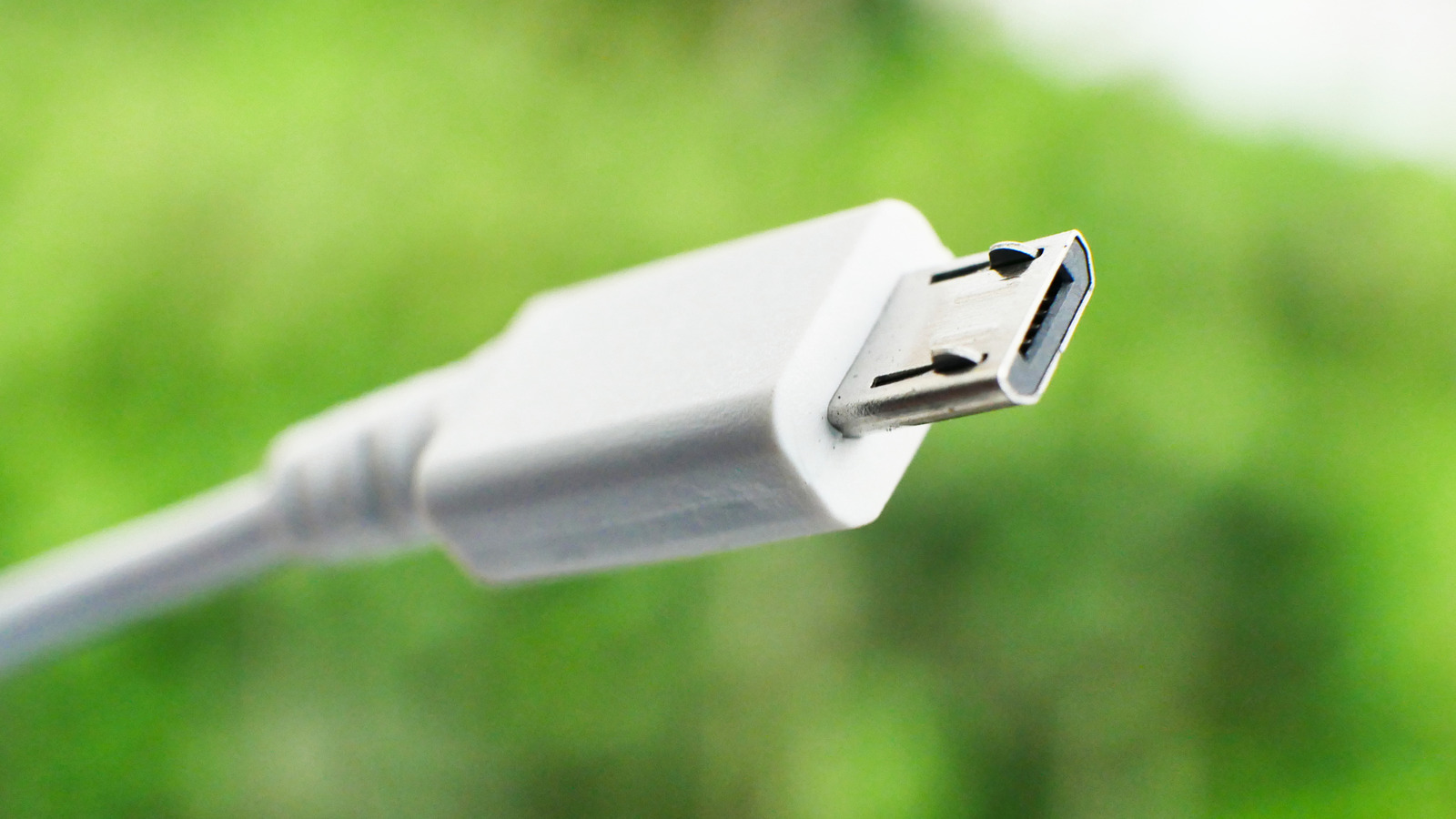
Micro USB isn't totally extinct, but it's still best avoided if seen.
USB 1.0 dates back to 1996, and since then, the tech industry has made a mockery of the "universal" part of the acronym by spinning off more variants than Willy Wonka has candy bars. Even on cutting-edge PCs, you'll likely encounter a mix of USB-A and USB-C ports, then spend a few moments trying to figure out where to plug in your USB 4 cables.
Micro USB is one of the most prolific variants, as it helped spread the data and charging benefits of USB to smaller devices. It came after other standards, like mini USB, but it had much more staying power than others. There's a chance you still have a few micro USB products laying around. And despite the wide transition to USB-C, you might even be able to find new cables and accessories to buy today that still use the older connection standard.
When you have a choice, however, it's best to skip micro USB. It's smart to be picky about the charging ports on the products you buy, since micro USB can only hold back their performance and compatibility.
Broadly, the presence of micro USB signifies a product is either old or cutting corners. The format dates back to 2007 — the same year the original iPhone shipped and an eternity in technology. USB-C does presumably raise manufacturing costs, but only relatively. That standard rolled out in 2014, which was well over a decade ago.
Source link