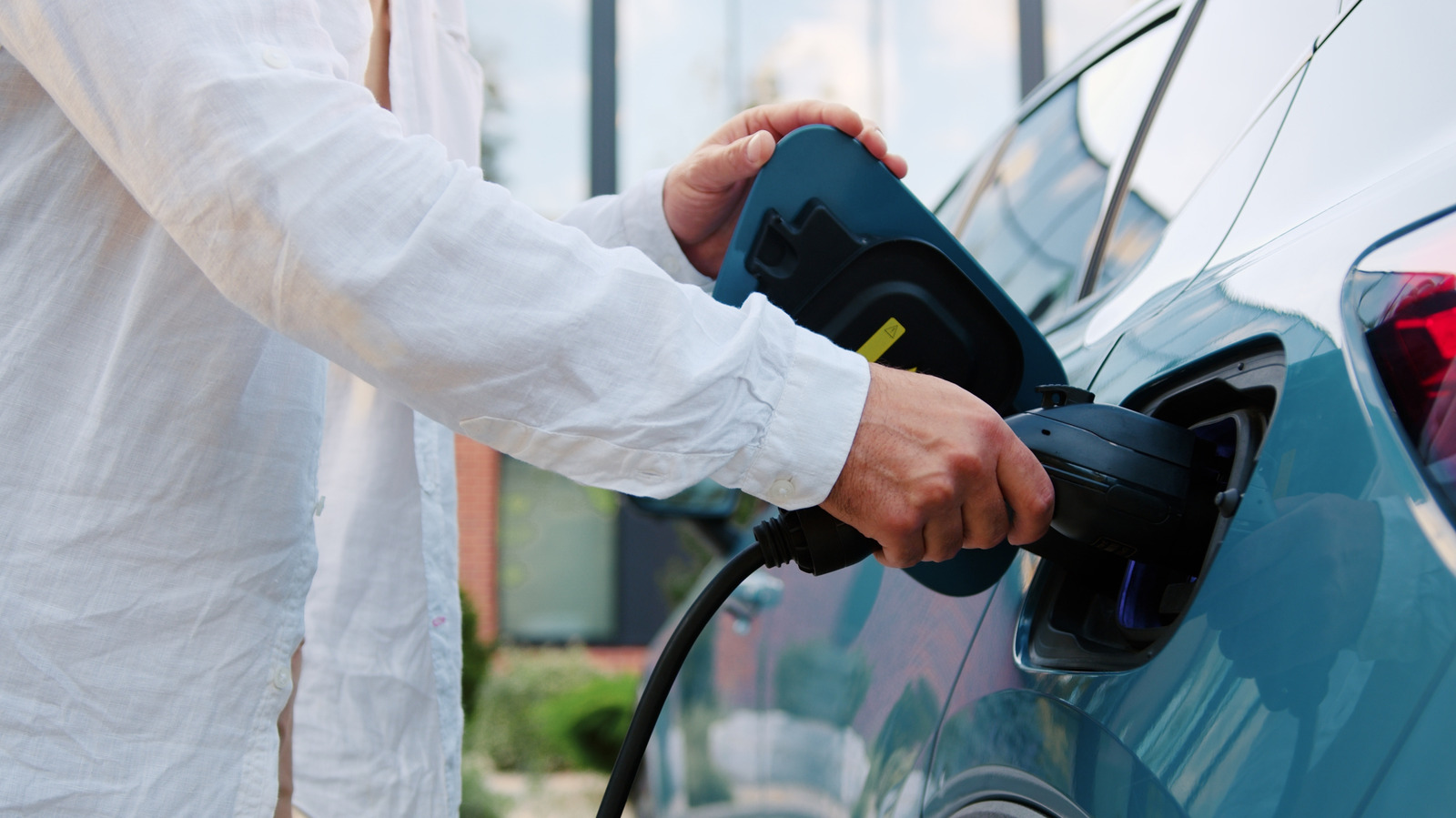
When the Tesla Model S launched in 2012, plugging it into a regular household outlet meant waiting more than 50 hours for a full charge, and all you got for that was up to 300 miles. The latest Model S is a different story: by the company's own figures, the car can add up to 200 miles in 15 minutes at a Supercharger. That's a very different car to live with.
But even now, charging doesn't stay fast. Look at how EV ads and spec sheets describe charging speed: "10 to 80 percent," "0 to 80 percent," almost never "to full." The first 80 percent is the fast part of the charge. Past it, the speed drops off, and the last stretch takes far longer than you'd expect. So what happens to the battery after 80 percent? It has nothing to do with bad EV charging habits, and everything to do with how the cell itself works.
There are three ways to charge an EV: via a regular wall socket, a home or public charging station or a fast-charge station. All three do the same basic thing. They push electrons toward the battery, and inside its cells, lithium ions travel from one side (the cathode) and settle into the other (the anode). Then, as the car drives, those ions travel back into the cathode and supply the electric current. So "charging the battery" just means pushing the ions back into the anode.
Source link