
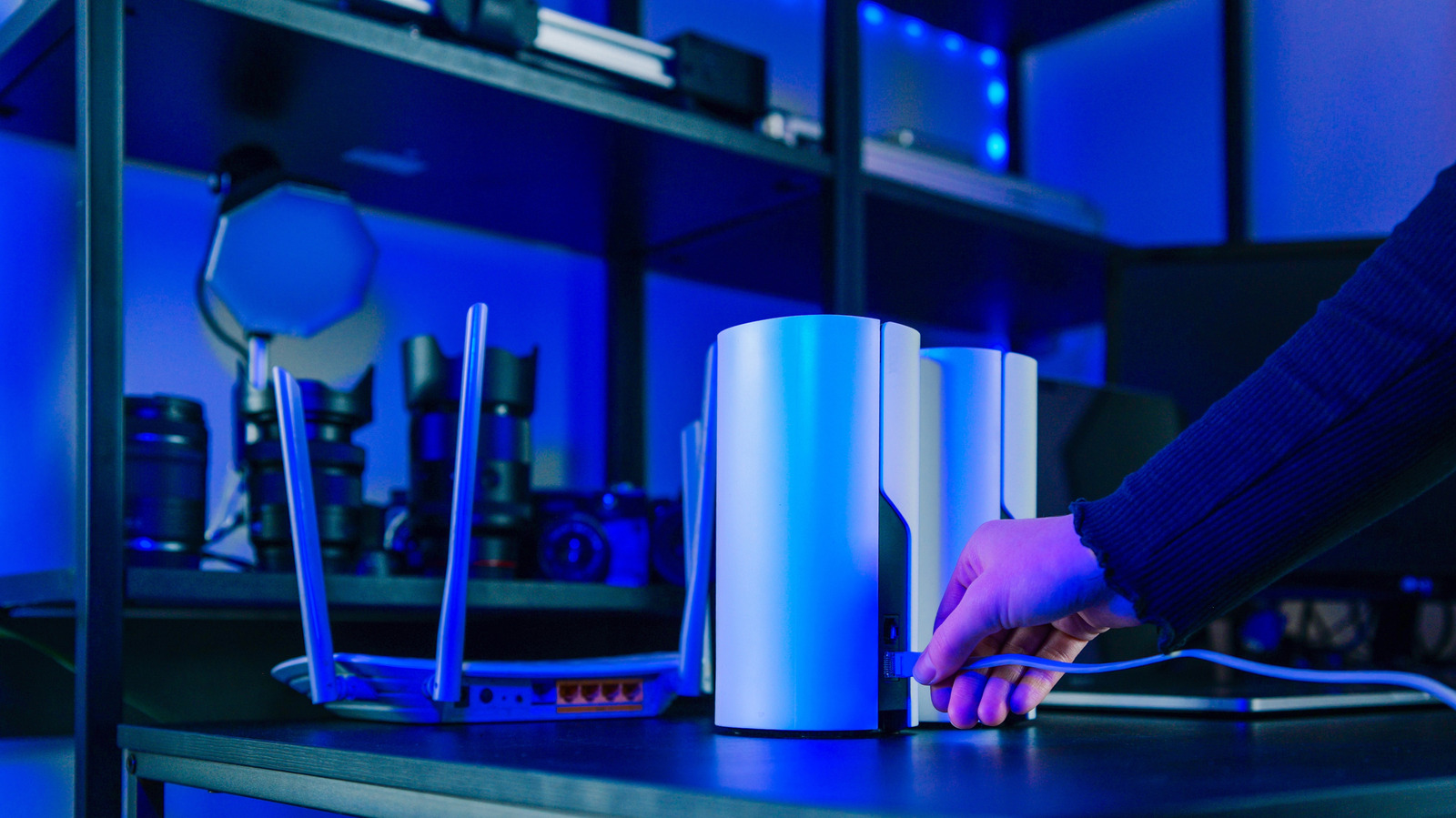
In just about any space larger than an apartment, it's hard to deny the value of mesh Wi-Fi routers. They do have drawbacks — primarily their price-to-performance ratio — yet top speed is meaningless if coverage isn't consistent. You might liken it to owning a Porsche 911 in a place like the West Texas desert, where gas stations are so far apart that you could conceivably run dry on a high-speed drive.
Something we hadn't really thought about much until recently is the fact that most mesh routers are missing external antennas. They do have antennas, naturally — they're just under the surface. You'd think, though, that with coverage being a priority, gear makers would want every possible boost to signal strength.
As it turns out, burying antennas is not only fine, but actually a technical advantage given the goals of mesh systems. There are also additional business factors, although this is one case in which companies aren't cutting corners. You're likely getting a better product.
Although external antennas do maximize range, that's actually less of a priority with mesh systems, for a reason that's glaringly obvious when you think about it for a second: A mesh network is already designed to repeat signals and fill in gaps. The most distant devices a mesh router has to talk to are usually its siblings, establishing a backhaul connection to your main router. All other devices are going to be a room or two away, at most.
Source link





