The sun hangs low over the plains of Castile and León, in the north-central region of Spain. But from a slope of the mountain Pico Trigaza, it appears that a few puffy white clouds have started to block the sun. That’s vexing.
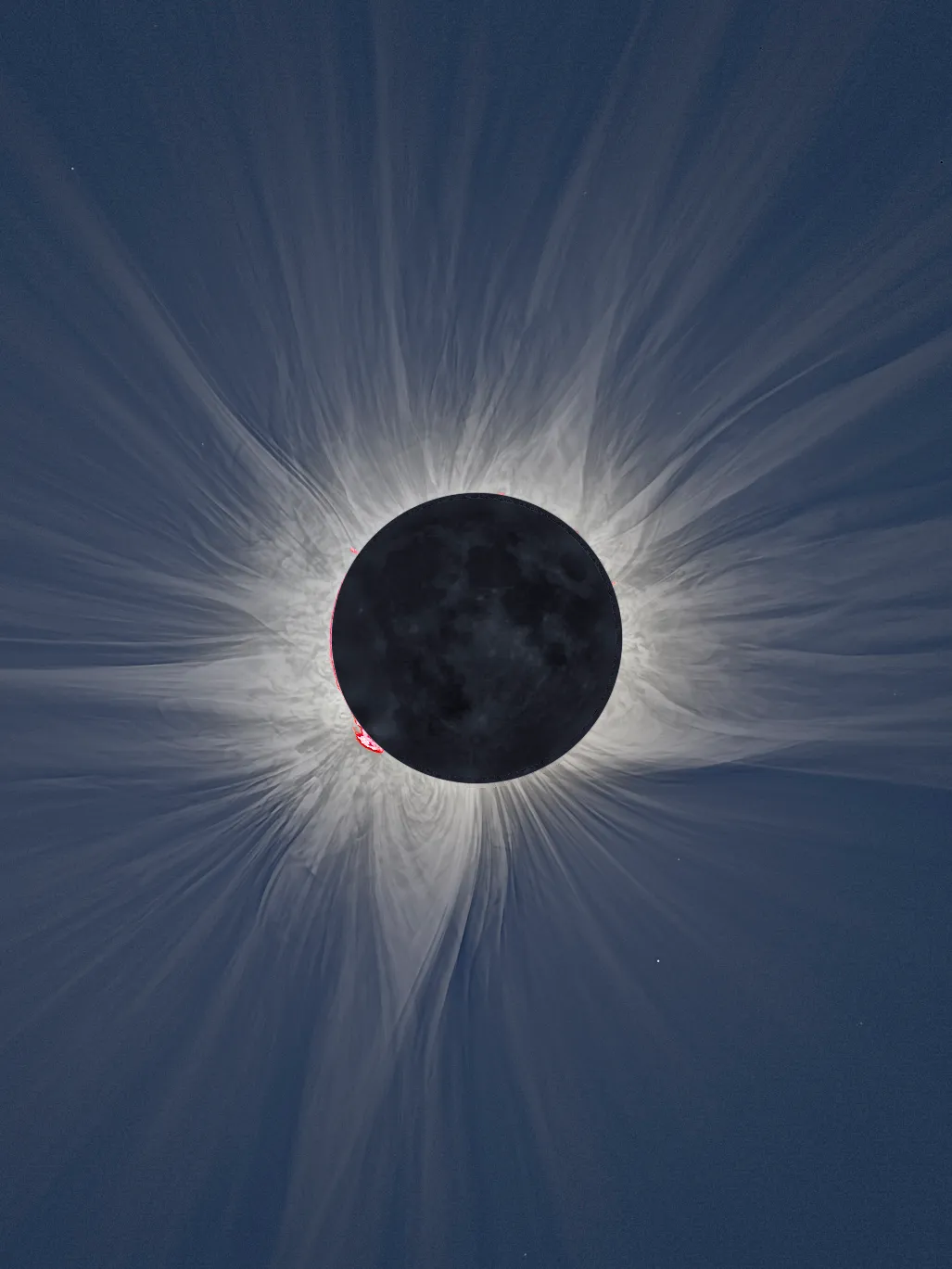
A group of researchers, some wearing cardboard eclipse glasses, is clustered around sets of portable telescopes and cameras connected to laptops. All this gear is scattered on tabletops perched on the mountainside. On the computer screens, the sun’s disk looks like a deep orange crescent that is slowly waning. That’s because the moon began to crawl across it about half an hour ago. In 25 minutes, it will obscure the sun completely, producing an eerie and wondrous phenomenon—a total solar eclipse.
In the late-summer, late-afternoon heat, the researchers watch anxiously as those fluffy clouds linger around the sun. From an abandoned hut on the slope a few meters above, where the researchers have set up camp, one of the grad students emerges and nods toward the cloud formation. “Do you think it will dissolve?” he blurts out.
” Miloslav Druckmüller glances calmly at his group of doctoral candidates, now making final checks of the equipment in preparation for totality. Here in Spain, on this 12th day of August, Druckmüller is getting ready for his 19th solar eclipse. He knows from long experience that weather can turn quickly when the moon’s shadow suddenly pushes the temperature down. Plus, there’s no sense in riling up the grad students any more than they already are.
Source link