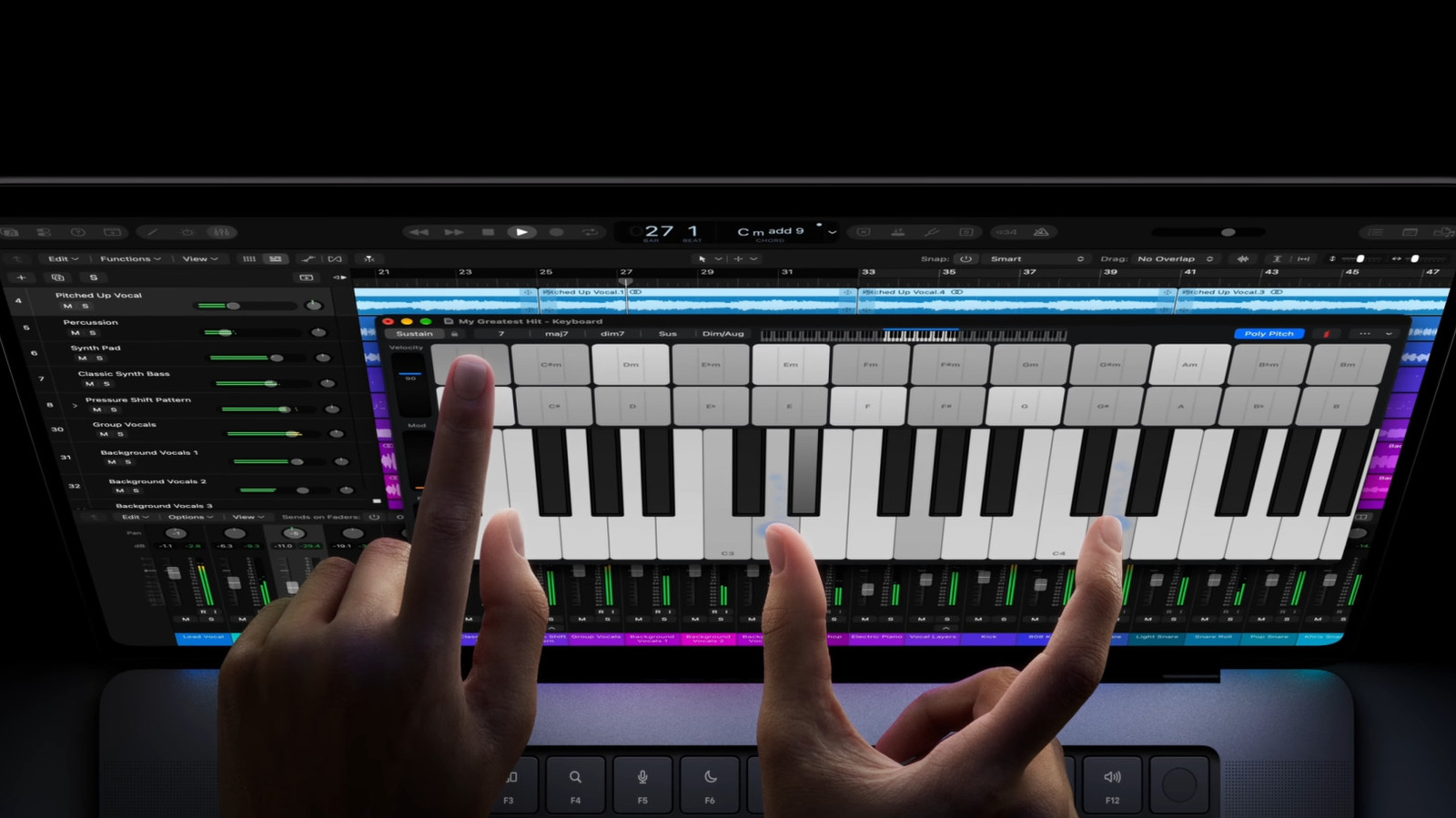
A touchscreen laptop gives you more options, but it's a secondary benefit to everything else a laptop offers.
Recently, Apple made headlines by announcing its first-ever touchscreen Mac, the PROLED MacBook Pro. That's despite co-founder Steve Jobs famously decrying touchscreen laptops as "ergonomically terrible," and launching an alternative in the form of 2010's iPad. In fact, iPads have become increasingly Mac-like in recent years, with many models adopting the same processors and iPadOS getting a similar multitasking interface. Some Android tablets have becoming increasingly PC-like, too.
Dedicated tablets do have advantages over laptops. They're often hundreds of dollars cheaper, which matters when memory prices are rocketing out of control. And of course, they're lighter and more portable, which can make them a godsend if you want to get tasks done (or just watch a few movies) on a long flight.
However, there are still reasons to buy a touchscreen laptop, even if you're not going to splurge on a device as costly as a MacBook Pro. It's mostly a combination of deeper functionality and what's included with that (normally) higher upfront cost.
All laptops incorporate a keyboard and trackpad, whereas those are paid add-ons for tablets. You may not need either, depending on your goals. But if nothing else, a physical keyboard is far easier to type on than a touchscreen, owing to its ergonomic positioning and feedback. It also gives you back a large amount of screen space. A trackpad improves precision for functions like selecting text or manipulating timelines in audio and video editors.
Source link